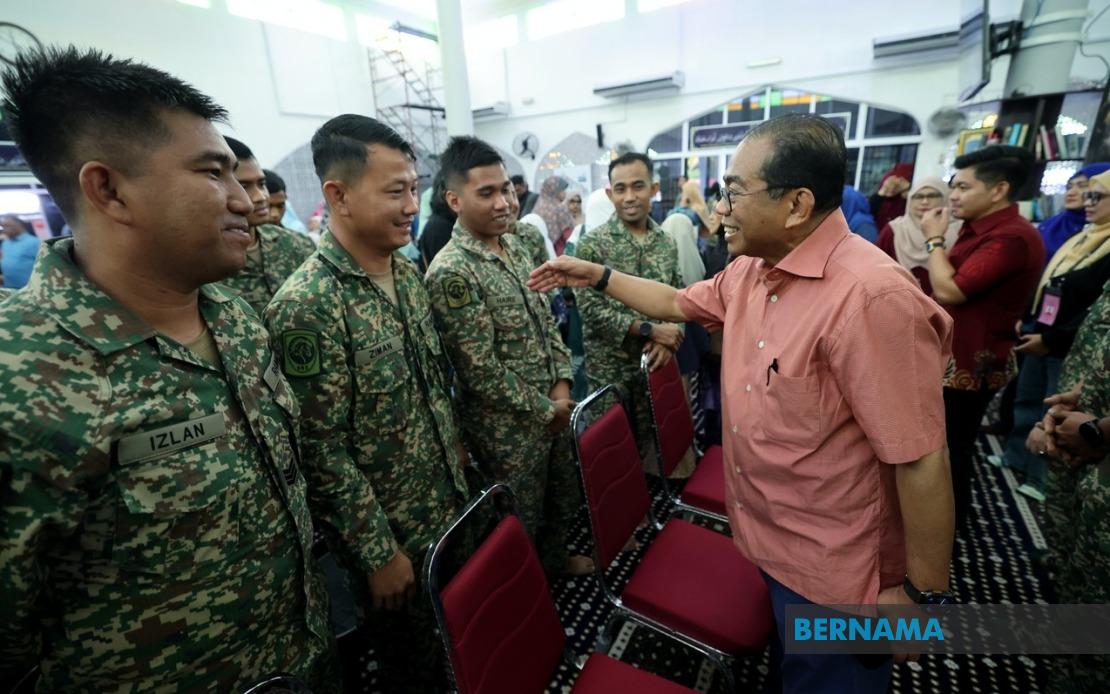
The inquiry into a fatal grenade explosion at Hobart Camp in Gurun that claimed two military lives last month is on track for submission to the Defence Ministry by mid-July, according to Defence Minister Datuk Seri Mohamed Khaled Nordin. Speaking after an event in Kota Tinggi on July 5, he indicated that finalisation of the report was underway and would be forwarded for ministerial review and subsequent action once completed.
The incident on June 16 resulted in the deaths of Corporal Norazmi Abu Bakar from the Sixth Battalion, Royal Malay Regiment (RAMD), and Private Siti Khadijah Sungip of the First Squadron, Royal Engineers Regiment (RAJD). Both sustained severe injuries when a grenade detonated during a training exercise at approximately 10.57 am. Medical personnel transported them to Sultan Abdul Halim Hospital in Sungai Petani, but both were pronounced dead en route to the facility. The fatalities have raised serious questions about safety protocols during military exercises and the adequacy of training supervision within the Malaysian Army's ranks.
Mohamed Khaled stressed that the Malaysian Army has received instructions to comprehensively evaluate its training methodology in light of the investigation findings. The review will extend beyond merely examining what went wrong in the June 16 explosion, as it must also factor in a second serious incident at the same facility that occurred just two weeks later. This wider assessment represents an acknowledgment that isolated accidents may reflect systemic vulnerabilities rather than one-off lapses in judgment or procedure.
The second incident underscores the urgent nature of the safety review. On June 29, a firearm discharged unexpectedly during a combat enhancement training (LPT) exercise at the same Hobart Camp location. Sergeant Mohamad Firdaus Che Shaharudin and Corporal Felix Franchis, both of the Fourth Battalion, Royal Ranger Regiment (4 RRD), suffered leg injuries after being struck by shrapnel in the 6.15 pm incident. Though neither loss of life occurred in this case, the back-to-back nature of the accidents within a fortnight strongly suggests deeper issues with how exercises are conducted, supervised, and controlled at the facility.
The Defence Minister indicated that the army would examine whether additional shortcomings or weaknesses exist beyond those immediately apparent in the two incidents. This suggests investigators are considering whether broader training culture, equipment maintenance standards, command structure clarity, or personnel qualification levels contributed to the accidents. Such a holistic examination is particularly important given that military training is inherently risky, yet organisations maintain the responsibility to minimise preventable hazards through rigorous systems and oversight.
Malaysian readers should understand that military training accidents carry implications beyond individual tragedies. Such incidents affect public confidence in the armed forces' operational readiness and safety culture. For a nation dependent on a capable military for regional security, questions about institutional safety practices inevitably spill into broader conversations about defence effectiveness and preparedness. The deaths at Hobart Camp represent a loss of trained personnel and demonstrate the cost of inadequate risk management in high-stakes environments.
The timeline for the investigation report's submission—by mid-July—provides a window for decision-making before the military year advances further. However, the Defence Minister's conditional language, noting he would update the public "Insya-Allah" (God willing), suggests some uncertainty about the exact date. Transparency regarding the report's findings will be crucial for public trust, particularly given that military families and personnel have a direct stake in understanding what safety measures will follow.
From a regional perspective, Southeast Asian militaries often share similar training methodologies and equipment, meaning findings from the Hobart Camp investigation could have relevance beyond Malaysia. If deficiencies in training doctrine, supervision ratios, or equipment handling procedures are identified, regional partners may benefit from learning the lessons before similar tragedies occur within their own ranks. Defence cooperation networks in the region often facilitate such knowledge-sharing, particularly when safety is at stake.
The conduct of military training represents a delicate balance between preparing personnel for genuine combat scenarios and protecting them from unnecessary harm. Modern defence establishments worldwide continue to refine this balance through evidence-based protocols, simulation technology, and graduated exposure to hazards. Malaysia's review of Hobart Camp's practices offers an opportunity to strengthen this balance and ensure that brave service members like Norazmi and Siti Khadijah are honoured not merely through memorial services but through systemic improvements that prevent future unnecessary deaths.
The Defence Ministry's commitment to awaiting the investigation report before making final decisions on corrective measures demonstrates appropriate procedural discipline. Acting on incomplete information could prove counterproductive, potentially implementing solutions that miss underlying problems or overlook interdependencies within the training system. Once the report arrives, swift and decisive action will be essential to demonstrate that the military takes the safety of its personnel with utmost seriousness and that accountability mechanisms function effectively within the institution.

