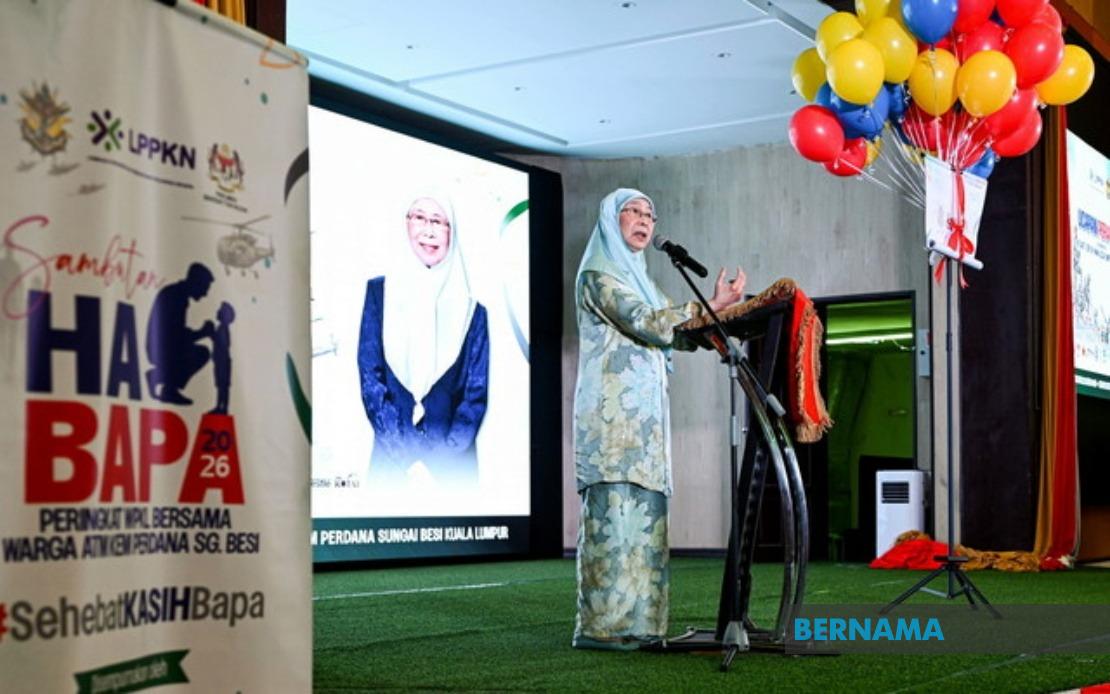
The importance of recognising and supporting fathers within Malaysia's military establishment took centre stage when Datuk Seri Dr Wan Azizah Wan Ismail, wife of the Prime Minister and Bandar Tun Razak Member of Parliament, delivered remarks at the 2026 Federal Territory of Kuala Lumpur Father's Day Celebration with Malaysian Armed Forces (MAF) personnel. Her comments underscore growing recognition within government circles that the unique pressures faced by military families warrant dedicated policy interventions and institutional support frameworks.
Dr Wan Azizah articulated a vision in which fathers serving in uniform receive comprehensive empowerment initiatives, particularly given the exceptional demands placed upon them by their commitment to national defence. The military context adds distinctive layers of complexity to fatherhood—extended deployments, operational uncertainties, and the physical and psychological toll of service often mean that fathers miss critical moments in their children's development and struggle to maintain consistent family presence. Her remarks suggest that tackling these challenges represents not merely a welfare concern but a strategic investment in military readiness and personnel retention.
Central to her argument was the role that targeted family policies can play in mitigating these strains. The National Family Compassion Policy (DKKN) emerged as a key mechanism through which the government aims to equip military fathers with the practical resources and guidance necessary to discharge their parental responsibilities despite geographic separation and time constraints. By framing family support as integral to military personnel management, Dr Wan Azizah positioned the state as having a vested interest in the personal wellbeing of serving members and their households.
Beyond immediate welfare considerations, Dr Wan Azizah stressed the broader institutional dimensions of supporting military fathers. Strengthening the family unit through enhanced paternal support serves structural purposes within Malaysian society—reinforcing traditional family hierarchies while acknowledging modern realities of dual-career households and the changing nature of masculinity and fatherhood. Her emphasis on fathers as "leaders in the family" reflects a particular philosophical approach to gender roles and family organisation that the government actively promotes through its various agencies and initiatives.
The National Population and Family Development Board (LPPKN) has developed several concrete programmes aimed at realising this vision. The Fatherhood Module, which emphasises practical parenting competencies and childcare knowledge, represents an attempt to professionalise fatherhood by treating it as a learnable skill set. Alongside this sits the Men Empowerment Network (MEN), which presumably facilitates peer support, knowledge-sharing, and collective problem-solving among male service members navigating the intersection of military careers and family responsibilities. These initiatives reflect an evolution in government thinking—moving beyond passive acceptance of military family hardship toward proactive intervention.
The scale of the Father's Day celebration itself—drawing approximately 500 participants including military fathers, their spouses, and children, along with representatives from multiple government agencies—demonstrates institutional commitment to this agenda. The event's theme, "Sehebat KASIH Bapa" (roughly, "As Strong as Father's Love"), encapsulates an emotional and aspirational dimension to the policy framework, suggesting that these initiatives aim to cultivate not just practical skills but also psychological resilience and emotional awareness among military personnel.
For Malaysia's military establishment, such programmes address a longstanding recruitment and retention challenge. Personnel burnout, family dissolution, and psychological strain represent significant costs to military effectiveness. By investing in family support infrastructure, the MAF and government agencies aim to create conditions under which service members can sustain their careers while maintaining functional family relationships. This is particularly relevant in an era when skilled personnel are increasingly mobile and when the opportunity costs of military service—foregone civilian careers, educational advancement, geographic relocation—weigh heavily on decision-making.
The emphasis on paternal roles also reflects broader demographic and social trends affecting Malaysia. As women's participation in the workforce increases and educational attainment widens, traditional divisions of domestic labour have shifted. Military families, which often depend entirely on service member incomes and face geographic constraints, experience these pressures acutely. Policies that recognise fathers' evolving responsibilities rather than reinforcing outdated assumptions about male absence from childcare represent a pragmatic adjustment to contemporary realities.
From a regional perspective, Malaysia's approach to military family support sits within broader Southeast Asian trends toward recognising personnel welfare as a strategic priority. Neighbouring militaries and defence establishments increasingly recognise that force effectiveness depends not solely on equipment and training but on the personal stability and psychological wellbeing of service members. Family-focused policies have become standard components of modern military human resource management across the region.
However, questions remain about implementation fidelity and resource allocation. Whether programmes such as the Fatherhood Module and Men Empowerment Network reach all eligible personnel, particularly those in lower ranks or remote postings, remains unclear. The effectiveness of these initiatives in actually reducing family instability or improving military retention rates requires rigorous evaluation, though such data is rarely made public.
Dr Wan Azizah's remarks ultimately reflect an understanding that supporting military fathers serves multiple objectives simultaneously—enhancing individual and family wellbeing, strengthening institutional effectiveness, reinforcing particular visions of family and gender roles, and demonstrating government responsiveness to service member concerns. Whether these multifaceted ambitions can be reconciled through existing and emerging programmes will shape the military personnel landscape in coming years.

