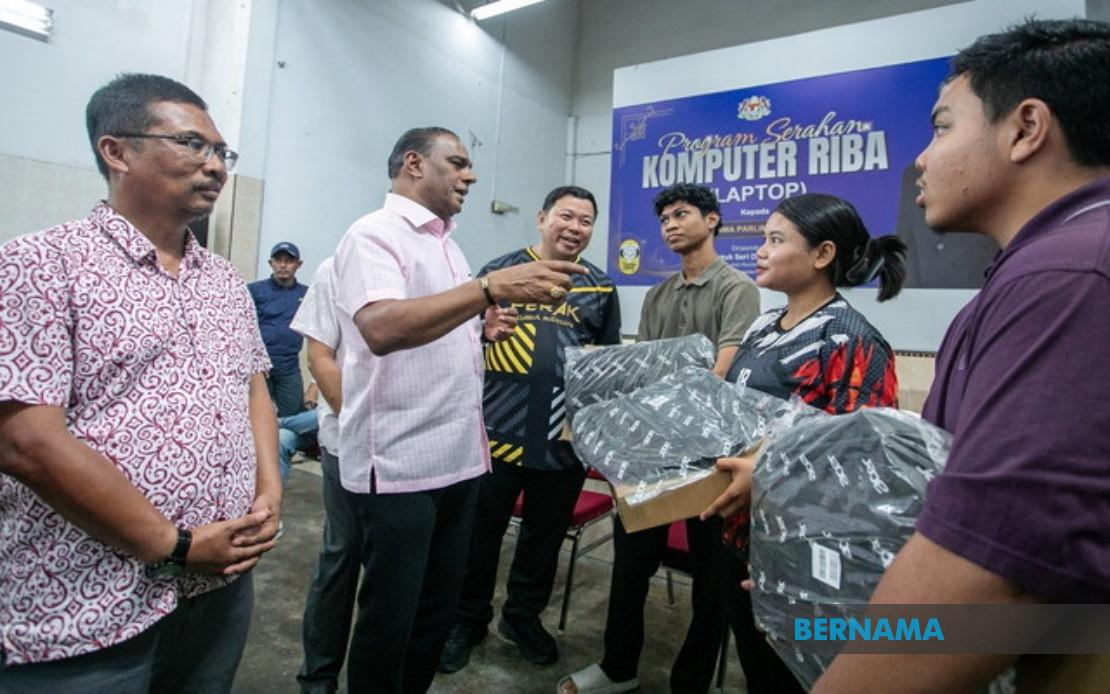
The Malaysian Indian Congress has committed to defending its sole parliamentary representation in the forthcoming Melaka state election, though party leadership is simultaneously exploring the possibility of broadening its electoral footprint across additional constituencies in the state. Datuk Seri M. Saravanan, who serves as deputy president of the historically significant Indian-based political party, disclosed this development during a public event in Tapah, signalling that MIC's strategic calculus for the upcoming polls extends beyond simply holding ground on existing political terrain.
Saravanan's remarks indicate that MIC's deliberations surrounding potential seat expansion remain in a preliminary stage, with no final determination yet reached on which constituencies might merit the party's candidate representation. The party's assessment process involves a multifaceted evaluation framework that extends well beyond mere seat availability. Leadership is carefully weighing the demographic composition and electoral viability of candidate constituencies, the calibre and credibility of potential contenders willing to carry the MIC banner, and realistic appraisals of victory prospects in different areas across the state.
The party president, Tan Sri S A Vigneswaran, is currently engaged in a comprehensive review of prospective candidates suitable for fielding in the election, with organisational sources suggesting that concrete decisions on the party's candidacy will emerge in the near term. This vetting process underscores MIC's recognition that electoral success depends not merely on choosing constituencies with favourable demographics, but equally on securing individuals with genuine grassroots resonance and demonstrated capacity to mobilise voter support.
Meanwhile, MIC has initiated groundwork preparations that reflect standard election machinery protocols. The party is investing significant effort in voter identification exercises, with particular emphasis on consolidating support among its established base of supporters across Melaka. Beyond mere voter enumeration, MIC is conducting issues analysis to identify which policy concerns and local grievances are likely to resonate during campaigning, allowing the party to develop messaging that speaks directly to constituent concerns and demonstrates the organisation's awareness of lived reality in the state.
MIC's current positioning in Melaka derives from its successful performance in the 2021 state election, when the party competed under the Barisan Nasional coalition framework. In that contest, MIC candidate VP Shanmugam captured the Gadek seat with a notably narrow victory margin of just 559 votes in a competitive six-way race. This slender majority underscores both the competitive nature of the constituency and the fragility of MIC's position there, suggesting that retaining this seat will require sustained organisational effort and voter engagement rather than assumption of automatic victory.
For Malaysian readers, MIC's deliberations carry significance beyond mere internal party mechanics. As a component of Barisan Nasional and a longstanding representative of the Indian Malaysian community within the broader political framework, the party's electoral strategy reflects broader patterns in how ethnically-focused political organisations are adapting to contemporary electoral dynamics. The Indian Malaysian community represents approximately seven percent of the national population but has historically wielded disproportionate political influence through MIC's positioning within BN structures.
The party's cautious approach to seat expansion rather than aggressive expansion reflects pragmatic realism about current political circumstances. Rather than embarking on an expansionist strategy that might stretch organisational resources thin or alienate coalition partners, MIC appears focused on consolidation and strategic growth where organisational strength genuinely exists. This measured stance suggests maturity in political calculation, acknowledging that sustainable electoral gains depend on quality rather than quantity of contested seats.
Melaka's electoral dynamics have shifted considerably since 2021, with various political realignments occurring at both national and state levels. The state itself has experienced transitions in governance and coalition configurations that complicate straightforward continuity assumptions. MIC's decision to undertake thorough assessment rather than proceeding hastily reflects appropriate caution given these shifting circumstances. The party recognises that previous electoral victories offer no guarantee of future success absent adaptive strategy and committed ground organisation.
The timing of Saravanan's announcement, occurring during his attendance at a parliamentary students laptop programme, also merits consideration. While the event itself focused on educational initiatives for constituents in Tapah, the deployment of the occasion for political announcements illustrates how Malaysian political figures utilise public events as platforms for advancing party messaging. This reflects the integrated nature of governance communication and electoral positioning in Malaysia's political culture.
For observers of Malaysian electoral trends, MIC's trajectory warrants monitoring as an indicator of how established communal parties are repositioning themselves within Malaysia's evolving political landscape. The party faces the perennial challenge of maintaining relevance to younger Indian Malaysian voters while navigating coalition dynamics with larger political organisations. Its Melaka strategy—focused yet deliberate, consolidated yet expansionist—reflects an organisation attempting to balance organisational reality with aspiration for growth.

