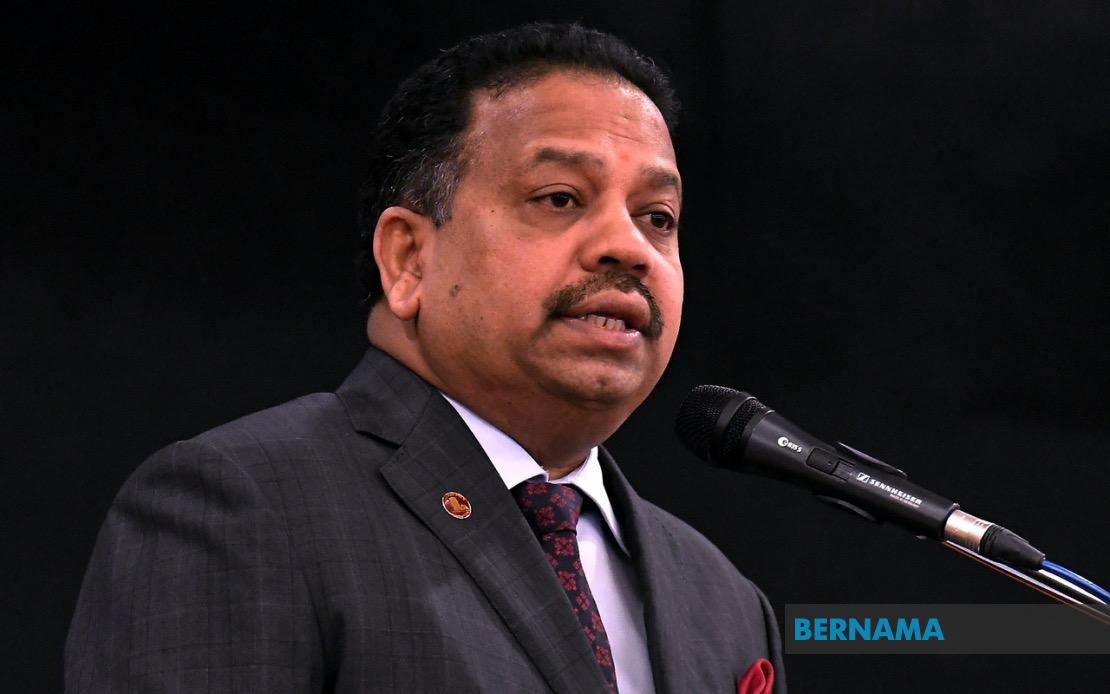
The Malaysian Indian Congress entered the Johor state election with an air of optimism about its prospects among the Indian electorate, with party president Tan Sri S.A. Vigneswaran declaring that community support for Barisan Nasional candidates would remain solid. Speaking at a press conference in Kulai on the eve of polling day, Vigneswaran grounded his confidence in what he characterised as a track record of productive engagement between MIC and both the federal administration and Johor's state government on matters affecting the Indian population.
The foundation of this optimism, according to the MIC leader, rested on the party's ability to work constructively with government institutions to address grievances and find practical remedies for challenges facing Indian Malaysians. He framed the choice before voters as one between representatives capable of partnering with the state government to deliver tangible solutions, versus those who might offer merely rhetorical opposition without capacity to effect change.
MIC's campaign strategy reflected a deliberate choice to occupy the middle ground in political discourse. Rather than engaging in personal attacks on rival candidates, the party focused its messaging on concrete policy proposals and remedies for community concerns. This measured approach, Vigneswaran suggested, demonstrated political maturity and a genuine commitment to problem-solving rather than scoring points through controversy.
The party's electoral footprint in the 16th Johor state election comprised four candidates distributed across different constituencies. K. Raven Kumar contested the Kemelah state assembly seat, while V. Rugendran pursued the Kahang position. P. Pannir Selvam represented MIC's interests in Perling, and R. Kumaran sought election in Bukit Batu. This spread of candidates across the state reflected MIC's effort to maintain relevance in multiple communities and demonstrate that the party remained an integral component of the Barisan coalition rather than a peripheral player.
The MIC president's remarks came amid renewed scrutiny of the party's financial relationships with government institutions. A Tamil-language news portal had published claims asserting that MIC had received government allocations amounting to RM221 million, a figure that Vigneswaran categorically rejected as inaccurate and potentially damaging to the party's reputation. Rather than dismiss the allegation as mere political noise, he took the unusual step of providing detailed justification for government support flowing to institutions associated with MIC.
According to Vigneswaran's explanation, the government assistance in question comprised annual grants directed toward AIMST University, an institution operating under a non-profit foundation structure rather than serving as a direct MIC asset. The grants, he clarified, were designed to support the university's infrastructure maintenance and reduce operational burdens that might otherwise be passed on to students through higher fees. This characterisation attempted to reframe the funding not as political patronage but as a legitimate government investment in higher education access for disadvantaged communities.
The trajectory of government support for the university reflected changing political circumstances at the national level. Since Datuk Seri Anwar Ibrahim assumed office as Prime Minister in 2023, annual allocations to the institution had been set at RM25 million, a figure maintained in the current fiscal year. Vigneswaran emphasised that these resources underwent rigorous financial audit and were deployed for verifiable purposes including dormitory upgrades, installation of renewable energy systems, and cost reduction measures that benefited the student population.
The MIC president's willingness to provide such granular detail about fund allocation suggested an acute awareness that accusations regarding government money and party finances carried particular resonance in the contemporary political environment. By demonstrating the paper trail of audited expenditures and explaining the social benefits flowing from the grants, he attempted to convert what opponents presented as evidence of entanglement into proof of legitimate institutional stewardship. The emphasis on student fees and financial accessibility also connected the funding to the everyday concerns of Indian Malaysian families considering higher education options for their children.
Facing what he deemed defamatory reporting, Vigneswaran indicated that MIC had engaged its legal team to pursue remedial action. The party's lawyers received instructions to dispatch a letter of demand to the news portal, requesting both a formal correction of the reported figures and a complete withdrawal of the allegations. This legal approach represented an escalation beyond the realm of political rebuttal into the domain of reputation protection, signalling that MIC regarded the matter as serious enough to warrant formal legal process.
The simultaneous pursuit of legal remedies and the detailed public explanation reflected a two-pronged strategy for managing the controversy. Where legal action addressed the formal record and provided a mechanism for correction, the public clarification aimed at shaping the narrative in real-time before voters made their electoral choices. For Indian Malaysian voters weighing their options in the Johor election, these competing narratives about financial relationships and institutional governance formed part of the broader context informing their assessment of whether MIC remained an effective vehicle for community representation within the Barisan framework.
Vigneswaran's campaign messaging ultimately hinged on a proposition that Indian voters faced a choice between a party embedded within the structures of power with demonstrated capacity to deliver incremental improvements to community welfare, versus alternatives that might offer more strident rhetoric but fewer mechanisms for translating demands into governmental action. Whether this argument would prove persuasive to an electorate potentially sceptical of established political arrangements remained an open question as polling commenced.

