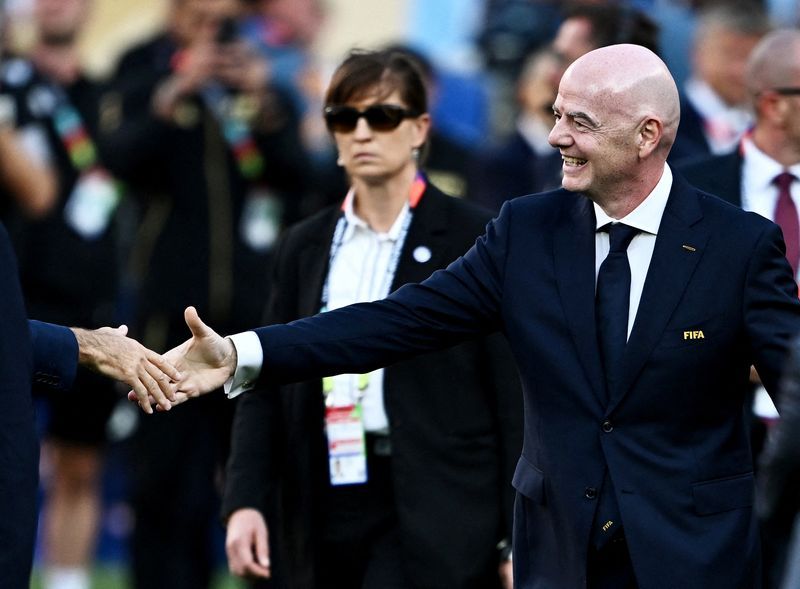
FIFA President Gianni Infantino's grip on his position faces an unprecedented challenge, but the world football body is demonstrating surprising resilience through backing from major football nations. Mexico and Argentina have publicly endorsed Infantino's leadership this week, providing crucial political support as he navigates the fallout from his now-shelved proposal to commercialise portions of World Cup broadcasting and marketing rights. The endorsements underscore a fractured global response to the FIFA chief's handling of the controversial scheme, which triggered a rare unified backlash from continental confederations and sparked calls for his removal.
Mexico's Football Federation has positioned itself at odds with its own regional confederation, CONCACAF, by voicing support for Infantino even as the North American confederation demanded a "comprehensive reckoning" with his presidency. This split reflects the complex political calculus within football's governance structures, where national associations must balance regional loyalties against broader institutional considerations. The FMF's statement emphasised that any challenge to Infantino's leadership must follow established procedures involving all 211 FIFA member associations, effectively raising the procedural bar for any organised opposition.
Argentina's Football Association took a more measured but similarly supportive approach, acknowledging in a letter to Infantino that the commercial proposal had generated "far more uncertainties than certainties" and that mistakes had occurred. However, the AFA framed these missteps as process failures rather than fundamental governance violations, arguing that the appropriate path forward lay in continuing under FIFA's existing institutional framework heading toward next year's Congress in Morocco. This distinction matters considerably for Infantino's prospects, as it allows member associations to express concern about implementation while maintaining confidence in his overall direction.
The geography of support and opposition reveals deepening fractures along continental lines. The Confederation of African Football unanimously backed Infantino on Thursday, providing solid backing from a bloc that controls substantial voting power at FIFA congresses. However, Europe's football governing body UEFA reaffirmed its commitment to boycotting FIFA competitions, a dramatic stance that reflects the continent's broader institutional concerns. Asia's confederation declared solidarity with UEFA and CONCACAF, positioning themselves within an emerging opposition coalition, though this stance has not translated into individual Asian nations withdrawing support from Infantino.
South America's CONMEBOL confederation, through which Argentina exercises significant influence, rejected any attempt to remove Infantino outside formal voting procedures. This institutional conservatism from CONMEBOL—which governs the world's most successful football region—provides a substantial check on any removal effort, as such action would require support from a supermajority of FIFA's membership. CONMEBOL's statement also raised concerns about Infantino's "repeated unilateral actions" and insufficient dialogue with confederations, suggesting that while backing the president, regional leaders expect greater consultation on future decisions affecting world football.
The controversy surrounding Infantino's commercial proposal stems from his attempt to restructure World Cup revenue streams without adequately consulting confederations, a departure from the institutional dialogue norms that FIFA formally introduced over a decade ago. Following meetings in Rabat this week, FIFA issued an apology for errors in how the proposal was handled, distinguishing between mistakes in process and communication versus breaches of governance rules. This framing reflects FIFA's legalistic approach to the crisis, suggesting that institutional procedures were technically followed even if implementation fell short of stakeholder expectations.
Infantino's reelection bid for a fourth term in March appeared assured several months ago, but the commercial rights proposal has created genuine uncertainty about his political standing. Unlike previous FIFA leadership elections where the outcome seemed predetermined, this contest has mobilised opposition constituencies that rarely organise collectively. Croatian Football Federation's withdrawal of support, alongside earlier withdrawals from England and Albania, suggests that Europe's institutional discontent may materialise in actual votes rather than merely symbolic gestures.
The absence of a credible rival candidate remains a critical factor protecting Infantino's position. Despite widespread criticism, no major football nation has publicly nominated an alternative, indicating that potential challengers assess their electoral prospects as poor. This dynamic effectively forces disaffected confederations and nations to choose between accepting Infantino or risking internal FIFA conflict through a contested election with an uncertain outcome. For many associations, particularly in Africa and South America, maintaining institutional stability may outweigh the desire to demonstrate discontent.
Player unions have proved less restrained in their criticism. FIFPRO characterised Infantino's commercial proposal as a "profound abuse of presidential power," language suggesting that footballers' representatives view the episode as symptomatic of deeper governance pathologies. This player perspective introduces a stakeholder dimension beyond confederation politics, potentially influencing public discourse around FIFA's institutional legitimacy even if union positions do not directly affect voting outcomes.
For Malaysian and Southeast Asian football observers, this crisis illuminates fundamental questions about FIFA's governance model and regional confederations' ability to influence world football policy. AFC's alignment with UEFA and CONCACAF signals Asian football's investment in institutional reform and transparency standards, yet the continent's associations have demonstrated limited capacity to shape FIFA outcomes when major southern hemisphere blocs prioritise stability. The controversy also highlights how commercialisation pressures continue driving FIFA decision-making, suggesting that revenue disputes will likely recur regardless of Infantino's ultimate fate.
The institutional pathway forward remains unclear beyond the March Congress. FIFA's commitment to reviewing processes and improving dialogue with confederations may address some procedural grievances, but fundamental questions about presidential power concentration and stakeholder consultation in major commercial decisions persist. Whether Infantino's expected reelection occurs, his presidency has already suffered reputational damage that complicates future initiatives requiring broad confederation consensus. The episode demonstrates that even FIFA's historically centralised authority structure has limits when major football regions unite in opposition, even if that opposition ultimately proves insufficient to alter leadership outcomes.

