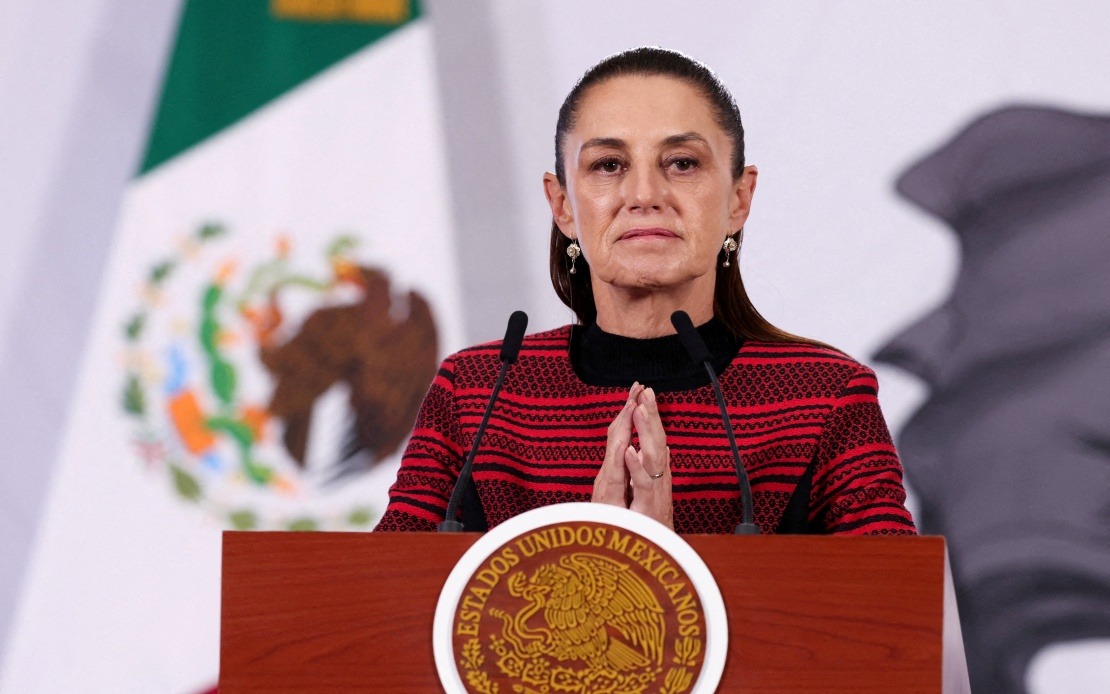
Mexican President Claudia Sheinbaum has accepted a direct invitation from United States President Donald Trump to attend the World Cup final, reversing her earlier decision to skip major tournament events in her own country. The invitation represents an unexpected diplomatic overture at a moment when bilateral relations between Mexico and the US remain strained over persistent disagreements on trade policies and cross-border security matters. The final, scheduled between Argentina and Spain in East Rutherford near New York, will draw attendance from top-tier political and royal figures from across the globe.
Sheinbaum announced the development to journalists on Friday, confirming that the invitation came directly from Trump himself. She disclosed that Canadian Prime Minister Mark Carney, representing the third co-host nation, will also be present at the final. The revelation underscores how the tournament, despite its primary sporting purpose, has become a platform for high-level diplomatic engagement among North American leaders during a period of considerable political friction.
The Mexican president's decision to attend stands in marked contrast to her earlier public stance. In June, Sheinbaum declined to participate in the World Cup opening ceremony held at Azteca Stadium in Mexico, a notably symbolic absence given that Mexico was serving as one of three co-hosts for the prestigious competition. Rather than viewing her ticket as a personal privilege, she gave it to an indigenous woman recognised for her passionate dedication to football, a gesture that emphasised her focus on inclusivity and cultural symbolism over ceremonial duties.
The geopolitical backdrop to this invitation warrants careful examination. Mexico and the United States have been locked in substantive disagreements regarding trade arrangements and approaches to security cooperation, creating a challenging diplomatic environment. These tensions had given little indication that either leadership would seek out high-profile public engagements. Trump and Sheinbaum have met in person on limited occasions—their previous encounter occurred in December at the World Cup draw ceremony in Washington, suggesting their relationship remains relatively formal despite holding the two most powerful political positions in North America.
Logistical adjustments have been made to accommodate Sheinbaum's attendance. Mexican media outlets reported that the presidential schedule originally planned for activities in the state of Quintana Roo was modified to enable her travel to the World Cup final. This schedule change demonstrates the significance both the Mexican government and the Trump administration appear to place on the symbolic value of their joint attendance at the event.
The tournament is drawing an array of distinguished guests from multiple nations. Spain's royal delegation, including King Felipe VI, Queen Letizia, Crown Princess Leonor, and Infanta Sofía, will be present in the stadium to support the Spanish team. This concentration of high-ranking officials and royalty at a single sporting event reflects the World Cup's status as more than merely an athletic competition—it serves as a gathering point for global leadership during moments of geopolitical significance.
Argentina's President Javier Milei has chosen not to attend the final in person, citing superstitious beliefs common in Argentine culture. This decision reflects how deeply embedded football is within the national identity and cultural practices of many Latin American nations, where sporting outcomes carry profound emotional and sometimes spiritual weight for both citizens and leaders alike.
For Malaysian and Southeast Asian observers, this diplomatic engagement carries broader implications. The World Cup's positioning as a venue for high-level bilateral meetings between leaders demonstrates how international sporting events can serve as catalysts for dialogue during periods of tension. The commitment from both Trump and Sheinbaum to appear together at the final, despite their governments' current disagreements, suggests a willingness to maintain some level of cooperative engagement even amid substantive policy disputes—a pattern that mirrors similar dynamics in regional diplomacy across Southeast Asia.
The invitation also raises questions about the future trajectory of Mexico-US relations. Whether this event signals a potential thaw in bilateral tensions or represents merely a ceremonial gesture remains to be seen. The appearance of both leaders at the World Cup final could provide an informal setting for candid discussions away from the formal negotiation table, potentially opening pathways for progress on trade and security matters that have troubled both capitals.
For Mexico specifically, Sheinbaum's attendance at the final—whether viewed as a personal decision or a calculated diplomatic move—represents a recalibration of her relationship with both the tournament and with the United States. Her initial preference to skip the opening ceremony in favour of highlighting indigenous representation has given way to a more direct engagement with the presidential pageantry surrounding the championship match. This shift reflects the complex balancing act facing Mexican leadership in managing relations with its powerful northern neighbour while maintaining domestic political credibility.

