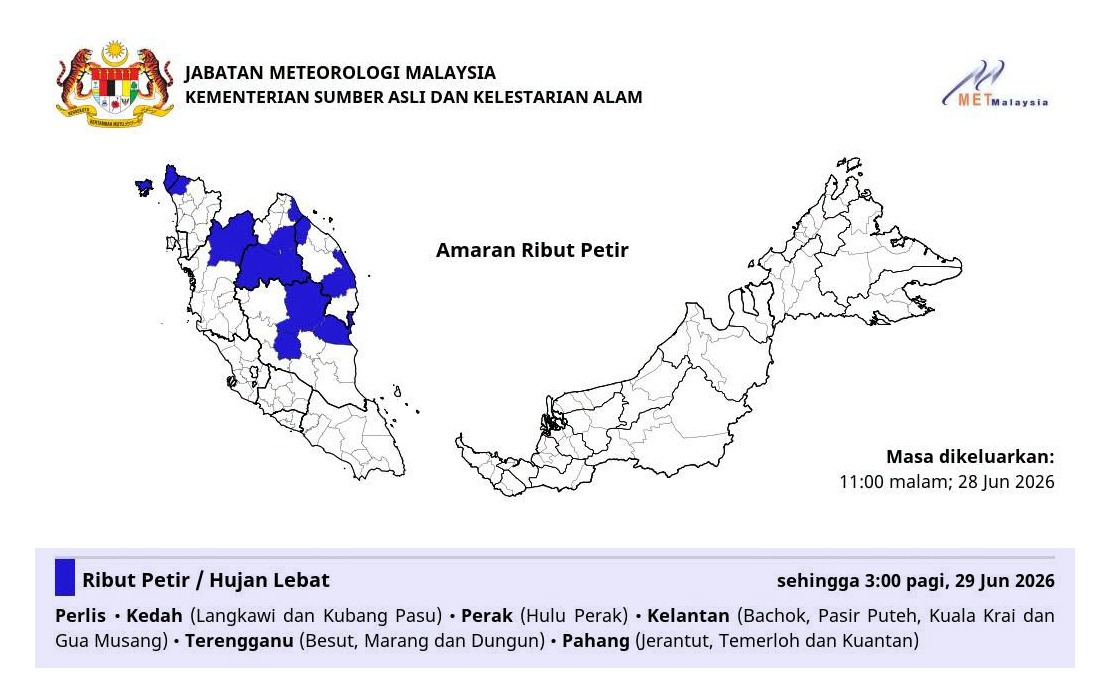
The Malaysian Meteorological Department has alerted residents across a broad swathe of the country to prepare for dangerous weather conditions, with thunderstorm warnings extending through the early hours of the following day. The alert encompasses six states where residents should exercise heightened caution and remain indoors where possible during the forecast period.
Perlis faces the full brunt of the expected system, with the entire state placed under alert status. In Kedah, the warning is more geographically concentrated, affecting specifically the island district of Langkawi and the mainland area of Kubang Pasu, both of which are prone to flooding during heavy rainfall events. These two zones have experienced significant weather disruptions in previous years, making the current alert particularly significant for residents and businesses operating in these regions.
The interior regions of the northern peninsula also feature prominently in the warning. Hulu Perak, which encompasses the state's mountainous and sparsely populated interior, has been identified as vulnerable. This inland territory's topography makes it susceptible to flash flooding during intense precipitation, and residents in these remote areas often face communication challenges during severe weather events that can hamper emergency response efforts.
The east coast of Peninsular Malaysia bears the greatest concentration of alert zones. Four districts across Kelantan have been flagged: Bachok, Pasir Puteh, Kuala Krai and Gua Musang. These areas, particularly those along the coast and in the interior highlands, frequently bear the brunt of monsoon systems and tropical weather patterns that develop offshore. The inclusion of Gua Musang, located in the state's interior, suggests that the system is expected to produce significant rainfall across elevation changes.
Terengganu's three identified zones—Besut in the north, Marang in the centre, and Dungun in the south—paint a picture of state-wide vulnerability. The warning's geographic spread indicates that the weather system possesses considerable lateral extent, likely driven by monsoon conditions or a tropical depression developing in regional waters. Besut's positioning on the northern coast makes it particularly exposed to wind and surge effects accompanying severe thunderstorms.
Pahang's three affected districts represent the southern portion of the east coast alert zone. Jerantut, nestled inland near the Tembeling River system, faces flood risk from rapid runoff during heavy downpours. Temerloh, straddling the Pahang River and serving as the state's main transport hub, could experience traffic disruptions and infrastructure impacts. Kuantan, as the state capital and major port city, is economically significant, and any disruption to its operations carries wider regional implications for commerce and supply chains.
The timing of the warning through 3 am represents a critical overnight period when visibility is reduced and emergency response becomes more challenging. Residents in affected areas should secure loose outdoor items, ensure drainage systems are clear, and avoid unnecessary travel during peak rainfall periods. Motorists should exercise particular caution, as road visibility deteriorates sharply during thunderstorms and water accumulation on roads creates hazardous driving conditions.
For those living and working in these regions, the warning carries practical implications beyond the immediate weather event. Farmers and agricultural workers may experience crop damage or field flooding. Small businesses dependent on daily trade may see customer numbers decline during severe weather. Students and workers commuting to educational or employment centers may face transportation delays, potentially affecting productivity across these economically important regions.
The east coast's vulnerability to seasonal weather patterns means that residents in Kelantan, Terengganu and Pahang are well-accustomed to such warnings. However, familiarity should not breed complacency. Flash flooding has claimed lives in these regions in previous years, and respecting meteorological warnings remains essential for public safety. The Malaysian Meteorological Department's specificity in identifying particular districts rather than issuing blanket state warnings demonstrates an increasingly granular approach to public alert systems.
For emergency management authorities operating across these states, the alert triggers standard protocols including positioning of rescue personnel, stockpiling of medical supplies, and coordination with hospital facilities. Local government bodies typically activate their disaster management committees and ensure that vulnerable populations, including the elderly and disabled, have adequate support and communication channels during severe weather events.
The broader pattern of warnings across both peninsular coasts simultaneously suggests a significant weather system, possibly drawing moisture from the South China Sea and driven by seasonal wind patterns. Such systems can produce localized wind speeds exceeding 60 kilometres per hour, rainfall rates surpassing 50 millimetres per hour, and lightning activity that poses direct hazards to outdoor workers and residents. The overnight timing compounds these risks, as darkness reduces the ability of individuals to identify and avoid hazardous situations.

