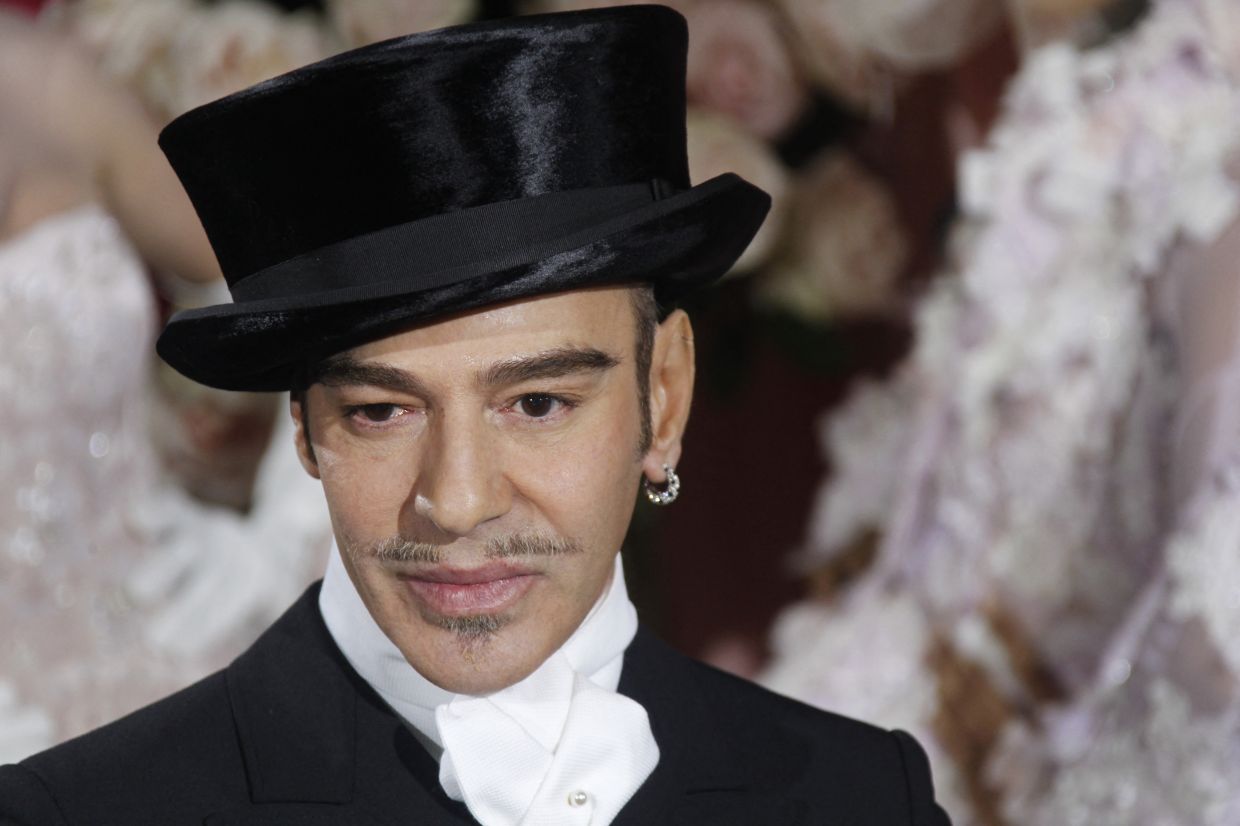
The Metropolitan Museum of Art has announced an ambitious and ethically complex decision: next May's Met Gala will celebrate the fashion legacy of John Galliano, a British designer whose extraordinary creative vision made him one of fashion's most celebrated figures before a personal downfall forced a reckoning with both his artistic legacy and moral accountability. The choice underscores an evolving conversation in the fashion world about how institutions should address the work of talented creatives whose conduct has caused documented harm.
Galliano's trajectory embodies the contradictions that have become increasingly difficult for the fashion establishment to ignore. For nearly 15 years, he served as creative director at Christian Dior, a position representing the apex of global fashion authority. His tenure produced some of the house's most memorable collections, and his work became synonymous with theatrical elegance and meticulous craftsmanship. Yet this ascension ended abruptly when a series of antisemitic and racist remarks made between 2010 and 2011 surfaced publicly. Video evidence of him making deeply offensive statements, including antisemitic remarks, circulated widely online, triggering a swift and dramatic professional collapse. A Paris court subsequently convicted him under French law prohibiting public insults based on race, religion, ethnicity, or national origin.
The designer's removal from Dior represented a watershed moment in fashion accountability. However, what followed was neither permanent exile nor a straightforward redemption narrative. Galliano invested years in both private rehabilitation efforts and public acknowledgment of his conduct. In 2014, Maison Margiela, the avant-garde Paris fashion house, took the calculated risk of hiring him as creative director—a decision that proved commercially and critically successful. For the following decade, he contributed significantly to the house's reputation for innovation and experimental design, suggesting that professional rehabilitation was possible but required sustained commitment to change.
By selecting Galliano for a solo exhibition at the Costume Institute, the Metropolitan Museum joins a select group of decisions to honor his creative contributions. He becomes only the third living designer to receive this distinction, a rarity that typically reserves such honors for figures whose legacies are largely uncontroversial or already firmly established. This choice deliberately positions the museum as willing to engage with complicated artistic legacies, rather than consigning problematic figures to historical silence or treating their work as culturally untouchable.
The museum has been transparent about the ethical complexity it faces. In a statement released on Friday, July 31, curators explicitly acknowledged that the exhibition "will not shy away from the problematic aspects of Galliano's history." Andrew Bolton, the Costume Institute's lead curator, framed the show as an examination of "how artistic achievement should be understood alongside ethical accountability." This framing suggests the museum intends the exhibition to function partly as a public education project, exploring what society owes to artists who have caused harm and what processes of genuine accountability and growth might entail.
Preparing the exhibition required extensive consultations with Jewish community leaders in New York, reflecting sensitivity to the nature of Galliano's offenses and recognition that those most affected by antisemitic speech deserved voice in how the exhibition would proceed. These conversations included senior figures such as curator Andrew Bolton, Galliano himself, and Anna Wintour, the influential editor of Vogue, indicating the seriousness with which the institution approached community concerns. Such engagement represents a departure from traditional museum practice, which rarely involves affected communities in exhibition planning regarding controversial figures.
The three-part structure of the exhibition reveals the curatorial strategy for presenting this complicated narrative. The first section, titled "Bearings," directly confronts the rupture created by Galliano's conduct. This portion will contextualize his dismissals from both Christian Dior and his eponymous label, address his struggle with substance addiction and subsequent treatment, and examine his public acknowledgment of wrongdoing. Rather than burying this history in exhibition materials, it becomes the first encounter visitors will have with his work—a structural choice that privileges ethical reckoning over commercial celebration.
The second section, "Horizons," shifts focus to Galliano's creative sources and intellectual foundations. This portion will explore how history, geography, art, storytelling, and performance have influenced his design philosophy. By examining his inspirations, the exhibition invites visitors to understand Galliano as a designer shaped by sophisticated cultural engagement rather than viewing him as a one-dimensional figure defined solely by his offenses. This section allows for the complexity that nuanced human beings embody—that someone can be both intellectually curious and capable of causing harm, and that understanding the former does not negate the latter.
The final component, "Atlas Of Transformation," focuses on Galliano's technical mastery and experimental approach to fashion design. This section celebrates his craftsmanship, innovation, and willingness to challenge conventional design boundaries. By structuring the exhibition to move from accountability to inspiration to technical excellence, the curators create a narrative arc suggesting that artists might be rehabilitated through genuine engagement with their wrongdoing, not despite it. However, this structure also risks suggesting a progression toward redemption that may feel premature or incomplete to those most harmed by his actions.
The May 2024 Met Gala itself will provide theater of its own. As the red carpet event that traditionally launches the Costume Institute's annual exhibition, the gala attracts international attention and represents fashion's most visible celebration of creativity. Watching celebrities and industry figures navigate the red carpet while wearing designs influenced by or reminiscent of Galliano's aesthetic will inevitably provoke public discourse about forgiveness, accountability, and whether artistic achievement can be separated from personal conduct. The visual spectacle will simultaneously broadcast the exhibition's celebration of his work and the ongoing tensions surrounding it.
For Malaysian and Southeast Asian audiences, this exhibition raises questions relevant to the region's own conversations about public figures, redemption, and institutional responsibility. As the fashion industry continues to reckon with issues of diversity, representation, and accountability, decisions like this one at the Metropolitan Museum signal that complexity rather than simplicity increasingly defines how cultural institutions address contested legacies. Whether Galliano's case ultimately serves as a model for how institutions can engage thoughtfully with complicated histories, or conversely as an example of how commercial and artistic considerations can overwhelm ethical concerns, remains to be seen when the exhibition opens next May.

