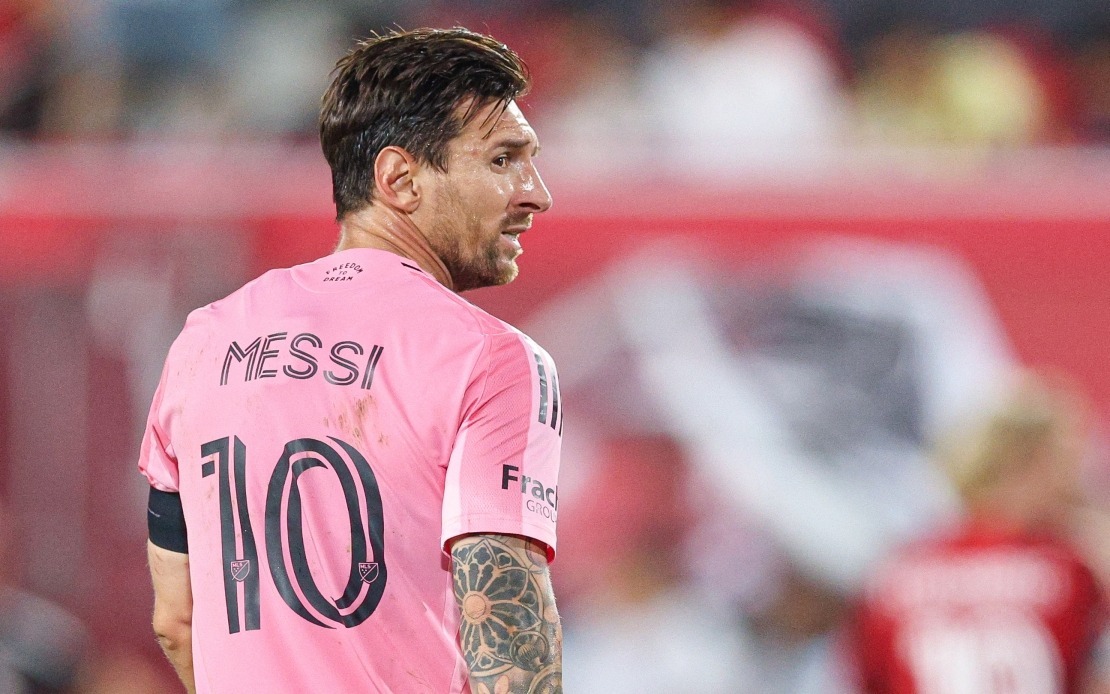
Lionel Messi stepped back onto the pitch for Inter Miami on Wednesday in what marked an emotionally significant moment for the football world, coming less than a week after the death of his father Jorge. The Argentina captain entered the match against Leon as a half-time substitute in the Leagues Cup's final group stage game, which ended in a 3-2 defeat for the MLS club. His participation represented a determined effort to return to the sport despite the personal tragedy and his own public expressions of doubt about continuing his career.
The loss of Jorge, who had been instrumental in Messi's life and career for decades, has cast a shadow over recent weeks. Jorge served as his son's agent from the time Lionel was just 14 years old, guiding him through the formative years that eventually established him as one of sport's finest talents. Beyond the professional sphere, Jorge was present for all of Messi's greatest achievements, including his pivotal role as captain when Argentina won the FIFA World Cup in Qatar in 2022. The father-son bond extended far beyond typical agent-client relationships, making this loss profoundly personal.
Messi had already missed Inter Miami's previous fixture, a 2-1 defeat to Monterrey on Saturday, as he attended a private funeral service held at a cemetery in Perez, a town located near his hometown of Rosario in Argentina. The decision to sit out that match underscored the immediate impact of his father's death on his mental and emotional state. In the interim period, Messi shared a deeply personal statement on social media that revealed the depth of his grief and uncertainty about his future. The post conveyed raw emotion, with phrases such as "You were by my side from the beginning" and "I don't know what I'm going to do without you," capturing the magnitude of his loss.
Perhaps most striking was Messi's candid admission about his career prospects. He wrote that he no longer felt certain whether he would continue playing football at all, stating plainly: "I used to just play football, and now I'm really not sure if I'll carry on doing it for much longer." This public contemplation of retirement represented a watershed moment for a player who has defined professional football for the better part of two decades. The uncertainty he expressed appeared genuine and unguarded, suggesting that without his father's presence and guidance, the motivation and meaning he derived from the game had shifted fundamentally.
According to Messi's statement, Jorge had played a crucial role in encouraging him to pursue one final World Cup opportunity despite his deteriorating health. That tournament took place this summer, when Argentina reached the final but fell to Spain 1-0 in extra time. The fact that Jorge had urged his son to play in that competition, even as his own condition worsened, underscores the sacrificial nature of their relationship. Jorge's push for Messi to achieve that final World Cup appearance now carries added poignancy, as it was one of the last major requests the father made of his son.
Messi's decision to play on Wednesday, just three days after the funeral, surprised many observers given his recent statements. His appearance as a half-time substitute suggested that being in action might offer some measure of solace or purpose during an extraordinarily difficult time. For athletes accustomed to processing their emotions through their sport, returning to the field can sometimes provide a necessary outlet and sense of normalcy amidst chaos.
Inter Miami manager Guillermo Hoyos offered thoughtful commentary on the situation, drawing parallels to his own experience of losing a father. Hoyos acknowledged that grief of this magnitude "takes a long time" to process and that losing one's father represents "a big blow in a man's life." He emphasized the particular weight of the loss for someone of Messi's stature, describing both the player and his family as "extraordinary," and noting how profoundly the absence of a guiding figure can affect even the most accomplished individuals. Hoyos's remarks conveyed genuine empathy and recognition that no amount of sporting success insulates a person from the fundamental pain of losing a parent.
Opposition coach Javier Gandolfi from Leon also spoke respectfully about Messi's display, positioning the moment within the broader context of his legacy. Gandolfi described Messi not simply as the greatest player in football history but also as a human being who conducts himself with exceptional character both on and off the pitch. By highlighting Messi's behavior and character alongside his technical abilities, Gandolfi's comments recognized that what Messi demonstrated on Wednesday transcended sport—it was a display of resilience and dignity during profound personal hardship.
The significance of Messi's return extends beyond Inter Miami or even the Leagues Cup fixture. For Malaysian and Southeast Asian football fans who have followed his career with passion, this moment encapsulates the universal human experience of grief intersecting with professional obligation. The question of whether Messi will continue playing remains unanswered, and understandably so. What is clear is that the certainty and clarity he once possessed about his future in football has been permanently altered by Jorge's passing. The coming weeks and months will likely prove decisive in determining whether Messi finds a way to reconcile his grief with his vocation, or whether his father's death marks a natural conclusion to an incomparable career.

