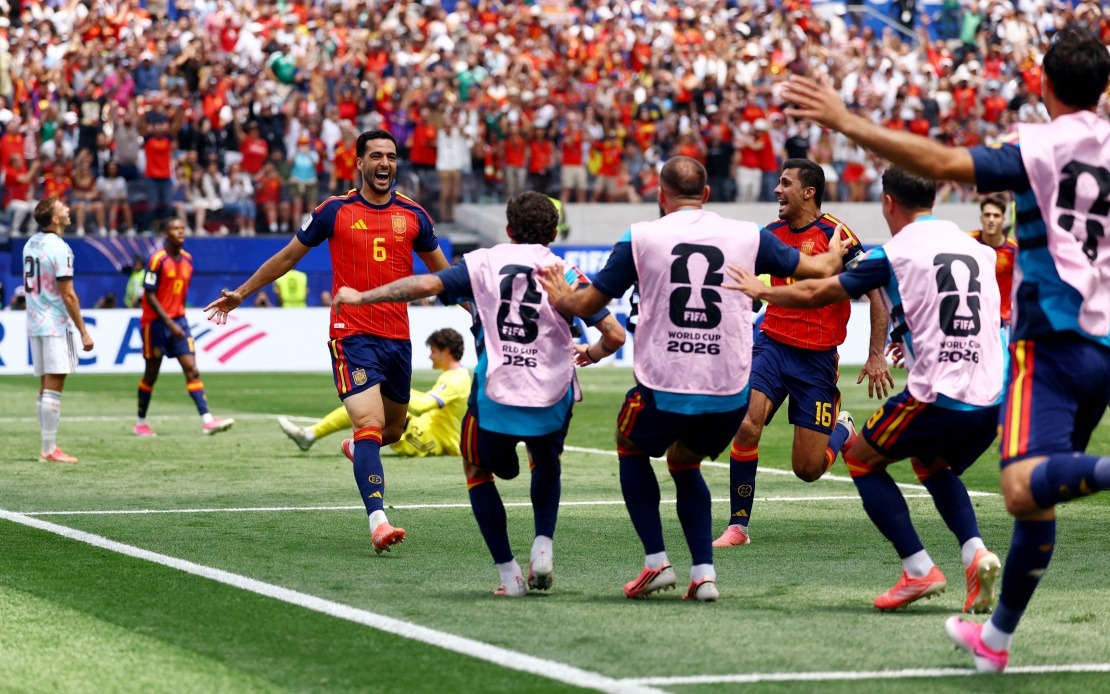
Spain secured their place in the World Cup semi-final with a dramatic 2-1 victory over Belgium in Inglewood, California, setting up an eagerly anticipated clash against France near Dallas on Tuesday. The decisive moment came from substitute Mikel Merino, who capitalised on a crucial mistake from Belgium's emergency goalkeeper in the 88th minute to send the European champions through to the next round.
Spain's pathway to this stage reflected their defensive solidity throughout the tournament. Goalkeeper Unai Simón had registered a remarkable run of 649 consecutive World Cup minutes without conceding a goal, a record that stretched across two tournament campaigns. However, that remarkable streak came to an end when Charles De Ketelaere pulled Belgium level in this quarter-final encounter, though Merino's late heroics ultimately restored Spain's advantage and kept their knockout journey alive.
Fabiรกn Ruiz had provided Spain with an early advantage, breaking the deadlock in the 30th minute to give his team control of the proceedings. The goal set the tone for a Spanish performance that showcased their technical superiority and creative attacking play throughout the match. Belgium's equaliser suggested they might mount a genuine challenge, but the Belgian side's injuries ultimately undermined their ability to mount sustained pressure against a well-organised Spanish setup.
Merino's crucial contribution mirrored his impact against Portugal in the previous round, where he similarly came off the bench to decide a knockout fixture. The Arsenal midfielder has emerged as a key asset in tight matches, combining tactical awareness with clinical finishing when opportunities arise. His ability to make immediate impacts upon entering the field has made him an invaluable resource for Spanish manager Luis de la Fuente in high-pressure situations.
Belgium's preparations for this quarter-final were severely compromised by injury concerns that mounted as the match approached. Captain Youri Tielemans withdrew during the warm-up with an apparent hamstring injury, compounding the absence of midfielder Amadou Onana, who had suffered a knee ligament tear earlier in the tournament. These missing players represented significant losses in terms of midfield experience and control, making Belgium's task considerably more difficult against accomplished Spanish opponents.
The situation deteriorated further for Belgium when goalkeeper Thibaut Courtois sustained an injury on the 71st minute and had to be replaced. This substitution introduced an unfamiliar figure to the Belgian goalkeeping position just when decisiveness and command of the penalty area were most critical. Reserve keeper Senne Lammens, drafted in from Manchester United's ranks, struggled to adapt to the intensity of the moment, ultimately contributing to the winning goal through his handling error.
Merino's winning moment came after Spain had made attacking changes, introducing Nico Williams to increase pressure on the Belgian defence. The combination of fresh attacking impetus and an increasingly vulnerable Belgian rear guard created the opportunity that decided the tie. When Lammens spilled a long-range effort from Pau Cubarsi, Merino reacted with the predatory instincts of an experienced forward, slotting the ball high into the net to seal Spain's progression.
The upcoming semi-final against France represents a meeting between two of international football's most successful nations. Spain's sole World Cup triumph came in 2010, a tournament that marked the apex of their golden era. France won the competition in 1998 and 2018, and reached the final four years ago when Argentina triumphed in Qatar. This semi-final will be a rematch of Euro 2024's semi-final stage, where Spain ultimately emerged victorious, suggesting La Roja possess the tactical tools and experience to trouble the French contingent.
France will enter this fixture as tournament favourites, but they have already confronted the realisation that Spain presents their most formidable challenge to date. The Spanish team's dominance in this quarter-final, despite Belgium's resilience, underscored their technical superiority and ability to control matches through superior ball retention and creative passing. The French squad, containing world-class attacking talent, must prepare for an opponent that combines defensive discipline with sophisticated attacking patterns that have proven difficult for previous adversaries to counteract.
For Malaysian and Southeast Asian observers, this semi-final matchup offers a compelling study in contrasting footballing philosophies. Spain's emphasis on possession-based football and intricate passing combinations represents a distinctly European approach that has evolved through domestic and continental competition. The encounter will showcase how such tactical frameworks function when confronted by France's blend of physicality, pace, and individual brilliance, making Tuesday's fixture essential viewing for anyone seeking to understand the current state of elite international football.

