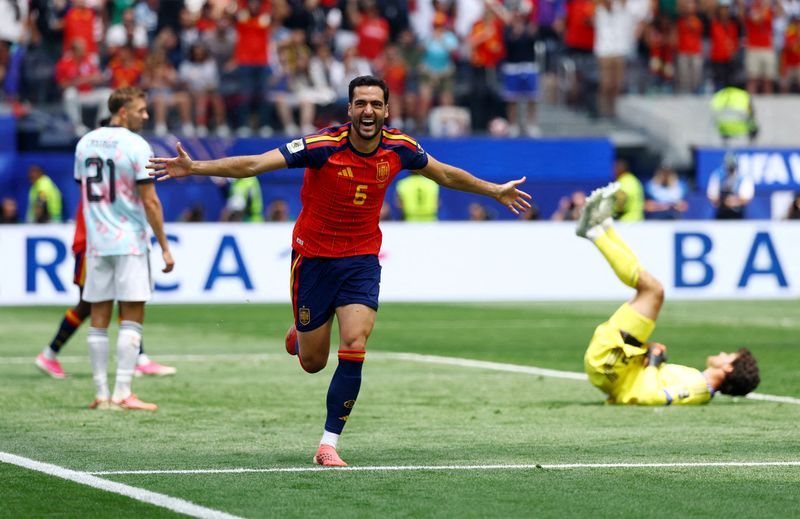
Spain's relentless attacking prowess proved decisive on Friday as Mikel Merino's opportunistic finish in the 86th minute secured a 2-1 victory over Belgium and propelled the European champions into the World Cup semi-finals at the Los Angeles Stadium. The substitute's goal capped a commanding second-half performance from the Spanish side, who will now face tournament favourites France in Dallas on Tuesday for a place in the final. Merino's strike came moments after Belgian goalkeeper Senne Lammens, thrust into action due to Thibaut Courtois's injury, fumbled a low effort from Pau Cubarsi, leaving the Spanish midfielder with a simple tap-in as the predominantly Spanish crowd erupted in the sweltering California heat.
The match unfolded as a tale of two halves, with Belgium mounting an impressive challenge despite being ravaged by injuries before and during the contest. Spain took the initiative early, with Fabian Ruiz breaking the deadlock in the 30th minute after capitalising on space left by Courtois's outstanding diving save. The Paris Saint-Germain midfielder's finish, threading the ball between Timothy Castagne's legs, vindicated coach Luis de la Fuente's tactical gambit to field Ruiz ahead of regular starter Pedri. However, Belgium's resilience shone through when Charles De Ketelaere levelled the match eleven minutes later, timing his run expertly to guide Castagne's cross past Spanish goalkeeper Unai Simon—marking the first goal Spain had conceded in the tournament.
Belgium's pre-match injury crisis fundamentally shaped the encounter's narrative. Captain Youri Tielemans was withdrawn from the starting lineup mere minutes before kickoff following a warm-up injury, with Hans Vanaken stepping into the breach. The absence of midfielder Amadou Onana, sidelined by an ACL tear sustained in Belgium's previous knockout victory against the United States, further depleted the Belgian midfield's creative depth. These setbacks compounded the difficulties facing a squad already managing the presence of ageing stars Kevin De Bruyne and Romelu Lukaku, whose experience could not fully compensate for the structural deficiencies left by injury.
Spain's dominance in the second period reflected their superior fitness and tactical cohesion following the interval. De la Fuente's substitution of Pedri for Ruiz restructured the Spanish midfield's pressing and possession patterns, while eighteen-year-old Lamine Yamal emerged as a particular menace down the wing, consistently troubling Belgium's backline with directness and skill that belied his age. The Spanish side controlled possession methodically, probing the Belgian defence with increasing intensity until Merino's introduction triggered the decisive moment. The attacking midfielder's remarkable achievement—becoming the first player in World Cup history to score the winning goal in two different knockout matches as a substitute—speaks to Spain's attacking depth and his own composure in crucial moments.
Merino's earlier substitute appearance against Portugal in the last-16 round had yielded a similarly dramatic winning goal, establishing a pattern that transcends mere coincidence. The midfielder's own reflection on his impact carries significance for understanding Spanish football's meritocratic approach to squad rotation. His assertion that preparation and professionalism breed opportunity suggests a deliberate coaching philosophy where bench players maintain competitive readiness throughout tournaments, challenging the conventional hierarchy between starters and substitutes. For Malaysian audiences watching through a regional lens, Spain's model of tactical flexibility and midfield depth contrasts sharply with how many Southeast Asian football programmes approach squad management.
Belgium's final desperate attempts to salvage the match foundered against a Spanish defence that, despite conceding one goal, ultimately proved sufficiently organised to frustrate the Belgian attackers' late surges. De Bruyne and Lukaku, operating in an increasingly congested midfield bereft of supporting creativity, found themselves starved of the space and service required to trouble Simon's goal. The narrative of a wounded Belgian side fighting admirably but ultimately succumbing to a superior collective unit reflects broader truths about tournament football's unforgiving nature—injuries compound tactical disadvantages, and preparation proves decisive when quality reaches parity.
Spain's trajectory toward the final represents a remarkable resurgence for a national team that has endured a relatively fallow period since their 2012 European Championship triumph. The last time Spain reached World Cup semi-finals was in 2010, when they went on to lift the trophy, suggesting that reaching this stage again carries symbolic weight beyond mere progression. The team's assertive early performance, their ability to absorb Belgium's leveller without panic, and their controlled dominance thereafter all point toward a squad capable of challenging France's tournament favouritism. De la Fuente's measured optimism—acknowledging France's quality while expressing Spain's confidence—reflects the genuine competitive equilibrium between the two remaining European sides.
The semi-final meeting between Spain and France promises a contest between contrasting playing philosophies. France, tournament favourites, have navigated their path through tactical pragmatism and individual brilliance. Spain, by contrast, have reasserted a more possession-based, midfield-centric approach that harks back to their golden generation whilst incorporating contemporary pressing intensity. Both teams boast exceptional depth across all outfield positions, though France's attacking firepower remains formidable. The Dallas venue, neutral ground stripped of the Spanish crowd advantage that characterised the Belgium encounter, introduces a variable that could prove decisive in determining which European power advances to the final.
For regional followers of international football, Spain's progression underscores the ongoing vitality of European football at the tournament's highest level. The depth of talent available to Spanish football—evidenced by the ability to field quality alternatives like Merino, Yamal, and numerous other squad players—reflects structural advantages that Southeast Asian programmes continue to address through investment in development pathways and competitive exposure. Belgium's injury-plagued exit, whilst sympathetic, also demonstrates how tournament success demands not merely individual talent but organisational robustness and squad depth capable of absorbing key personnel losses. As the semi-finals approach, Spain's methodical, talent-laden progression offers insights into how modern tournament football rewards both technical excellence and comprehensive squad management.

