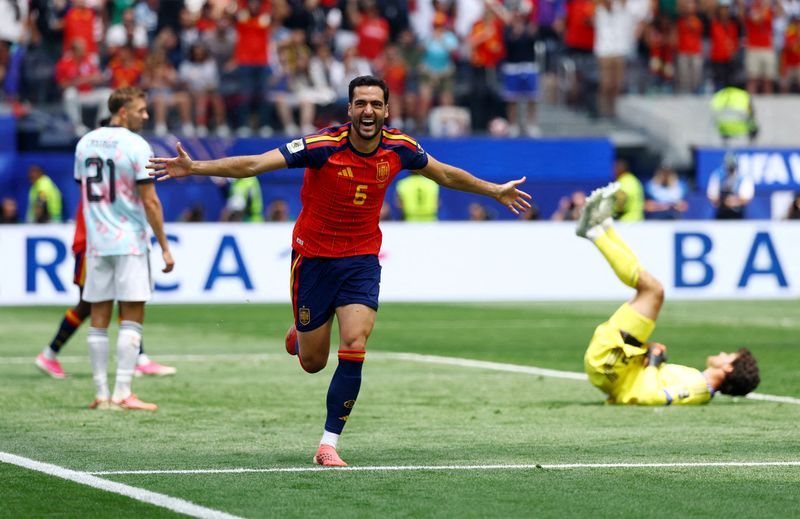
Spain has booked its passage to the World Cup semi-finals after a thrilling encounter with Belgium at Los Angeles Stadium on Friday, where substitute Mikel Merino's clinical finish in the 88th minute proved decisive in a 2-1 triumph. The goal came at a crucial juncture when Spain capitalised on a goalkeeping error from Belgium's makeshift custodian Senne Lammens, whose failure to secure a low strike from Pau Cubarsi allowed Merino to pounce and seal the result for the Spanish side before a predominantly Spanish crowd in sweltering conditions.
The match itself represented a fascinating tactical battle between two European heavyweights grappling with contrasting fortunes heading into the encounter. Spain appeared energised and purposeful from the opening moments, their attacking intent evident as they sought to establish dominance against a Belgium side already depleted by injury concerns. The Spanish approach bore fruit when Fabian Ruiz capitalised on a Thibaut Courtois save in the 30th minute, poking home after the goalkeeper's diving effort left the ball loose, with the PSG midfielder's finish finding its way past Timothy Castagne's legs and into the net. The goal vindicated Spain coach Luis de la Fuente's decision to start Ruiz ahead of Pedri, a selection choice that had drawn some surprise given Pedri's usual prominence in the Spanish midfield.
Belgium responded with admirable resilience despite their mounting injury problems, drawing level just 11 minutes later through Charles De Ketelaere. The Belgian attacker displayed precise movement to meet Timothy Castagne's cross with a well-timed header that evaded Unai Simon, marking the first goal Spain had conceded throughout the tournament to that point. The equaliser reinvigorated Belgium's challenge and suggested the fixture would remain competitive despite the physical toll of missing key personnel. The oppressive heat at the stadium appeared to affect both teams, with the remainder of the first half becoming a more cautious affair as both sides sought to avoid unnecessary exertion in demanding climatic conditions.
Belgium's injury crisis extended beyond those already sidelined, with captain Youri Tielemans withdrawn from the starting lineup only minutes before kickoff following a warm-up injury, forcing Hans Vanaken into the midfield. The absence of midfielder Amadou Onana, sidelined by an anterior cruciate ligament tear sustained during their earlier knockout victory against the United States, further stretched Belgium's options. These compounding absences meant Belgium was essentially fielding a patched-together side against a Spanish team gathering momentum as the match progressed.
Spain emerged from the interval with renewed intensity, systematically pressing Belgium's makeshift defence and gradually suffocating their opponents' ability to mount attacking forays. The sustained pressure eventually yielded its reward when Merino, introduced from the bench after 86 minutes of play, capitalised on the chaos around the Belgium penalty area. The decisive moment stemmed from Lammens' inability to claim Cubarsi's low drive cleanly; the rebound presented itself invitingly for Merino, who made no mistake in converting from close range, sending the Spanish supporters into raptures as the sold-out crowd erupted in celebration.
Spain's achievement represents a significant milestone in their World Cup history, as they have now reached the semi-finals on just two occasions in the tournament's history. Their previous semi-final appearance came in 2010 when they ultimately captured the competition's crown, establishing themselves as one of international football's great sides during that era. A fourth-place finish in 1950, when the final tournament phase operated as a group stage rather than knockout matches, represents their only other deep tournament run prior to this achievement.
The victory propels Spain into a fascinating semi-final showdown against tournament favourites France, scheduled for Dallas on Tuesday as both nations vie for a place in the final match. France's status as pre-tournament champions and widespread expectations for another strong campaign make them formidable opposition, yet Spain will approach the encounter with considerable confidence following their dominant performance against Belgium and their unbeaten run through the tournament thus far.
The stadium's attendance included notable figures from entertainment and cinema, with British rock musician Noel Gallagher and American actress Courtney Love among those observing the contest. Spanish cinematic representatives Penélope Cruz and Javier Bardem also attended, alongside American actor Brad Pitt, underscoring the broader cultural significance of World Cup matches and their appeal beyond football's traditional fanbase.
For Malaysian and Southeast Asian football enthusiasts, Spain's advancement reflects the enduring quality of European football at the highest level, despite persistent challenges from emerging footballing nations. The Spanish approach, emphasising possession-based football and patient build-up play, continues to exert considerable influence on global tactical thinking, particularly among regional academies seeking to develop their own technical capacities. Spain's semi-final berth also ensures continued European dominance in this tournament, raising questions about when non-European nations might genuinely challenge for the sport's greatest prize.

