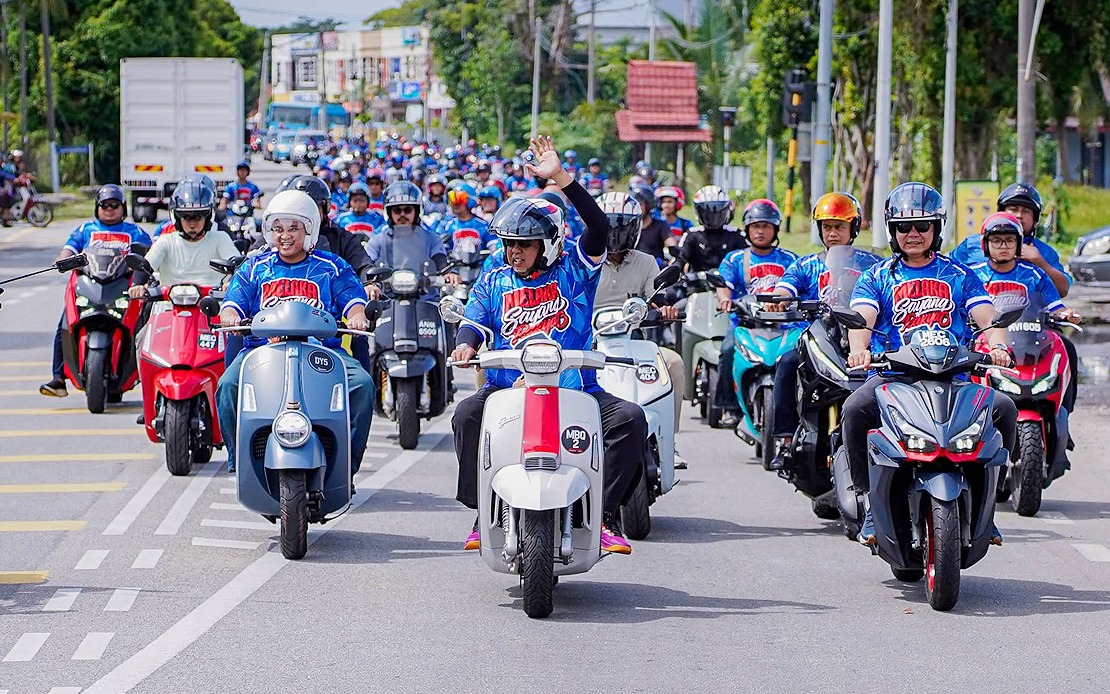
The Melaka state government has expanded its WRUR (Wilayah Rakyat Unitama Rakyat) grassroots engagement programme into the Tangga Batu parliamentary constituency, with Chief Minister Datuk Seri Ab Rauf Yusoh outlining an ambitious two-phase rollout that will serve the Pantai Kundor and Paya Rumput state constituencies. The expansion reflects a strategic shift toward sustained, systematic community outreach rather than ad-hoc policy interventions, marking what the administration describes as a continuation of ground engagement methodology refined over multiple cycles of implementation.
The scope of the initiative is substantial, encompassing more than 200 distinct programmes spanning welfare assistance, community infrastructure development, educational support, youth initiatives, and entrepreneurship opportunities. Rather than positioning WRUR as a seasonal or election-driven campaign, state officials have characterised the approach as an embedded mechanism for addressing persistent local grievances and service delivery gaps. This framing suggests recognition among Melaka's leadership that sustainable governance requires ongoing dialogue with constituents beyond formal political cycles.
The programme's track record provides measurable evidence of its operational effectiveness. Across 23 previous implementation phases statewide, administrators processed over 4,000 complaints, achieving a resolution rate approaching 70 percent. Within the Tangga Batu constituency specifically, earlier initiatives in the Sungai Udang and Kelebang state constituencies generated 359 complaints, of which 328 were resolved and 31 remain under active follow-up. These metrics suggest the programme functions as a functional feedback mechanism, though the remaining 30-percent unresolved complaint rate warrants consideration regarding resource allocation, bureaucratic capacity, or the complexity of certain grievances.
During the sixth implementation series, the programme distributed over RM150,000 across multiple beneficiary categories, reflecting targeted resource allocation to vulnerable populations. Fishermen received RM22,000 covering 220 individuals, while five boat owners impacted by maritime incidents received RM1,500. Small and medium enterprise entrepreneurs obtained RM14,000 in business equipment benefiting 10 businesses. The distribution strategy extends beyond economic assistance to include contributions toward religious institutions, places of worship, student scholarships, and housing support for distressed homeowners, indicating a comprehensive approach to community welfare rather than narrowly economic intervention.
Infrastructure remediation has emerged as a critical component following recent environmental stressors. The Department of Irrigation and Drainage is executing RM50,000 in cleaning and maintenance operations at Sungai Seberang Gajah, following flash flooding that damaged 73 residential properties in the Pantai Kundor area. Completion is anticipated within the immediate week, suggesting urgent prioritisation of flood mitigation. The department has simultaneously initiated procurement procedures for RM100,000 in improvement works at Sungai Lereh, indicating forward-looking investment in drainage infrastructure resilience across multiple waterways within the constituency.
Capital development plans extend beyond environmental management to address transportation infrastructure deficiencies. The Public Works Department has lodged federal approval requests for a RM16 million project targeting the crossing culvert structure on Jalan Tangga Batu-Tanjung Minyak. This scale of investment suggests the infrastructure bottleneck has been classified as regionally significant, potentially reflecting congestion or safety concerns that affect inter-constituency connectivity or commercial activity. The requirement for federal-level endorsement indicates coordination between state and national authorities on development priorities.
For Malaysian readers, the Tangga Batu WRUR initiative demonstrates how state administrations are operationalising systematic grievance mechanisms in peripheral or underserved constituencies. The programme's emphasis on sustained engagement rather than periodic intervention aligns with broader governance trends emphasizing citizen-centered service delivery and transparent complaint resolution. The relatively high resolution rate suggests institutional learning, though the 30-percent gap in unresolved cases warrants public scrutiny regarding implementation barriers.
Regionally, this approach reflects patterns across Southeast Asian democracies where ruling administrations strengthen grassroots legitimacy through visible, quantifiable community programmes. The dual focus on immediate welfare relief and long-term infrastructure investment attempts to balance urgent constituent needs with structural development, though success depends on rigorous follow-through and transparent impact measurement beyond complaint resolution statistics.
The Melaka model also illustrates tension within Malaysian federalism regarding resource distribution. The RM16 million culvert project requiring federal approval reflects constrained state finances and centralized infrastructure decision-making, a structural reality that may limit state governments' ability to independently address critical development gaps. The reliance on federal coordination for major projects potentially introduces delays or political complications depending on intergovernmental relations.
For constituents in Pantai Kundor and Paya Rumput, tangible implications include expanded access to complaint mechanisms, targeted economic support, and scheduled infrastructure improvements. The flood mitigation projects directly address documented environmental vulnerabilities, while entrepreneurship assistance and educational contributions target long-term social mobility. However, programme sustainability depends on consistent funding, administrative capacity, and political continuity across electoral cycles—factors not addressed in official communications.
The WRUR's evolution from ad-hoc initiatives to institutionalized engagement reflects recognition that governance legitimacy increasingly requires sustained responsiveness to localized concerns. Whether this approach becomes a replicable model for other Malaysian states or remains unique to Melaka's administration depends on broader political dynamics, budgetary constraints, and the programme's demonstrable impact on electoral confidence and community satisfaction—metrics requiring independent assessment beyond government-released statistics.

