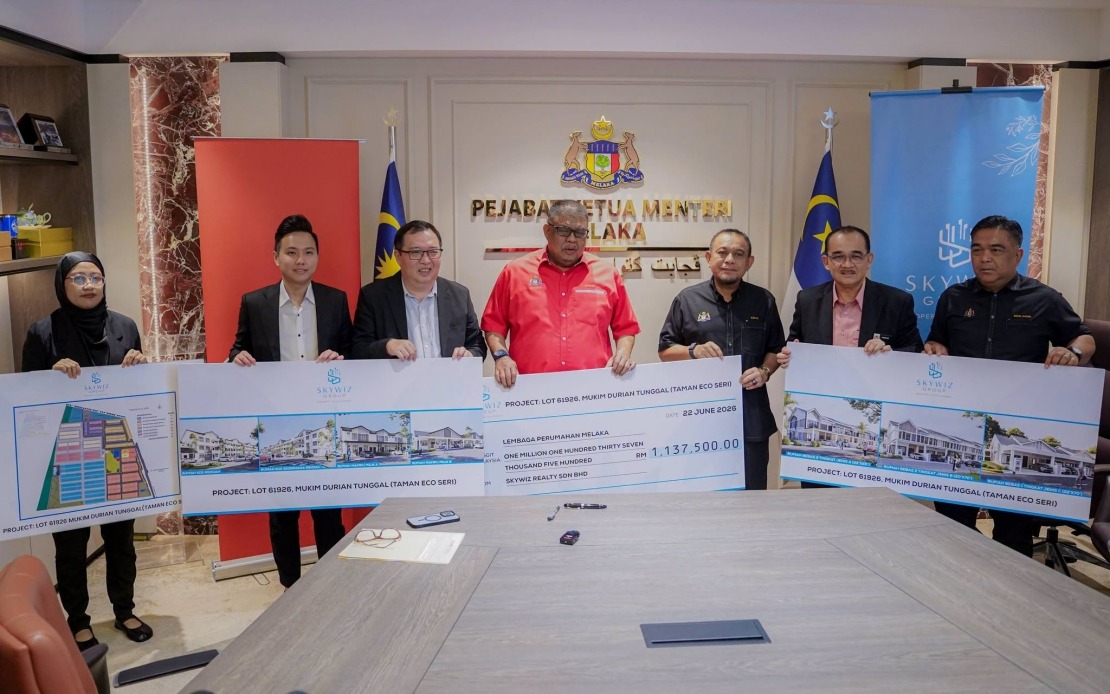
Melaka's Chief Minister Datuk Seri Ab Rauf Yusoh has launched a push to transform the state's property landscape by making lifts a mandatory feature in new multi-storey developments. Speaking at the signing of an Affordable Housing Development Agreement in the state capital, Ab Rauf stressed that lift facilities should be treated as an essential infrastructure component rather than an optional luxury amenity, particularly to serve the elderly and vulnerable residents of the state.
The timing of this initiative reflects growing frustration with the commercial viability of existing developments across Melaka. The Chief Minister pointed to concrete examples of market stagnation, citing areas such as Kota Laksamana, Banda Hilir and Melaka Raya where numerous multi-storey properties remain unsold despite significant marketing efforts. His analysis identified the absence of lift facilities as a material impediment to buyer interest and long-term property values. This acknowledgement marks a significant recognition that accessibility infrastructure directly influences purchasing decisions and community acceptance of residential and commercial projects.
The state government is now preparing to formalise this approach through policy mechanisms. Ab Rauf indicated that Melaka intends to introduce regulatory requirements mandating that proposed shoplots and three-storey residential properties include lift installations. Such a move would represent a departure from current practice where lifts are often treated as premium additions rather than baseline expectations. By elevating accessibility to policy status, Melaka would align itself with international best practices in inclusive urban development and demographic-responsive planning.
Underlying this initiative is a broader demographic reality facing Malaysian states. As populations age, accessibility becomes increasingly important for maintaining quality of life and social participation. Properties without lift access effectively exclude a growing segment of the population—not only the elderly, but also individuals with mobility challenges, parents with young children, and those managing temporary injuries. By addressing this gap proactively, Melaka positions itself as a state that understands the evolving needs of its residents and can attract developers committed to inclusive design principles.
The announcement occurred during the signing of an agreement between the Melaka Housing Board (LPM) and developer Skywiz Reality Sdn Bhd, which LPM executive director Datuk Murad Husin also attended. This project partnership underscores the state government's dual strategy of setting policy direction while simultaneously advancing specific development initiatives aligned with accessibility standards. The collaboration signals that regulatory expectations are being integrated into active procurement relationships.
The Skywiz Reality development demonstrates the scale of Melaka's affordable housing ambitions. The project will introduce 903 residential units across a 26.56-hectare site in Mukim Durian Tunggal, Alor Gajah, with construction spanning three years. The composition reflects deliberate socioeconomic stratification: 453 units are designated as affordable housing, subdivided into 61 low-cost houses, 54 low-medium cost houses, 200 Type A affordable units and 138 Type B affordable units. The remaining 450 units will target the open market, creating a mixed-income community structure that encourages social cohesion while generating commercial returns.
Financially, the arrangement is structured to benefit the state's housing agency. LPM anticipates returns of RM2.38 million from the Skywiz Reality arrangement, establishing a revenue model where housing development serves both public welfare and fiscal objectives. The developer must commence construction within 90 days of receiving Form B certification from the Hang Tuah Jaya Municipal Council, creating accountability mechanisms and timeline certainty for stakeholders.
The broader context reflects Melaka's commitment to addressing the state's housing deficit through the MeSRa initiative. To date, 23,514 affordable homes have reached completion across the state. The government targets construction of more than 38,440 additional affordable units, representing a substantial expansion of accessible housing stock. This trajectory indicates that housing remains a central policy priority and that the state views residential development as fundamental to economic vitality and population retention.
Ab Rauf articulated a philosophical perspective on housing that extends beyond mere transaction economics. He framed property ownership as the foundational element supporting robust family structures, healthy communities and sustainable state development. This rhetorical positioning reflects understanding that housing policy intersects with social cohesion, intergenerational stability and regional competitiveness. When residents cannot afford housing or find properties inaccessible, broader economic and social consequences ripple through communities.
The lift mandate initiative also carries implications for property development costs and feasibility analysis. Developers will need to incorporate lift installation expenses into project budgeting from the planning stage, potentially affecting unit pricing and profit margins. However, the Chief Minister's framing suggests this is a market correction rather than a burden—by making properties more accessible, developers actually enhance marketability and reduce inventory holding periods. Over the project lifecycle, improved sales velocity may offset higher upfront capital expenditure.
For Malaysian investors and property observers, Melaka's emerging policy trajectory suggests a broader regional shift toward accessibility-inclusive development standards. As demographic trends favour ageing populations across Southeast Asia, states that embed accessibility early in planning frameworks will likely attract investment from developers seeking sustainable, demographically resilient projects. This positions Melaka as a potential model for policy experimentation that other Malaysian states might subsequently adopt.
The state government has committed to ongoing project monitoring through LPM, ensuring developers meet agreed construction schedules, technical specifications and quality standards. This supervisory approach reflects recognition that policy intentions require implementation rigour to deliver intended outcomes. By coupling regulatory mandates with active oversight mechanisms, Melaka increases the likelihood that accessibility commitments translate into functional community infrastructure rather than symbolic gestures.

