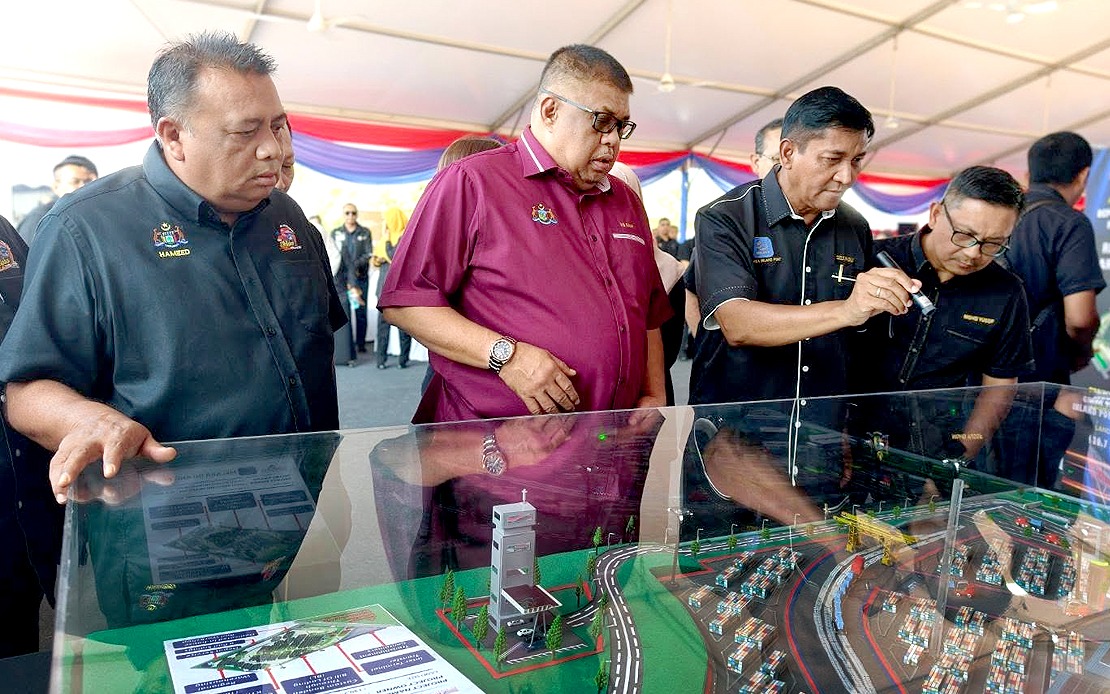
Melaka is embarking on an ambitious infrastructure initiative to transform its logistics capabilities, with state authorities unveiling plans for a RM129 million road project that will fundamentally restructure how cargo moves between the state's expanding port facilities. The 12-kilometre thoroughfare, connecting Kuala Linggi International Port to Ayer Molek in Kuala Sungai Baru, represents a strategic intervention designed to eliminate inefficiencies that currently plague the region's supply chain operations. Datuk Hameed Mytheen Kunju Basheer, chairman of Melaka's Public Works, Infrastructure, Public Facilities and Transport Committee, outlined the vision during a groundbreaking ceremony for the Melaka Inland Port, emphasising that the development will position the state as a more competitive logistics destination within Southeast Asia's increasingly complex maritime trade networks.
The project's most compelling feature is its dramatic reduction in travel distances for commercial vehicles. Currently, goods moving between Kuala Linggi International Port and Ayer Molek traverse a circuitous 28-kilometre route, a significant inefficiency in an industry where fuel costs and delivery times directly impact operational margins. The new road will compress this journey to merely 12 kilometres, a 57 percent reduction that translates into tangible cost savings for logistics operators and accelerated throughput for port facilities. For Malaysian companies seeking competitive advantages in regional supply chains, this infrastructure investment signals government commitment to lowering operational barriers and improving their positioning against regional competitors in Thailand, Vietnam, and Indonesia.
The route design reflects sophisticated planning aimed at maximising the economic benefits of Melaka's existing port infrastructure. Rather than serving as a standalone corridor, the new road will thread through the Melaka Inland Port area, creating seamless connectivity between Kuala Linggi International Port, the Inland Port itself, and Tanjung Bruas Port. This networked approach ensures that shippers can efficiently distribute containers and consolidate cargo across multiple facilities based on vessel schedules and destination requirements. The interconnected system transforms what might otherwise be three separate port operations into a unified logistics ecosystem, substantially increasing the state's capacity to handle regional trade flows and reducing the likelihood that shipping companies will divert business to competing port authorities in neighbouring states or countries.
Implementation will unfold across multiple phases, reflecting the complexity of coordinating large-scale infrastructure projects. The Works Ministry is currently completing the design stage, with quotation, tender, and contractor appointment processes anticipated for 2025. This timeline suggests construction could commence in the latter half of next year, though completion dates have not been firmly specified. Hameed indicated that full project realisation is expected around 2028 or 2029, a four-to-five year construction window that allows for the substantial earthworks and drainage systems required in Melaka's coastal environment, where tidal influences and soil conditions demand careful engineering consideration.
Parallel initiatives will reinforce the primary road's impact by upgrading peripheral connections throughout the port network. The state government has identified road widening between Tangga Batu and Sungai Udang, which connects to Tanjung Bruas Port, as a priority that will eliminate current bottlenecks hampering vehicle movement during peak shipping periods. These complementary upgrades recognise a fundamental principle of logistics infrastructure: a single high-capacity road creates bottlenecks if surrounding roads cannot efficiently distribute traffic, rendering the investment partially ineffective. By systematically improving the entire network, Melaka authorities are maximising the return on their infrastructure expenditure.
A secondary 6-kilometre road project, budgeted at RM49 million, will extend connectivity from Telok Gong through Kampung Pulau to Paya Lebar, establishing an alternative routing that bypasses traditional village settlements. This element carries particular sensitivity in the Malaysian context, where infrastructure projects frequently intersect with residential communities and cultural heritage considerations. By explicitly designing a route that avoids passing through established villages, the state government appears to have incorporated social impact assessment into project planning, potentially reducing community opposition and environmental complications that can derail infrastructure timelines. Currently, the Paya Lebar to Kampung Pulau segment is undergoing quotation procedures, while the Kampung Pulau to Telok Gong alignment remains in design stages, suggesting this component will mature toward construction somewhat later than the primary road project.
The broader strategic context positions Melaka as increasingly intent on recapturing its historical significance as a maritime trading hub, a role the state lost centuries ago when European colonial powers relocated regional commerce to ports they controlled. Modern Melaka's infrastructure ambitions directly challenge Port Klang's regional dominance and position the state to capture traffic volumes that might otherwise concentrate at larger, more established facilities. For Malaysian businesses engaged in export-oriented manufacturing, these developments offer tangible benefits through reduced logistics costs and faster port turnaround times, ultimately improving the competitiveness of Malaysian products in global markets where speed and cost efficiency increasingly determine competitive outcomes.
The investment also reflects broader Southeast Asian trends toward port competition intensifying as regional economies diversify supply chains and seek alternatives to congested major hubs. With Thailand developing its eastern seaboard ports and Vietnam expanding its port infrastructure, Melaka's initiatives can be understood as defensive investments intended to prevent market share erosion. The cumulative effect of these road projects—creating an efficient, multi-port ecosystem—positions the state to attract regional logistics operators and potentially capture transshipment traffic that currently flows through Singapore or other regional centres. For Malaysian policymakers, this represents not merely local infrastructure development but a strategic assertion of the country's competitive position within Southeast Asian trade networks.
The projects together will reshape traffic patterns throughout Melaka's southern industrial corridor, with implications extending beyond the port sector itself. Improved logistics efficiency creates positive spillover effects for manufacturing operations, agricultural processors, and other value-added industries seeking reliable, cost-effective cargo movement. The reduced travel distances will also yield environmental benefits through lower fuel consumption and reduced vehicular emissions, though these advantages have not been quantified in available statements. As Malaysia navigates the energy transition and increasingly faces pressure to demonstrate climate commitment, infrastructure that inherently reduces transportation inefficiencies offers dual benefits: economic competitiveness and environmental stewardship aligned within a single development framework.

