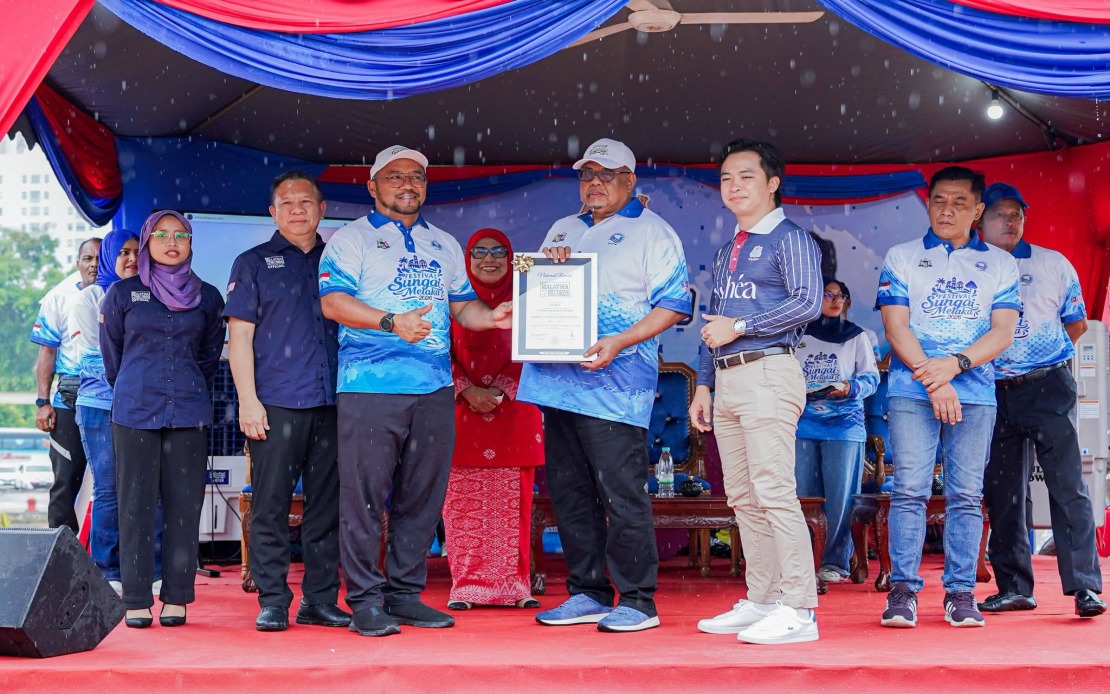
Melaka's tourism sector has now accumulated four Malaysia Book of Records achievements in just thirty-six months, marking a significant streak for the heritage state's efforts to establish itself as a competitive destination in Southeast Asia. Chief Minister Ab Rauf Yusoh unveiled the latest distinction during a ceremony held at Dataran Pengkalan Rama on July 19, positioning these milestones as evidence of systematic innovation rather than isolated triumphs.
The pace of recognition highlights a deliberate strategy by the state administration to leverage record-breaking initiatives for tourism positioning. Rather than treating the accolades as ceremonial accomplishments, Yusoh articulated a vision wherein each Malaysia Book of Records certificate becomes a springboard for tangible expansion of visitor appeal and extended duration of stays. His insistence that recognition should not remain confined to office walls reflects growing frustration in regional tourism boards about the gap between headline achievements and actual economic impact on communities and hospitality sectors.
The most recent record joins three previous recognitions earned between 2023 and 2026, suggesting a coordinated approach to identifying and executing record-breaking tourism products. This pattern indicates state officials have systematized the process of conception, execution, and documentation of tourism initiatives that meet Malaysia Book of Records criteria. For Malaysian readers, this approach mirrors strategies adopted by neighbouring Penang and Selangor, yet Melaka's concentration within three years appears more aggressive than comparable states' recent tracks.
Melaka's emphasis on community participation emerges as a central pillar in this tourism expansion model. The Sungai Melaka Festival, now in its seventeenth iteration, demonstrates how heritage assets can be programmatized into recurring events that generate economic activity beyond traditional accommodation and restaurant spending. The festival's 2026 edition encompasses over thirty distinct programmes distributed across Melaka's three districts, ensuring geographic dispersal of visitor traffic and economic benefits rather than concentration in central tourist zones.
The freshwater fishing competition exemplifies how niche activities can transform into broader tourism products with proper structuring and promotion. The participation of 1,123 anglers, including substantial numbers travelling from outside Melaka, validates market demand for specialized fishing tourism experiences. The RM30,000 prize allocation—with RM10,000 for first place—signals serious institutional commitment to attracting competitive participants rather than casual participants, elevating the event's profile as a specialization experience rather than mass-market activity.
For Malaysian and Southeast Asian tourism operators, Melaka's fishing competition model offers replicable elements. The early-morning participation rates suggest the activity appeals to dedicated fishing communities with established networks and social connections, meaning marketing can leverage existing communities rather than requiring creation of new audience segments from scratch. Yusoh's recognition that fishing possesses its own "dedicated community and following" indicates state officials have moved beyond generic family-oriented tourism towards identifying and serving niche enthusiast markets.
The planned expansion of the fishing competition presents opportunities for Melaka to compete directly with established fishing tourism destinations in Thailand and Indonesia. Malaysian anglers currently traveling internationally for competitive fishing events represent potential domestic spending retention. Scaling the competition with greater prize pools and international participation could position Melaka as a regional hub for sport fishing tourism, attracting participants and their support networks across Southeast Asia during peak seasons.
The Sungai Melaka riverfront development represents broader regional trends towards heritage asset revitalization. Across Southeast Asia, riverside and waterfront tourism has experienced renaissance as cities recognize that colonial-era infrastructure and geographical features offer authenticity that theme parks cannot replicate. Melaka's systematic programming of river-based activities aligns with successful models in Penang's Georgetown, Bangkok's Chao Phraya initiatives, and Hoi An's Ancient Town in Vietnam.
Yusoh's emphasis on economic "spillover" for residents addresses legitimate concerns that tourism recognition and visitor growth may not translate into tangible household income expansion for average Melakans. When tourism strategies concentrate benefits among hotel operators, restaurant chains, and tour companies, local communities perceive events as disruptions rather than opportunities. The explicit focus on programs that extend visitor stays suggests officials recognize that day-tripping provides less economic multiplier effect than overnight stays, which generate restaurant spending, accommodation revenue, and attraction visits across multiple days.
The integration of Melaka River and Beach Development Corporation (PPSPM) into tourism planning indicates institutional evolution beyond ad-hoc event management. Dedicated waterfront development agencies can coordinate infrastructure improvements, safety standards, and promotional campaigns more effectively than scattered departmental efforts. PPSPM's participation in the records presentation ceremony suggests the corporation is positioned as an ongoing steward rather than a one-off project manager.
For Malaysian tourism policy broadly, Melaka's trajectory demonstrates the viability of experiential and record-based tourism distinct from conventional beach and cultural heritage models. As international travel competition intensifies post-pandemic, destinations pursuing "world's largest" or specialized niche attractions may gain search engine visibility and social media traction that general heritage tourism does not automatically generate. Malaysia's emerging tourism landscape increasingly reflects this competitive differentiation among states.
The challenge facing Melaka involves sustaining momentum beyond the novelty of record certifications. Tourism records attract initial media attention and curious visitors, but converting curiosity into repeat visitation and extended stays requires quality execution and continuous product refinement. The fishing competition's success hinges on consistent organization, prize reliability, and gradual building of international reputation within specialist communities—elements requiring sustained funding and administrative commitment rather than episodic sponsorship.

