The Melaka state government has unveiled an ambitious package of interventions aimed at modernising the fishing sector and reinforcing social protection for one of the state's most vulnerable occupational groups. The initiatives, unveiled during Chief Minister Datuk Seri Ab Rauf Yusoh's grassroots engagement tour, represent a significant shift in how state administrations are approaching traditional livelihoods in an era of technological change and rising operational costs.
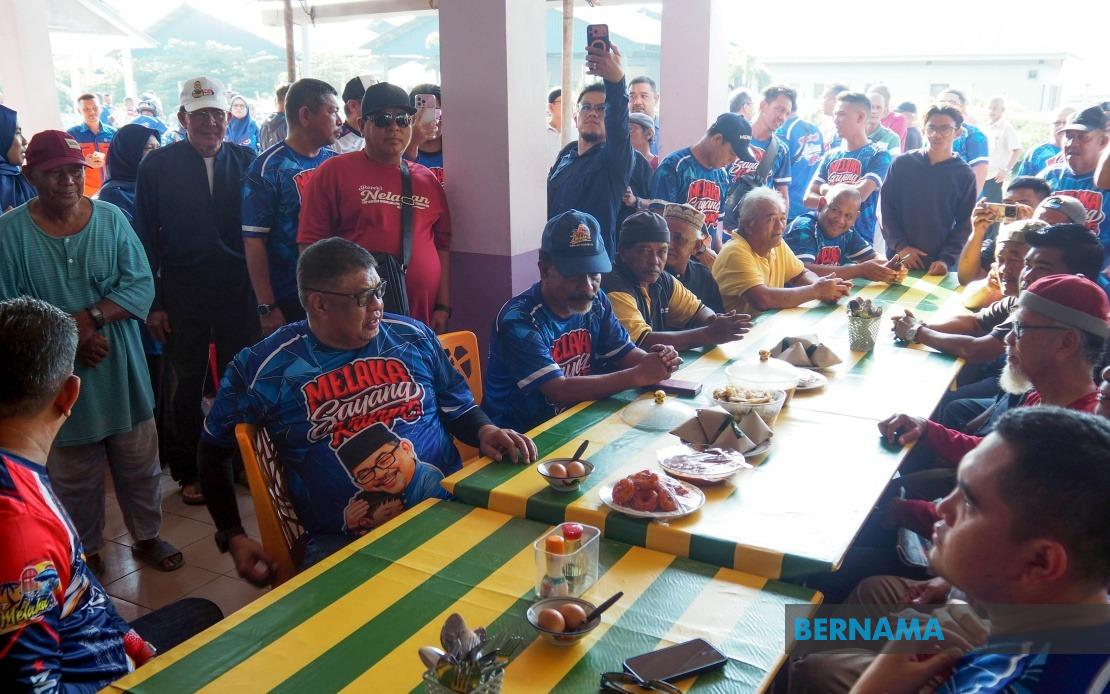
The centrepiece of the announcement encompasses two distinct but complementary measures: universal PERKESO coverage for all registered fishermen and the supply of fish finder devices to enhance catch efficiency. These were revealed during the fifth stop of the 'Jelajah Ketua Menteri Sayang Rakyat' tour at the Kuala Sempang Jetty in the Merlimau state constituency, an area where marine-based livelihoods remain a critical economic pillar for hundreds of families. The Chief Minister's emphasis on direct community engagement reflects a broader governance philosophy centring on listening to grassroots concerns rather than relying solely on top-down policy formulation.
The PERKESO extension carries particular significance for a workforce historically excluded from formal social protection schemes. Fishermen, by virtue of their self-employed status and the seasonal, unpredictable nature of their work, have traditionally fallen through gaps in Malaysia's social safety net. Occupational hazards unique to maritime labour—including drowning, equipment injuries, and weather-related incidents—expose fishermen to risks that require adequate insurance coverage. The state government's commitment to funding PERKESO contributions for registered members addresses a longstanding welfare deficit that community leaders have repeatedly raised in policy discussions across Malaysia's fishing states.
Equally innovative is the fish finder initiative, which introduces sonar and GPS technology to a sector that has relied predominantly on experiential knowledge passed down through generations. Fish finders enable operators to identify fish concentrations below the water surface with precision, fundamentally altering the calculus of fishing operations. The technology addresses a core challenge facing modern fishermen: declining catch per unit effort as fish stocks have contracted due to environmental pressures, climate change, and competitive fishing practices. By reducing wasted fuel, time, and effort spent searching for viable fishing grounds, these devices can meaningfully improve the economics of small-scale fishing enterprises.
The economic barriers to fishermen acquiring this technology privately have been substantial. Market prices for basic fish finder units range between RM1,000 and RM2,000, representing a prohibitive capital outlay for operators already struggling with rising fuel costs, maintenance expenses, and equipment replacement cycles. A fisherman with two decades of experience, Amirul Shah Fuad Shah, articulated the tangible value proposition: the ability to move beyond estimation and intuition towards data-informed decision-making. For ageing fishermen particularly, where accumulated experience may not compensate for declining physical capacity or changing environmental conditions, technological augmentation offers a pathway to sustained productivity.
The distribution programme extended beyond structural support to immediate cash relief. At the Kuala Sempang event, 107 registered fishermen each received RM200 under the 'Bantuan Jaring Nelayan' scheme, totalling RM21,400 in direct transfers. While modest in individual terms, such cash injections provide critical liquidity for fishermen managing irregular income streams and unexpected expenses. The distribution also served a secondary purpose: validation and recognition of fishermen's social status and contribution to state economic life, a symbolic gesture that community leaders underscored as psychologically and politically significant.
Community stakeholders responded positively to the announcement, framing it within a broader modernisation narrative. Md Khalil Md Jadi, chairman of the Kampung Sempang Fishermen's Association, positioned the initiatives as evidence of genuine state commitment to lifting the fishing community from economic precarity. His emphasis on the elderly composition of the fishing workforce adds demographic urgency to the welfare and technology measures. Malaysia's fishing communities are aging as younger Malaysians increasingly seek alternative employment in service sectors and urban economies, creating sustainability questions for communities built around maritime livelihoods.
The Melaka initiative carries implications for how other Malaysian states approach fishing sector development. Unlike subsidy-driven or production-focused interventions common in agricultural policy, this package emphasises welfare modernisation and technological empowerment in tandem. The approach acknowledges that income enhancement requires both social security and productivity tools, rather than assuming that technology alone will resolve income insecurity. For regional observers, the model suggests how Southeast Asian fishing states might balance traditional livelihoods with contemporary economic pressures without abandoning the sector to decline or unregulated expansion.
Implementation challenges remain significant. The fish finder programme requires maintenance training, fuel provision for extended operations, and complementary infrastructure investments in processing and marketing. The PERKESO coverage, while groundbreaking, must be accompanied by effective claims processes that accommodate fishermen's limited literacy regarding insurance procedures. The state government's direct engagement approach, illustrated through the Jelajah tour, may prove essential for translating policy announcements into sustained community benefit. Persistence in addressing fishermen's practical concerns—from equipment access to market linkages—will ultimately determine whether these initiatives generate genuine livelihood improvement or remain symbolic gestures.
Looking forward, the Melaka model demonstrates that state governments retain meaningful capacity to reshape working conditions for vulnerable occupational groups through targeted investment and institutional reform. The combination of social security extension, technology provision, and direct engagement creates a more comprehensive support ecosystem than traditional fishing subsidies. As Malaysia's fisheries sector confronts climate volatility, resource constraints, and demographic change, such holistic approaches may offer templates for other states seeking to preserve fishing communities as viable economic actors rather than managing their inevitable decline.

