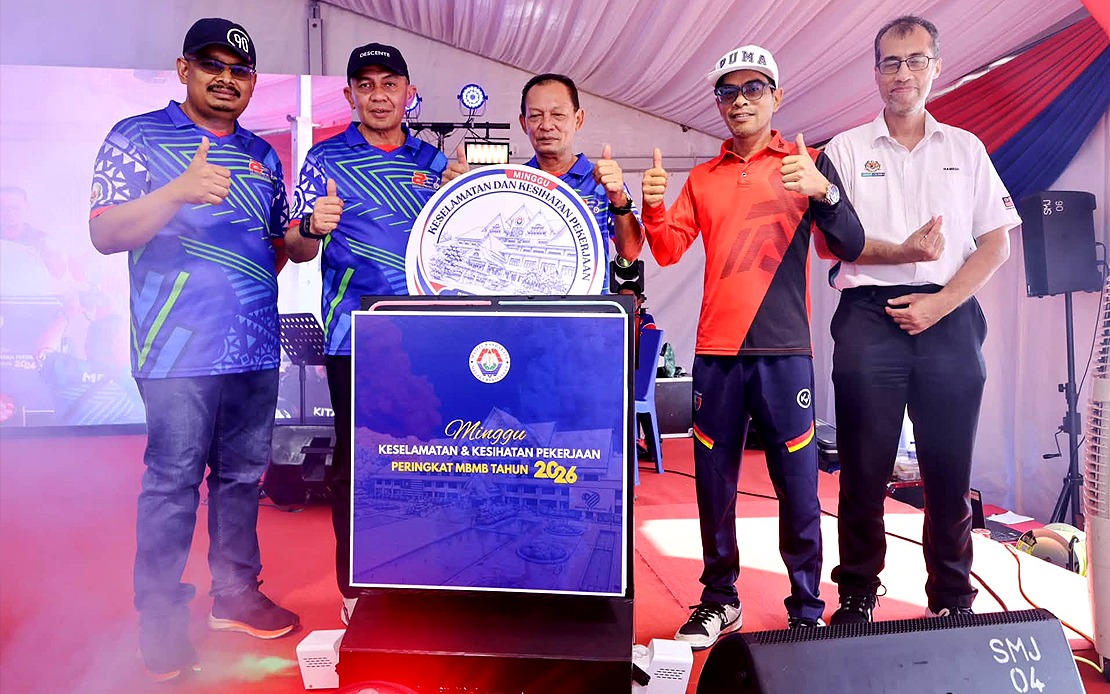
The state of Melaka has experienced a concerning tally of workplace incidents over the first six months of 2026, with authorities confirming 277 separate accidents that have left workers with both permanent and temporary injuries across multiple economic sectors. The troubling figures emerged during the official launch of the state-level Occupational Safety and Health Week celebrations, where regional safety officials outlined the evolving workplace safety landscape in what remains one of Malaysia's most industrialised regions.
Most alarming among the documented incidents were three fatalities recorded during the same period. Two deaths occurred within the construction industry, while a third was registered in the manufacturing sector—underscoring the particular hazards that workers face in these traditionally high-risk occupational domains. The construction sector, in particular, has long been identified as a critical safety concern across Malaysia, with workers regularly exposed to heights, heavy machinery, and unstable work environments that compound injury risks.
Ramesh Zakir Shamsul, director of the Melaka Department of Occupational Safety and Health, addressed the findings with cautious optimism, characterising the overall accident trajectory as remaining "relatively under control" despite the absolute numbers. His assessment reflects a comparative approach to workplace safety metrics, suggesting that the incidents, whilst significant, have not spiralled beyond manageable levels for a state with Melaka's industrial footprint. However, such framing also invites scrutiny regarding what thresholds are considered acceptable and whether complacency risks undoing safety gains.
The regulatory environment governing occupational safety in Malaysia remains anchored to the Occupational Safety and Health Act 1994, legislation now spanning three decades and serving as the foundational framework for workplace compliance across the nation. Under this statute, all employers bear a mandatory obligation to report every workplace accident, with subsequent investigations conducted by DOSH to determine causation and identify systemic failures. This investigative process, when executed rigorously, provides crucial intelligence for preventing recurrence.
DOSH's operational approach in Melaka emphasises continuous monitoring of industrial and commercial operations throughout the state. The department's oversight activities extend across diverse sectors—from manufacturing plants to construction sites, hospitality establishments to port operations—each presenting distinct safety challenges and regulatory requirements. The breadth of this monitoring responsibility underscores the resource constraints that occupational safety authorities typically face across Malaysia.
A significant dimension of DOSH's strategy involves collaborative partnerships with employers and municipal authorities. The Melaka Historic City Council, represented at the event by Mayor Datuk Shadan Othman, has emerged as a key institutional ally in disseminating workplace safety awareness. This partnership model reflects recognition that government workplace safety agencies cannot achieve meaningful compliance through enforcement alone; rather, cultivating a culture of safety requires multiple institutional actors working in concert.
The workplace safety promotion initiatives include regular workshops and public talks specifically designed to educate both employers and workers about occupational hazards and preventive measures. Such educational programmes serve a dual purpose: they translate abstract regulatory requirements into practical guidance that workers and supervisors can implement daily, whilst simultaneously building institutional relationships that facilitate voluntary compliance. The effectiveness of these awareness campaigns, however, remains difficult to quantify and often depends heavily on the consistency and quality of delivery.
Ramesh Zakir emphasised that responsibility for workplace safety cannot rest exclusively with regulatory authorities. Employers themselves occupy a pivotal position in the safety ecosystem, wielding direct influence over work practices, equipment provision, training protocols, and the broader organisational culture surrounding risk awareness. Large employers often possess greater resources and expertise to implement comprehensive safety programmes, creating disparities between multinational corporations and small-to-medium enterprises in their capacity to meet safety standards.
Melaka's industrial profile—encompassing electronics manufacturing, petrochemicals, automotive parts production, and palm oil processing alongside construction and port activities—creates a complex safety landscape where different sectors require tailored regulatory approaches. The concentration of manufacturing activity reflects the state's historical positioning as a manufacturing hub, though this economic specialisation also concentrates occupational hazards geographically. For Malaysian policymakers, Melaka's experience provides a revealing case study in managing safety across economically vital but hazard-intensive sectors.
The timing of these disclosures, coinciding with an occupational safety awareness week, illustrates a deliberate institutional strategy to maintain public and employer attention on workplace safety during specific calendar periods. Whether such concentrated awareness initiatives produce sustained behavioural change or result in temporary compliance surges remains an open empirical question. International evidence suggests that sustained, integrated safety cultures prove more effective than periodic awareness campaigns.
Looking forward, Melaka's safety record will likely attract scrutiny from workers' advocates, employer associations, and the state government itself. The three fatalities represent human tragedies with rippling consequences for families and communities, making the prevention of future deaths a moral imperative beyond mere statistical management. Achieving meaningful improvement will require sustained investment in inspector capacity, employer compliance support, worker education, and technological enhancements to hazard identification and control.

