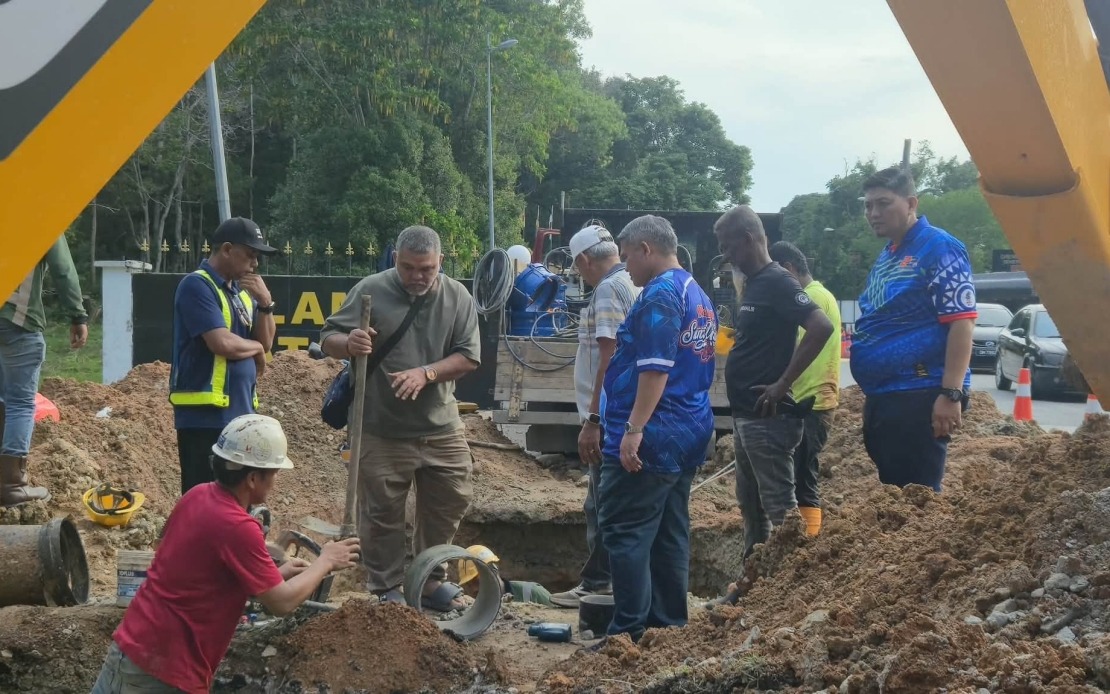
The Melaka state government is moving to address persistent water supply problems at Kem Terendak military camp in Sungai Udang by proposing a temporary storage facility, marking an escalation in efforts to resolve infrastructure challenges that have left thousands without reliable access to clean water. The proposal, announced by Housing, Local Government, Drainage, Climate Change and Disaster Management senior exco Datuk Rais Yasin, reflects growing urgency around the issue, which has disrupted daily operations for military personnel, their families, and educational institutions within the sprawling military establishment.
The most recent crisis stems from a major pipe rupture along Jalan Kampung Payasum in the Sungai Udang vicinity, which triggered the worst water shortage in recent days. The initial burst was projected to be repaired by evening, though Rais cautioned that full restoration of normal water pressure and supply would require an additional one to two days. This timeline underscores the cascading nature of such infrastructure failures—even after pipe repairs are completed, the system requires time to stabilize and return to normal operational parameters. The delays created genuine hardship for the military community and civilian residents within the camp's boundaries.
Syarikat Air Melaka Berhad (SAMB), the state water authority, has been mobilized in response, deploying an impressive logistics operation to mitigate the shortage. The utility company has been ferrying 25,000 gallons of water daily using a fleet of 25 tanker lorries since the crisis began, delivering supplies directly to affected areas. Additionally, SAMB has distributed water containers to schools within the camp, including the prestigious MARA Junior Science College, to ensure educational activities could proceed despite the disruption. However, even this substantial supply effort has proven inadequate given the scale of demand across a population of approximately 2,000 military personnel and households.
The temporary tank proposal represents a bridging strategy while longer-term infrastructure improvements take shape. The state government is preparing to submit the proposal to the Ministry of Defence (Mindef), which retains authority over military installations and their essential services. Rais emphasized that the decision to construct the temporary facility hinges on Mindef's approval, reflecting the hierarchical governance structure governing military infrastructure. SAMB has already identified potential locations for the tank and is prepared to commence construction once authorization is granted, alongside continued deployment of mobile water tankers as a complementary measure.
Underlying this short-term fix is a more comprehensive long-term solution already in progress. The Development and Upgrade of the Water Reticulation System project at Kem Terendak is scheduled for completion by April 2028, representing a substantial investment in modernizing the camp's aging water distribution infrastructure. This multi-year project addresses systemic vulnerabilities that have plagued the facility—the frequency of disruptions suggests that the existing pipe network has reached the end of its serviceable life. Once completed, the upgraded reticulation system should dramatically reduce the likelihood of major pipe bursts and supply interruptions that have become increasingly common.
The water crisis at Kem Terendak illustrates a recurring challenge facing Malaysian military installations: the tension between aging infrastructure and adequate maintenance budgets. Many military establishments across the country host significant civilian populations through families and authorized civilian workers, creating demands that rival small towns. Kem Terendak's situation is particularly acute given that it houses not only military personnel but also educational facilities and substantial civilian communities, all dependent on a water distribution system that appears to lack redundancy or resilience against major component failures.
Rais, who represents the Sungai Udang state assembly seat, positioned the Melaka government as a committed partner in resolving the crisis, despite water supply at military installations technically falling under the purview of the Public Works Department and the Defence Ministry. This collaborative approach reflects practical recognition that water systems often transcend jurisdictional boundaries—the pipe burst occurred in civilian areas of Sungai Udang, necessitating coordination between state and federal authorities. The state's willingness to deploy SAMB resources demonstrates how water crises can catalyze inter-agency cooperation in addressing infrastructure emergencies.
The incident also highlights the interdependencies within military communities in Malaysia. Beyond the direct inconvenience to military personnel, the water shortage affected educational institutions that serve children of service members and civilians. The decision to prioritize water container supplies to schools reflected sensitivity to how infrastructure failures can disrupt critical social services and educational continuity. Schools require substantial water for sanitation, food preparation, and general operations, making them particularly vulnerable during supply disruptions.
Looking ahead, the temporary tank proposal represents an immediate confidence-building measure for residents of Kem Terendak while longer-term solutions are implemented. The visibility of state government involvement—through the official proposal and daily water deliveries—addresses not only the physical shortage but also the psychological dimension of crisis management. When essential services fail, residents need assurance that authorities are taking decisive action, even if full resolution requires months or years. The temporary tank, once approved and constructed, will provide tangible evidence of commitment to solving the problem.
The April 2028 completion date for the comprehensive water reticulation upgrade positions Kem Terendak among several Malaysian military and government installations undertaking infrastructure modernization. These projects reflect broader recognition that post-independence water systems in many facilities have deteriorated beyond efficient operation. The scale of the Kem Terendak project suggests investment of substantial public resources, but the recurring crises demonstrate that such spending is justified and necessary to maintain operational effectiveness of essential government institutions.
For residents of the Sungai Udang area and Kem Terendak specifically, the Melaka government's intervention marks a shift from purely reactive crisis management to a coordinated approach encompassing immediate relief, temporary infrastructure, and long-term system replacement. The proposal for a temporary water tank, while awaiting Defence Ministry approval, demonstrates how state governments can leverage their utility companies and resources to address challenges within military installations, even where federal agencies retain primary responsibility. Success in this case could establish a template for similar interventions elsewhere in Malaysia where aging military infrastructure requires urgent remediation.

