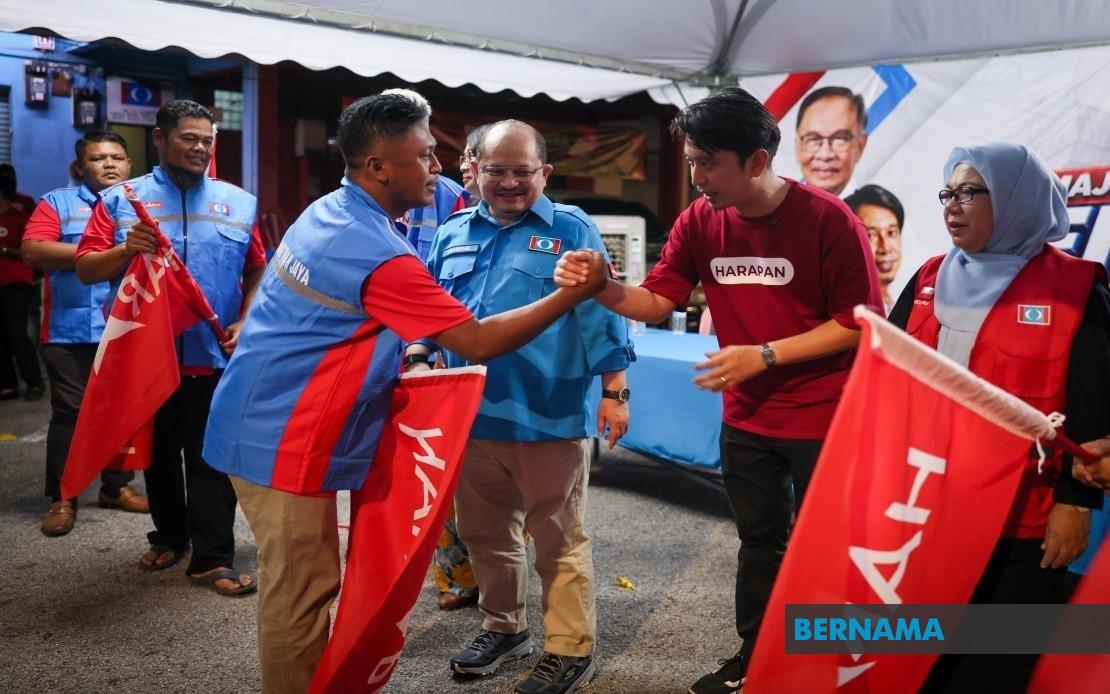
Parti Keadilan Rakyat (PKR) Melaka has committed to unveiling its candidates for the forthcoming state election well in advance of polling day, a strategic decision aimed at providing newcomers to politics adequate time to prepare themselves for public scrutiny. The accelerated timeline reflects the party's determination to field fresh political talent while maintaining electoral competitiveness in a state that has become increasingly contested ground between the major coalitions.
Adam Adli Abdul Halim, acting chairman of the Melaka PKR Leadership Council, outlined the party's revised approach during an event launching the Keadilan Election Machinery for the Hang Tuah Jaya branch in Taman Bukit Piatu. The decision to move up the candidate announcement represents a deliberate shift from past practice, when PKR had repeatedly struggled to declare its nominees in timely fashion due to competing organisational demands and internal deliberations. By bringing forward the schedule this time, the party hopes to avoid the rushed preparations that have characterised previous campaigns.
The candidate selection process itself operates through a carefully structured framework involving multiple screening stages. Initial assessments occur at the branch level before advancing to state-level evaluation, after which recommendations proceed to party headquarters for final approval by the party president. This tiered approach, while administratively intensive, allows PKR to apply consistent standards across all potential nominees and ensure that selections reflect party values and strategic objectives. The extended timeline provides sufficient space for this multi-layered vetting without compromising the eventual quality of candidates.
Diversity represents a central consideration in PKR's recruitment strategy for the Melaka election. Adam Adli emphasised that the party is deliberately seeking to balance representation between women and young voters, recognising that contemporary electoral politics demands inclusive candidate slates that reflect demographic realities. This commitment to diversification requires careful planning and individual candidate development, making early announcement and preparation cycles essential. The party acknowledges that simply fielding fresh faces without adequate mentoring and support would undermine both candidates and the broader electoral message.
Parallel to candidate selection, PKR is investing substantial resources in strengthening its ground machinery across multiple constituencies. A series of planned launches in Tangga Batu, Hang Tuah Jaya, Alor Gajah, Masjid Tanah and Jasin will establish operational frameworks designed to mobilise voters and coordinate campaign activities at local levels. Adam Adli, who also serves as Deputy Minister of Higher Education, stressed that robust machinery takes priority even before candidate identity is settled. The underlying logic reflects sound electoral management: an effective ground operation can compensate for candidate deficiencies, while even outstanding candidates struggle without organised support networks.
Coalition-building remains an active dimension of PKR's Melaka strategy, though negotiations with Barisan Nasional have not yet entered formal phases. Informal discussions between Pakatan Harapan and BN representatives have explored the possibility of electoral cooperation, but substantive agreements remain absent. PH election director Datuk Seri Amirudin Shari has initiated contact with Melaka Chief Minister Datuk Seri Ab Rauf Yusof to arrange detailed negotiations, signalling serious intent to explore collaboration. However, the exploratory nature of current exchanges suggests that significant obstacles may yet impede agreement.
Adam Adli framed coalition discussions within a broader context of electoral civility and democratic norms. Beyond the transactional benefits of formal cooperation, interparty communication creates space for discussing campaign conduct and reducing the incidence of what he characterised as harsh and dirty politics. In Malaysian electoral contexts, where personal attacks and negative campaigning frequently dominate campaign discourse, any willingness to establish ground rules for more respectful competition represents meaningful progress. Both PH and BN have expressed openness to structured dialogue, indicating shared recognition that election quality benefits from mutual restraint.
The negotiations between major coalitions carry particular significance for Melaka given the state's recent political volatility. The state has experienced rapid shifts in governmental control, reflecting deep voter ambivalence about existing political arrangements. An electoral agreement between PH and BN could stabilise the political landscape by reducing three-cornered contests and limiting spoiler effects. Conversely, failure to reach accommodation would likely produce fragmented voting that rewards disciplined campaign operations and punishes organisationally weak contenders.
PKR has simultaneously made clear its capacity to contest Melaka independently if coalition discussions falter. This position reflects realistic assessment that BN, currently governing the state through Chief Minister Yusof, may prefer maintaining incumbent advantage over power-sharing arrangements. PKR's autonomous preparation assumes that negotiations could conclude without agreement, requiring the party to mount a competitive campaign as opposition force rather than coalition partner. This dual-track readiness indicates pragmatic political management rather than ideological rigidity.
For Malaysian voters observing Melaka developments, the early candidate announcement and machinery emphasis signal that electoral competition in the state will proceed on relatively organised terms. Unlike situations where last-minute nominations and minimal preparation create chaotic campaigns, PKR's advance scheduling permits deliberate strategy development and candidate vetting. Whether this disciplined approach translates to electoral advantage depends on candidate quality, campaign messaging, and the ultimate coalition configuration, but the structural foundation appears substantially more robust than recent Melaka electoral cycles.

