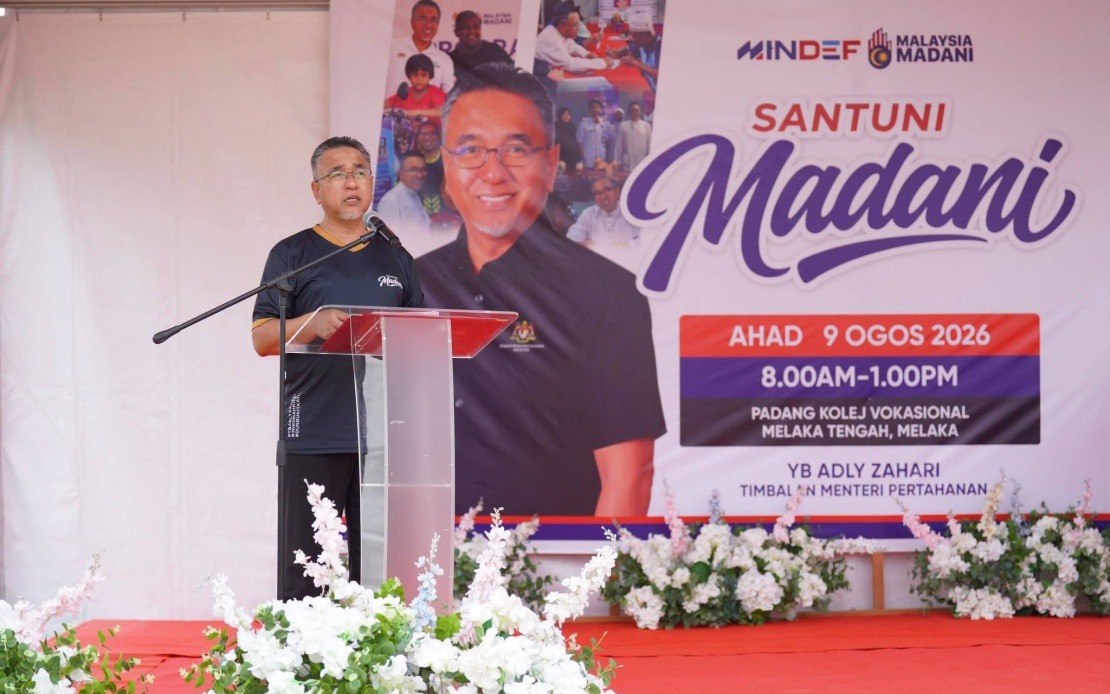
Melaka's Pakatan Harapan leadership has signalled openness to exploring political alliances ahead of the state election, though concrete decisions on partnership terms and seat allocations remain under discussion. Speaking at an event in Melaka Tengah on August 9, coalition chairman Adly Zahari underscored the flexibility within PH's negotiating position, emphasising that various cooperation models exist within democratic systems and that the coalition welcomes approaches from interested parties.
The breadth of PH's current stance reflects the coalition's strategic calculation that expanded alliances could enhance its electoral prospects in Melaka, where it faces considerable competitive pressure. Adly made clear that while internal discussions have taken place—two rounds of meetings held to evaluate the coalition's strength—formal decisions at the PH level have not crystallised. This measured approach allows negotiating room while signalling that the coalition is not locked into any predetermined framework.
A notable distinction emerges in PH's approach to Barisan Nasional. Adly explicitly confirmed that direct discussions with BN have not commenced, yet the coalition remains receptive to parties whose political philosophy aligns with Malaysia MADANI principles. This careful language reflects sensitivities within PH's own ranks, where some members may favour cooperation while others prefer to contest independently. The framing suggests PH is creating space for bottom-up engagement without centralised commitment.
PKR, one of PH's three main components, offered its own perspective through state leadership council acting chairman Adam Adli Abd Halim. He acknowledged Melaka's distinctive political environment compared to other states participating in the federal Unity Government arrangement, suggesting that local dynamics demand customised approaches rather than uniform national templates. This recognition matters because Melaka's political character—with its particular community composition, historical factional patterns, and demographic shifts—genuinely differs from peninsular states like Selangor or Negeri Sembilan.
Adam Adli's reference to ongoing informal communication with BN, despite absence of formal negotiations, hints at the delicate dance characterising Malaysian coalition politics. Personal relationships and party-to-party contacts often precede official overtures, allowing politicians to test receptiveness without public commitment. The distinction between formal and informal channels provides political cover for both potential partners while maintaining flexibility.
Regarding seat targets, PH's ambitions are notably ambitious given current circumstances. The coalition presently holds five of Melaka's 28 state assembly seats, representing roughly 18 percent representation. Leadership assessments centre on three parliamentary constituencies where PH achieved federal victories—Alor Gajah, Kota Melaka, and Hang Tuah Jaya—alongside three additional areas identified as holding potential: Tangga Batu, Masjid Tanah, and Jasin. This geographic distribution across six parliamentary zones suggests PH believes it commands competitive capacity across most of Melaka's populated regions.
The coalition's confidence in expanding its footprint depends partly on whether federal-level PH performance translates downward to state contests. Malaysia's electoral patterns increasingly show ticket-splitting behaviour, where voters support different coalitions at federal and state levels. PH's federal strength may not automatically guarantee state-level gains, particularly in constituencies where local personalities, incumbent advantages, or community grievances diverge from national sentiment.
Cooperation dynamics could materially alter PH's electoral mathematics. If the coalition negotiates seat-sharing agreements—whether with minor parties, independent candidates, or larger partners—it could concentrate resources on winnable contests and avoid three-way splits that benefit incumbents. Conversely, overextended cooperation might alienate PH's base voters who view such arrangements as pragmatic betrayals of principles, or create internal tension if seat allocations dissatisfy component parties like DAP, PKR, and Amanah.
The PKR representative's emphasis on state assemblymen focusing on constituency work and minimising political polemics reflects awareness that excessive coalition manoeuvring can generate voter fatigue and cynicism. In Melaka, where federal coalition politics have created substantial administrative instability—including multiple changes in state leadership over recent years—voters may prioritise governance effectiveness over coalition configurations. This pressure creates incentive for PH to demonstrate tangible development outcomes while negotiating alliances.
The timing of these statements matters within Malaysia's political calendar. State elections typically occur unpredictably due to dissolution possibilities, meaning coalition discussions must happen in preparation mode rather than response to formal dissolution announcements. PH's current posture of receptive flexibility allows the coalition to maintain initiative in partnership conversations while preparing internal machinery for potential electoral competition.
For Southeast Asian context, Melaka's coalition dynamics reflect broader regional patterns where single-party dominance has eroded, forcing major coalitions toward pragmatic power-sharing arrangements. Thailand's fractious post-election coalition-building, Indonesia's complex parliamentary mathematics, and the Philippines' shifting alliance patterns all demonstrate how electoral pluralism increasingly requires negotiated governance arrangements. Malaysia's Melaka situation exemplifies this regional trend.
PH's hedging strategy—expressing openness while avoiding premature commitments—recognises that state-level politics operate according to distinct rules than federal arrangements. Local issues, community leaders, and demographic shifts create unique contests in which national coalition templates may not fit precisely. By maintaining flexibility, PH positions itself to capitalise on whatever configuration proves most advantageous when electoral conditions crystallise.

