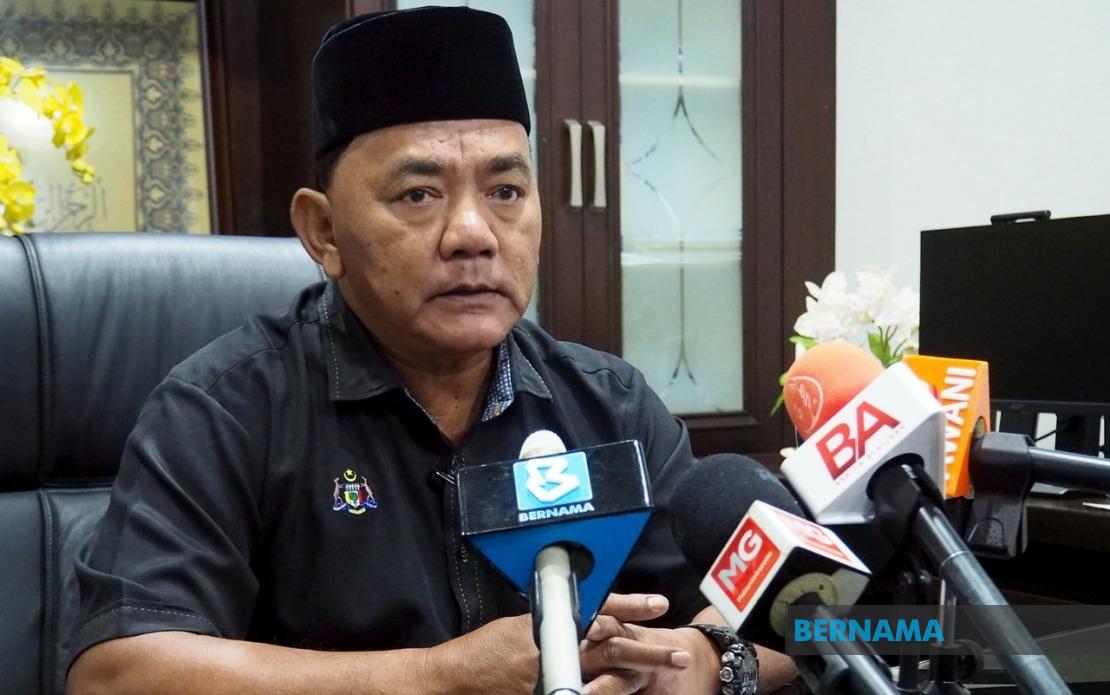
Melaka is positioning itself for a significant upgrade to its Islamic legal infrastructure, with state authorities setting their sights on launching a Main Syariah Court by next year as a new tier within the existing judicial hierarchy. The move represents a deliberate attempt to modernize how the state handles religious and family law matters, reflecting growing demand for faster and more accessible justice in these domains. Datuk Rahmad Mariman, who chairs the State Education, Higher Education, and Religious Affairs Committee, outlined the timeline during an official event, emphasizing that implementation remains contingent on completion of the necessary legislative procedures.
The establishment of this additional court tier sits within a broader reform agenda that Melaka authorities are advancing through two key legislative instruments. The Melaka Syariah Courts Bill and the accompanying Syariah Court Civil Procedure (Court Fees) Rules represent the legal scaffolding for these changes, signaling the state's commitment to restructuring how it delivers Islamic justice. Beyond simply adding a new court, these measures will also address the mechanism for appointing Syarie judges, suggesting that Melaka recognizes inefficiencies in personnel selection that may currently slow judicial appointments. The state government views these reforms as interconnected components of a single modernization drive rather than isolated initiatives.
Any constitutional changes to Melaka's Islamic legal framework must clear the State Assembly, meaning the timetable for launch depends on successful passage of legislation during upcoming parliamentary sessions. This procedural requirement, while standard across Malaysian states, introduces an element of uncertainty into the timeline. Nevertheless, the announcement indicates that preparatory work has advanced sufficiently to allow for public disclosure of implementation targets. The fact that authorities are willing to commit to a specific year suggests internal confidence that legislative hurdles can be overcome, though political dynamics within the state assembly could alter this trajectory.
Data released during the announcement underscores why Melaka believes judicial expansion is necessary. Between January 2024 and August 2026, the state's Syariah Court processed 11,037 resolved cases out of 13,424 total filings—a completion rate of 82 percent. While this figure represents reasonably robust throughput, the persistence of nearly 2,400 unresolved cases indicates growing caseloads that strain existing institutional capacity. For a state with Melaka's population and demographics, the accumulation of pending matters in family law, inheritance disputes, and related domains suggests that a single court tier may be approaching saturation point.
The broader context for this move reflects a pattern visible across Malaysia's states, where Syariah courts have become increasingly central to how Muslim citizens navigate legal challenges. Family matters—marriage, divorce, guardianship, inheritance—form the core of Syariah jurisdiction, and rising case volumes reflect both demographic growth and increased legal awareness among the public. Melaka's move to create appellate capacity through a Main Syariah Court would align the state with judicial best practice, allowing initial decisions to be reviewed and providing a mechanism for correcting errors or inconsistencies.
The timing of this announcement, made during the Melaka Syariah Court Mahabbah Programme 2026 event, illustrates how the state is attempting to reframe Islamic justice as customer-responsive rather than bureaucratic. The "Mahabbah" program—centered on concepts of love and compassion—aims to demystify the Syariah system for ordinary citizens and explain their rights and responsibilities when navigating family disputes. This outreach dimension suggests that Melaka officials recognize that the public's relationship with Islamic courts extends beyond case outcomes to encompass accessibility, dignity, and clarity about legal processes.
Melaka Mufti Datuk Abdul Halim Tawil and Chief Syarie Judge Azzeman Omar's participation in these announcements signals institutional alignment across the state's Islamic administrative hierarchy. When religious authorities, senior judges, and political leadership speak with a unified voice on judicial reform, it typically indicates that proposals have passed internal vetting and enjoy cross-institutional support. This consensus matters for implementation, as it reduces the likelihood of bureaucratic friction during the transition period when a new court tier is being operationalized.
For Southeast Asian observers, Melaka's initiative reflects how Malaysian states are independently experimenting with institutional innovations within their constitutional jurisdictions over Islamic law. Unlike civil courts, which operate under a unified national framework, Syariah courts remain state-administered bodies, allowing provinces to pilot reforms that may later be adopted regionally. Should Melaka's main court model prove effective, other states facing similar caseload pressures may adopt comparable structures, gradually reshaping the landscape of Islamic justice delivery across Malaysia.
The implementation of a Main Syariah Court would create a two-tiered system where initial cases proceed through established mechanisms while appellate review occurs at the new senior tier. This structure is standard in civil jurisdictions but represents a relatively novel development for Islamic courts in Malaysia, where appellate capacity has historically been limited. The creation of such capacity would enhance public confidence in the system by offering recourse to those dissatisfied with initial decisions, potentially reducing perceptions of finality and arbiter bias that sometimes affect Syariah court legitimacy.
Melaka's concurrent commitment to streamlining Syariah judge appointments indicates awareness that expanding court capacity without improving personnel selection processes would merely create larger bottlenecks. The quality of judicial decisions depends fundamentally on the caliber of judges, making recruitment and appointment mechanisms as critical as structural reforms. By addressing both simultaneously, the state positions itself to expand not just the quantity of judicial capacity but its quality dimension as well.
The state's announcement of celebrations for Maulidur Rasul on August 29, featuring awards recognizing Islamic institutional excellence, demonstrates how Melaka is embedding these judicial reforms within broader narratives about Islamic governance and institutional development. Such ceremonial recognition serves both symbolic and practical functions, signaling public commitment to religious administration while creating opportunities to highlight achievements in judicial administration and personnel performance.
For Malaysian citizens and regional observers, Melaka's trajectory offers insights into how subnational governments are responding to the intersection of growing Muslim populations, rising litigation rates, and evolving public expectations about judicial efficiency. The success or failure of this Main Syariah Court experiment may influence how other states calibrate their own institutional strategies over the coming decade.

