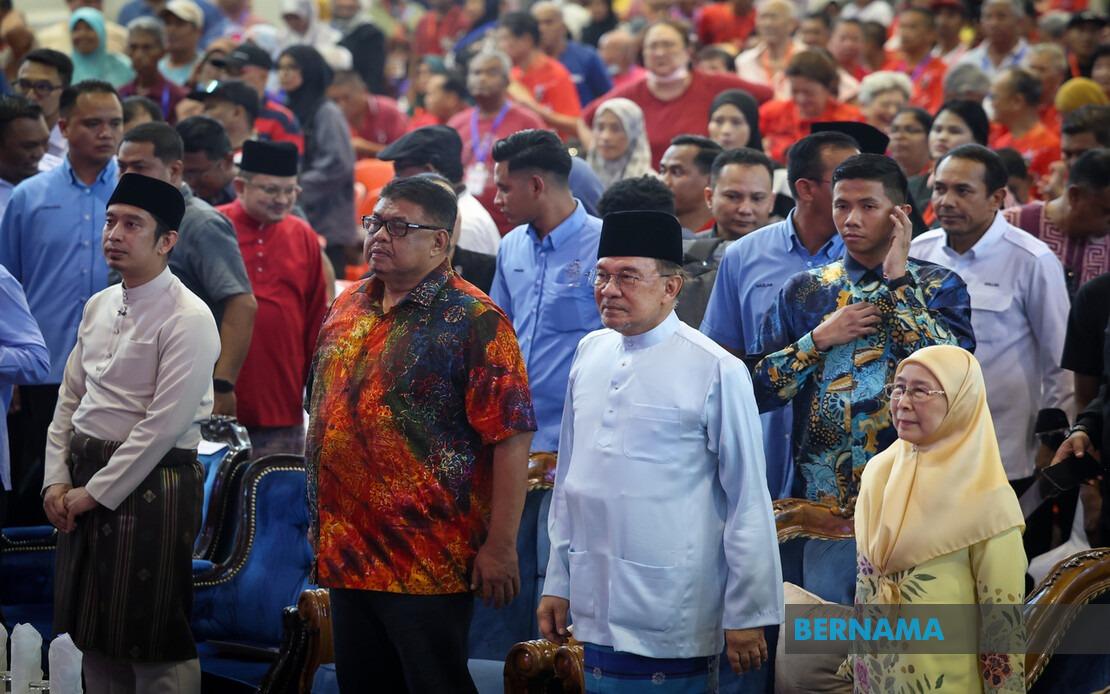
Melaka has emerged as a regional leader in environmental stewardship, establishing comprehensive systems to protect and enhance its natural landscape heritage. Chief Minister Datuk Seri Ab Rauf Yusoh outlined the state's multi-pronged approach during the National Landscape Day 2026 celebration held this week, where Prime Minister Datuk Seri Anwar Ibrahim officiated the event alongside Housing and Local Government Minister Nga Kor Ming. The initiative represents a significant shift toward treating landscape development as a strategic policy priority rather than an afterthought to urban planning.
At the heart of Melaka's sustainability agenda lies the enforcement of the Tree Preservation Order under the Town and Country Planning Act 1976, a legal mechanism designed to safeguard trees of high ecological and cultural value. This foundational protection has been substantially strengthened by the introduction of the Melaka State Landscape Guidelines in 2022, which establish a unified framework governing how implementing agencies, local authorities, developers and other stakeholders approach landscape development. The guidelines mandate that such projects be undertaken in a manner that is planned, maintains high quality standards, reflects the state's distinctive identity and adheres to sustainability principles.
Perhaps most significantly, Melaka has embraced digital innovation to transform tree management from a fragmented, often ad-hoc process into an integrated, data-driven system. The MyTrees@Melaka initiative, launched in 2017, represents a state-led technological solution that has already compiled an impressive 70,753 tree inventory records as of 2026. This comprehensive database, developed through collaboration between Melaka's four local authorities and the state Forestry Department, enables systematic monitoring and maintenance of the urban canopy. For Malaysian policymakers observing similar challenges in other states—where tree loss in urban expansion frequently goes untracked—this digital infrastructure offers a replicable model.
The practical results of Melaka's commitment are visible on the ground. As of last June, the state government had successfully planted 10,588 trees throughout its various municipalities, demonstrating that policy frameworks translate into concrete environmental action. Critically, the state has instituted a requirement that every newly planted tree be recorded within the MyTrees@Melaka system, monitored continuously and maintained according to data-driven protocols. This approach eliminates the common scenario where planted trees die due to neglect or inadequate aftercare, ensuring that both financial investment and environmental benefit are maximized.
Beyond tree management, Melaka is pursuing a broader vision of landscape development that integrates geological heritage, biodiversity, cultural identity and economic opportunity. The state is advancing the Aspiring Melaka Geopark concept, which positions Melaka's distinctive geological formations and natural features as educational and touristic assets. This framework recognizes that landscape preservation need not be purely conservation-focused; instead, it can generate sustainable economic returns through nature-based tourism while maintaining ecological integrity. For a state seeking to diversify its economic base beyond traditional manufacturing and agriculture, this integration of conservation and commerce represents smart policy.
Three major landscape projects were implemented in Melaka during the previous year, each designed to enhance public access to improved natural spaces. The SDG Park at Sungai Melaka, Kampung Felda Air Kangkung Recreation Park and Taman Kejiranan Pulai Indah represent investments in creating functional, usable green spaces rather than merely aesthetic improvements. The state plans to accelerate this momentum with three additional MADANI Recreational Park projects commencing this year, including landscape upgrades at Dataran Sejarah Ayer Keroh, the Ayer Keroh Art Lanai and the Bukit Beringin Masjid Tanah MADANI Recreational Park.
Ab Rauf articulated an important conceptual distinction during the landscape day celebration: that development progress cannot be measured solely through physical infrastructure expansion. Instead, he emphasized that genuine progress encompasses the capacity to preserve ecosystems while simultaneously enhancing quality of life for citizens. This philosophical positioning—grounded in what he termed the MADANI framework—suggests Melaka is moving beyond the conventional development model that treats environmental protection and economic growth as inherently competitive objectives.
The National Landscape Day 2026 celebration itself served as a substantial knowledge-sharing platform, attracting approximately 3,000 participants including landscape architecture professionals, local authority representatives, industry stakeholders, academics and enthusiasts. The twelve local authority pavilions showcased regional creativity and distinct landscape identities, facilitating the exchange of ideas and best practices across Malaysia's landscape sector. For a country often characterized by sectoral silos and limited inter-state coordination, such platforms provide valuable opportunities for horizontal learning.
Melaka's approach also reflects broader regional and global trends toward green urbanism and nature-based solutions for urban challenges. As Southeast Asian cities grapple with rapid urbanization, heat stress and environmental degradation, Melaka's systematic inventory and management protocols offer lessons applicable across the region. The state's integration of digital tools, legal protection mechanisms, community engagement and economic incentives creates a holistic framework that addresses landscape development comprehensively rather than piecemeal.
The implications for Malaysian governance extend beyond environmental management alone. Melaka demonstrates that state-level leadership can drive innovation in policy implementation, particularly through technological solutions that enhance transparency and accountability. The MyTrees@Melaka system creates a permanent record of environmental efforts—tree counts, locations, species composition and maintenance history—that builds institutional memory and enables evidence-based decision-making. This contrasts sharply with traditional approaches where landscape decisions remain ad-hoc and undocumented.
Looking forward, Melaka's model raises important questions about scalability and adaptation for other Malaysian states with different geographic, demographic and economic contexts. Urban states like Selangor and Kuala Lumpur face substantially higher density and development pressure, while rural states must balance agricultural land use with forest conservation. Nevertheless, the core principles underlying Melaka's approach—comprehensive inventory systems, legal protection mechanisms, stakeholder collaboration and outcome measurement—remain universally applicable.
The state's landscape initiatives also align with Malaysia's broader sustainability commitments under international frameworks, including climate action targets and biodiversity preservation goals. By demonstrating tangible progress in tree conservation and ecosystem management, Melaka strengthens Malaysia's credibility in global environmental diplomacy while building public confidence in government sustainability rhetoric.

