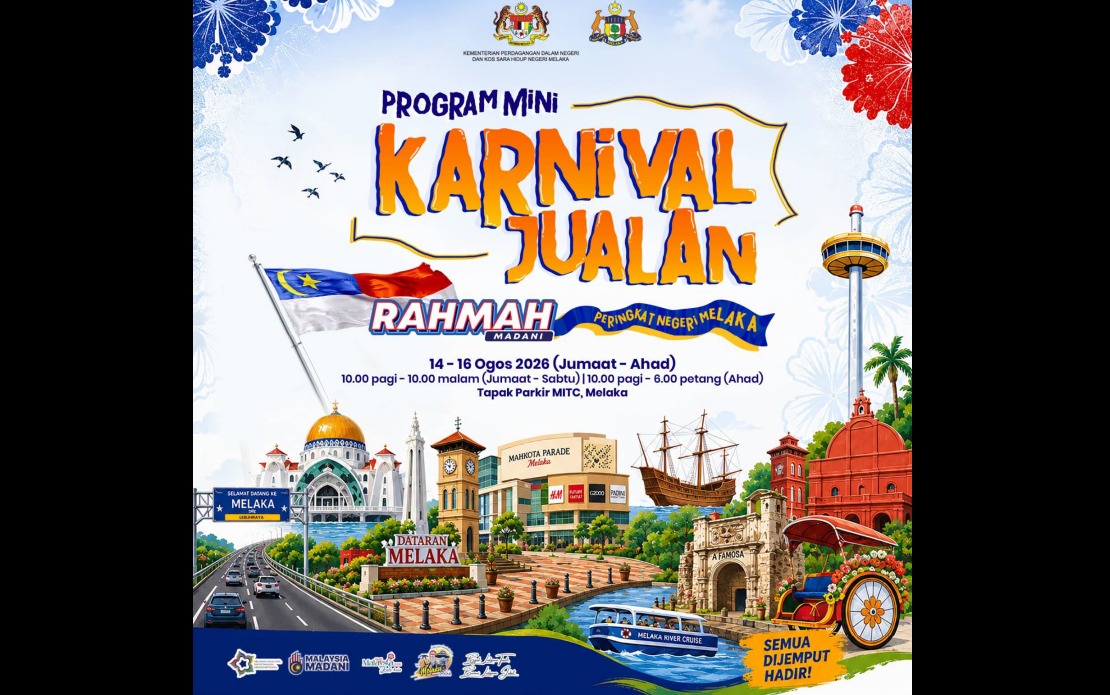
The Melaka Domestic Trade and Cost of Living Ministry (KPDN) is preparing to launch an ambitious community engagement event this weekend, with projections suggesting the three-day carnival will welcome more than 10,000 visitors to the Melaka International Trade Centre. Running from Friday through Sunday, the event represents a strategic effort by the ministry to reshape its public interface, moving beyond traditional bureaucratic channels to create a more accessible and engaging platform where Malaysians can directly interact with government services aimed at alleviating household expenses and improving purchasing power.
Senator Datuk Dr. Fuziah Salleh, the KPDN deputy minister, framed the carnival as a manifestation of the ministry's commitment to democratising access to its programmes. Rather than requiring citizens to navigate government offices or portal systems, the carnival brings multiple initiatives under a single roof, packaged within an entertainment-focused environment. This approach reflects a broader policy shift across Malaysian ministries toward citizen-centric service delivery, particularly relevant given persistent public concern about the rising cost of living across Southeast Asia.
Central to the carnival's appeal is the MADANI Rahmah Sales Programme, a government initiative designed to provide everyday essentials at substantially reduced prices. For households already grappling with inflation pressures—a concern that has intensified across the region following global economic disruptions—access to bulk purchasing opportunities and subsidised goods represents tangible relief. The carnival format allows families to assess product quality and variety before committing to purchases, addressing a common consumer hesitation with discount schemes that sometimes compromise on item selection or freshness.
Beyond the merchandise angle, the KPDN has deliberately constructed the event as a dual-purpose initiative combining commerce with education. Exhibition booths will showcase the ministry's consumer protection mechanisms, price monitoring systems, and enforcement capabilities. This transparency serves multiple functions: it builds public confidence in government oversight of market practices, educates consumers about their rights, and demonstrates the institutional machinery working to suppress price gouging and unfair trading practices. For Malaysian consumers often frustrated by sudden price spikes, understanding how regulatory bodies operate can prove reassuring.
The carnival's programming reflects sophisticated event design targeting demographic inclusivity. The inclusion of an e-sports tournament in collaboration with Todak signals recognition of younger demographics' entertainment preferences, while Menu Rahmah food truck operations appeal to families seeking affordable meal options. Children's colouring competitions and performances by local artistes maintain multigenerational appeal, ensuring that attendance serves not merely transactional purposes but also strengthens community bonds through shared experience. This breadth of activity transforms what might otherwise feel like a government promotion into a genuine social gathering.
Antique car and classic motorcycle exhibitions add an unexpected cultural dimension to the carnival schedule. These displays serve as nostalgic touchstones and conversation starters, fostering an atmosphere where citizens feel welcomed as participants in a celebration rather than consumers queuing for discounts. Stage activities and family-oriented programming underscore this shift away from purely utilitarian government engagement toward experiences that generate positive associations with public institutions.
The timing and venue selection warrant consideration within Malaysia's broader political and economic context. Melaka, as a historically significant state with substantial tourism infrastructure, provides a suitable backdrop for showcasing KPDN initiatives to both residents and visiting tourists. The Melaka International Trade Centre offers professional facilities capable of accommodating large crowds while maintaining operational efficiency across multiple concurrent activities. Running the carnival across a weekend maximises accessibility for working families while capitalising on higher footfall patterns typical of leisure-focused settings.
Operational hours reflect practical considerations around energy management and staff scheduling. Friday and Saturday sessions extend from 10 am to 10 pm, accommodating both morning shoppers and evening family visitors, whilst Sunday's abbreviated schedule from 10 am to 6 pm acknowledges religious observances and the week's preparation requirements. This rhythm provides opportunities for different visitor cohorts to attend at their convenience without creating congestion-related operational challenges.
For Malaysian policymakers monitoring cost-of-living pressures that have emerged as primary electoral concerns, initiatives like this carnival demonstrate government responsiveness to public anxiety without requiring substantial fiscal redistribution. By leveraging existing KPDN platforms and capacity, the ministry essentially repackages established programmes within an engaging format, generating positive media coverage and demonstrating tangible commitment to affordability without necessitating additional budget allocations. This efficiency appeals to fiscally-constrained administrations balancing multiple competing demands.
The carnival also serves as a pilot programme potentially replicable across other states, establishing a template for regional KPDN offices to emulate. Should attendance targets prove accurate and visitor feedback register positive sentiment, this model could become a regular fixture in Malaysia's consumer advocacy calendar, creating predictable opportunities for families to access subsidised goods while simultaneously building institutional legitimacy for price regulation mechanisms. For other ASEAN nations grappling with similar cost-of-living challenges, such community-based intervention models offer alternative policy tools beyond pure subsidy or price control approaches.
From a consumer protection standpoint, the carnival's emphasis on direct advisory services and business matching sessions creates informal channels through which residents can raise complaints, seek clarification about market regulations, or explore entrepreneurial opportunities within monitored trading frameworks. These interactions generate valuable intelligence for KPDN enforcement teams whilst simultaneously building public understanding of regulatory boundaries and appropriate market conduct standards. The informal setting likely encourages more candid consumer engagement than traditional complaint mechanisms.
The deputy minister's invitation to the local community carries implicit recognition that carnival success depends fundamentally on public participation. Rather than a top-down initiative, the framing positions the event as collaborative celebration requiring community enthusiasm. This rhetorical approach, whilst sometimes dismissed as performative, carries psychological significance in contexts where citizens frequently experience government as imposing rather than inviting. The linguistic choice to welcome rather than merely announce signals institutional respect for citizen agency, a distinction that resonates across diverse socioeconomic demographics.
Ultimately, the Melaka KPDN Mini Carnival exemplifies how Malaysian government agencies are experimenting with experiential governance strategies—moving beyond administrative announcements toward immersive public encounters that simultaneously advance policy objectives and generate positive citizen experiences. Should the anticipated 10,000-visitor projection materialise, the carnival will constitute a successful proof-of-concept for this evolving approach to cost-of-living intervention, establishing a replicable model for government-community engagement across Malaysia's domestic trade landscape.

