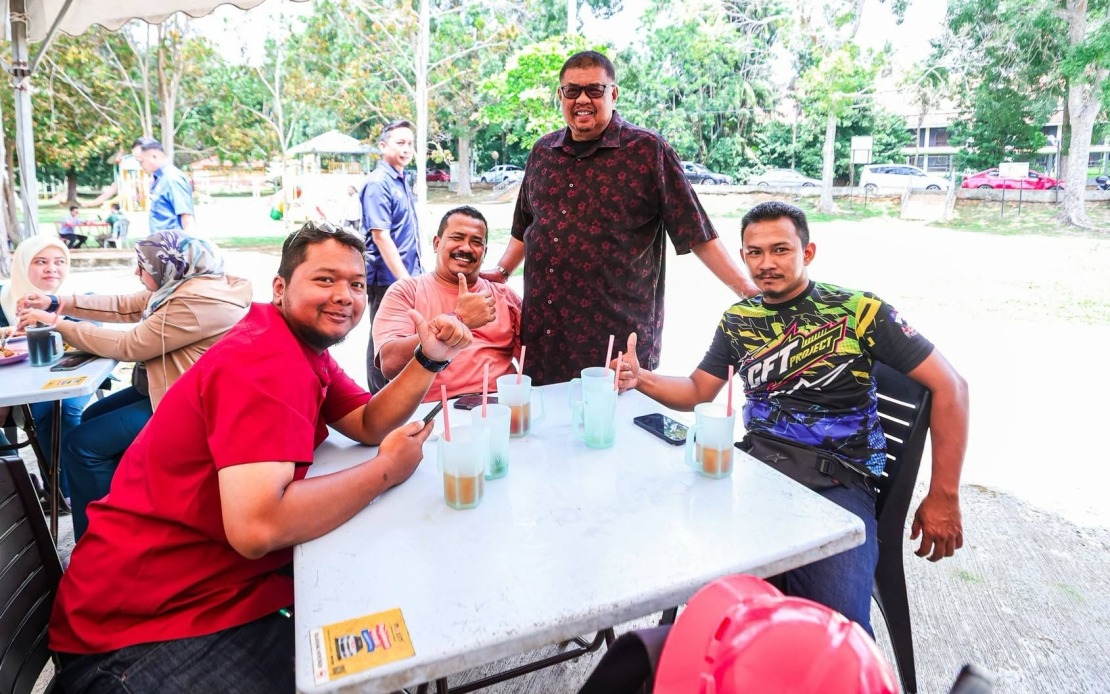
Melaka has notched up a significant milestone in public service delivery, with Chief Minister Datuk Seri Ab Rauf Yusoh announcing that satisfaction levels among residents have climbed to 91.94% this year. The figure represents a strong endorsement of the state administration's approach to connecting with constituencies and addressing citizen grievances through structured engagement mechanisms.
The impressive satisfaction metric stems substantially from the Wakil Rakyat Untuk Rakyat (WRUR) Programme, a grassroots initiative that mobilizes government workers across multiple agencies to visit communities in every state constituency. Unlike traditional top-down service delivery models, the WRUR approach embeds civil servants directly in neighborhoods for extended periods, enabling them to hear concerns firsthand and work toward practical resolutions. This two-week engagement cycle has evidently resonated with residents, who increasingly perceive government as responsive rather than distant.
About 379 state civil servants received the Excellent Service Award (APC) during a formal recognition ceremony, with a further 39 receiving the Special Service Award (AKP) based on their 2025 performance assessments. These accolades underscore the state's strategy of institutionalizing excellence through formal recognition—a practice that signals to the broader bureaucracy that service quality directly impacts career advancement and professional standing. By linking individual performance to state-level achievements, Melaka appears to have created a feedback loop that reinforces the importance of citizen-focused work.
Ab Rauf cautioned against complacency despite these accomplishments, framing the satisfaction figures not as a destination but as an escalating mandate for continuous improvement. He emphasized that elevated public confidence translates into higher expectations, requiring administrators to remain perpetually vigilant about service standards. This framing is particularly relevant for Southeast Asian governments, where citizen satisfaction surveys often fluctuate rapidly in response to economic conditions, infrastructure projects, or political developments. Melaka's leadership appears cognizant that maintaining high ratings demands sustained institutional effort rather than one-time initiatives.
The state government's performance extends beyond service delivery surveys. During the first half of 2025, Melaka accumulated over ten state, national, and international awards and recognitions. Emboldened by this trajectory, officials have set an ambitious target of securing more than twenty accolades by year-end—a goal that reflects confidence in institutional capacity but also indicates the competitive landscape among Malaysian states vying for recognition on governance and development metrics.
Central to Melaka's administrative philosophy is the MESRA concept, which the Chief Minister described as the foundational pulse guiding state government operations. While the source does not elaborate extensively on what MESRA encompasses, the framework evidently prioritizes trust-building, respect, and establishing public service as a source of community pride. This values-based approach aligns with contemporary global trends emphasizing that bureaucratic legitimacy rests not merely on delivering services but on embodying ethical principles that citizens recognize and appreciate.
The emphasis on civil service culture carries particular weight in Malaysia's federal context. Individual state governments increasingly compete on administrative reputation as a differentiator, especially given that many delivery functions overlap between state and federal levels. A state that successfully builds a reputation for responsive, excellent governance potentially attracts investment, tourism, and skilled talent while also strengthening political support for state-level initiatives. Melaka's deliberate investment in staff recognition and direct community engagement represents a calculated effort to establish such competitive advantage.
For Malaysian readers monitoring state government performance, the 91.94% satisfaction figure warrants context within regional comparisons. While specific comparative data on other Malaysian states' satisfaction metrics is not universally published, anecdotal reports and media coverage suggest that public contentment with state administration varies considerably across Malaysia. Melaka's reported figure—if methodologically sound—positions the state as a potential leader in perceived administrative effectiveness, though independent verification of methodology and sample representativeness would strengthen confidence in the data.
The WRUR programme also illuminates evolving approaches to closing the gap between government and citizens in Southeast Asia. Rather than relying exclusively on digital platforms, customer service centers, or formal complaint mechanisms, the initiative acknowledges that direct, face-to-face engagement remains potent for building trust and resolving complex local issues. For residents in constituencies where civil servants conduct regular two-week campaigns, the experience likely differs substantially from interactions with distant bureaucratic offices—a distinction that satisfaction surveys may capture without fully explaining causation.
Looking forward, Melaka's trajectory raises questions about scalability and sustainability. Deploying civil servants across all constituencies for extended engagement periods requires significant resource allocation and coordination. Maintaining consistent service quality across 28 constituencies in a state of roughly 900,000 people demands robust management systems and accountability frameworks. The awards programme helps reinforce quality standards, but only if evaluation criteria remain rigorous and transparent.
For Malaysia's broader governance landscape, Melaka's experience suggests that public satisfaction with state administration can be meaningfully improved through deliberate, structured engagement combined with internal performance incentives. The combination of direct community presence (WRUR) and formal recognition mechanisms (service awards) creates institutional reinforcement for the behaviors the government wishes to encourage. Other states monitoring Melaka's approach may find elements worth adapting to their own contexts, though outcomes will depend on local circumstances and implementation fidelity.

