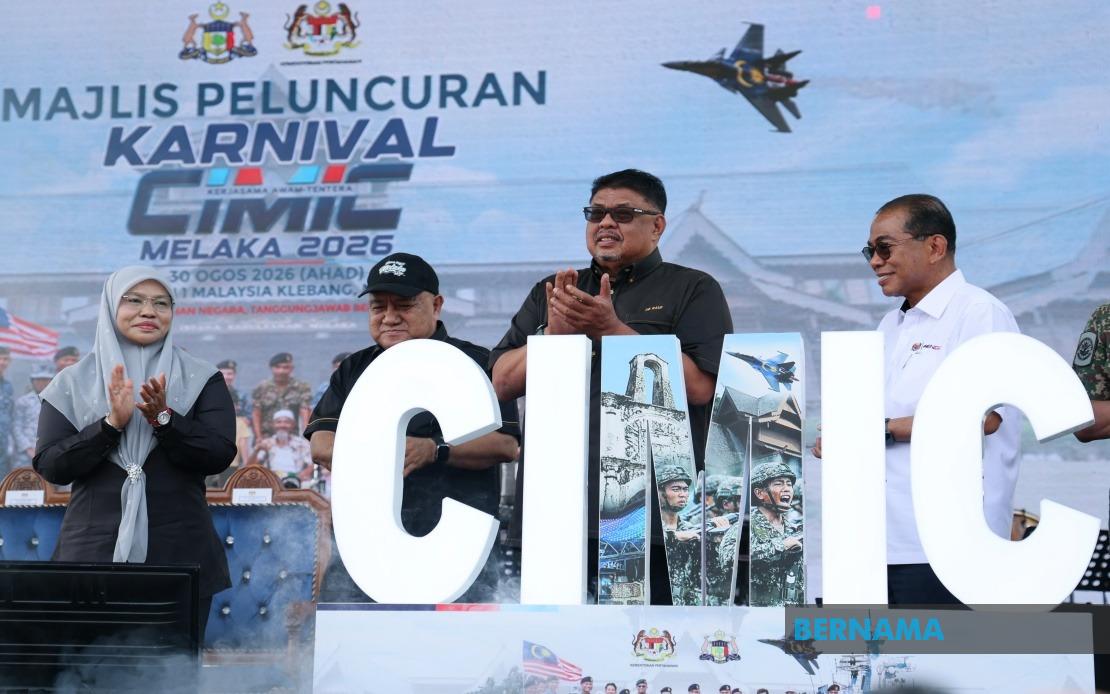
Malaysia's Defence Ministry has begun investigating whether the prestigious Langkawi International Maritime and Aerospace Exhibition could relocate to Melaka, with Defence Minister Datuk Seri Mohamed Khaled Nordin signalling the shift would improve public access while requiring significant state investment in supporting infrastructure. The proposal emerged during the Civil-Military Cooperation Carnival at Klebang, where Mohamed Khaled outlined the strategic advantages of a mainland location whilst acknowledging the substantial capital expenditure needed to prepare the necessary facilities.
The Klebang area, situated near Batu Berendam airport and accessible to maritime berthing facilities, has been identified as a viable site. Mohamed Khaled emphasised that this geographical configuration mirrors Langkawi's essential attributes—aviation and naval access—whilst offering a fundamental advantage: substantially greater convenience for attendees travelling from across the nation. The current island setting, he suggested, inherently restricts participation to those willing to undertake the additional journey, thereby limiting the exhibition's reach and impact within Malaysia's defence and aerospace sectors.
Melaka Chief Minister Datuk Seri Ab Rauf Yusoh acknowledged the state's interest in hosting the international event, though he cautioned that careful evaluation of both financial capacity and tangible benefits must precede any commitment. This measured stance reflects the practical considerations involved in such undertakings, particularly given that hosting international exhibitions demands substantial upfront investment in venues, accommodation infrastructure, and supporting services. Ab Rauf indicated willingness to pursue discussions with federal authorities, provided the arrangement would prove advantageous to both administrations.
The relocation concept gained traction following Melaka's successful hosting of naval elements during this year's National Day celebrations, where six Royal Malaysian Navy vessels participated prominently. This demonstration of the state's capacity to accommodate major military-maritime activities provided tangible evidence that Melaka possesses the foundational infrastructure necessary for hosting such prestigious international gatherings. The visible presence of naval assets during civic celebrations effectively showcased the peninsula's capabilities to audiences and officials alike.
LIMA, held biennially, represents one of Asia's most significant defence industry exhibitions, attracting international suppliers, military delegations, and commercial aviation interests. The event currently rotates through Langkawi, maintaining a tradition rooted in the island's comparative isolation and dedicated maritime-aerospace testing facilities. However, accessibility challenges inherent to island venues have periodically constrained attendance among regional stakeholders and domestic participants unable to arrange multi-day trips without substantial planning.
A mainland relocation would carry strategic implications for Malaysia's regional standing within defence and aerospace sectors. Melaka's historical prominence as a maritime trading centre and its contemporary position within major Southeast Asian transportation corridors could reinforce Malaysia's positioning as a serious participant in advanced industrial sectors. Enhanced accessibility would likely attract expanded participation from regional militaries and commercial entities currently deterred by logistical complexities associated with island venues.
The financial requirements present the central challenge to any transition. Developing adequate exhibition facilities, accommodation capacity, and transportation infrastructure to international standards demands multi-year planning and considerable capital deployment. The Defence Ministry and state government would need to conduct feasibility studies examining venue construction costs, operational expenses, and revenue projections. Such analysis typically reveals whether such initiatives can achieve financial sustainability or require ongoing government subsidy.
From a Malaysian perspective, this proposal reflects broader policy considerations regarding how the nation positions itself within global defence markets and international aerospace commerce. Improving accessibility to LIMA could strengthen Malaysia's standing as a credible defence technology hub, potentially attracting expanded participation from international defence contractors currently evaluating regional engagement strategies. Southeast Asian nations increasingly compete for such prestige events, recognising their value as economic generators and platforms for demonstrating industrial capability.
The timing of this exploration warrants consideration, as Malaysia concurrently pursues broader economic diversification and regional infrastructure development. Melaka, positioned centrally within Peninsula Malaysia and connected to major transportation networks, represents strategic thinking about venue placement that extends beyond the exhibition itself. Such developments often catalyse broader investment in transport infrastructure, hospitality facilities, and commercial services benefiting local communities well beyond the exhibition period.
Implementation would require careful coordination between Defence Ministry authorities, Melaka state administration, and relevant federal agencies overseeing maritime and aviation facilities. Preliminary assessments must confirm that Batu Berendam airport and Klebang maritime facilities can accommodate exhibition-scale operations involving international military delegations, commercial aircraft displays, and naval vessel visits. Existing capacity constraints or regulatory limitations could necessitate substantial capital works before hosting becomes feasible.
The proposal also reflects increasing recognition within Malaysia's policy establishment that Langkawi's geographic peripherality, whilst historically presenting advantages for certain defence applications, increasingly constrains its utility as a venue for major international gatherings requiring regional participation. Modern exhibition dynamics emphasise accessibility and connectivity alongside facility quality, suggesting that traditional venue selection criteria merit reconsideration.
Interest in this relocation proposal extends beyond immediate exhibition considerations, touching on broader questions about how Malaysia optimally deploys limited public resources for infrastructure investment. Decisions regarding venue development require rigorous economic analysis, with particular attention to whether such investments generate returns commensurate with their fiscal impact. Both administrations have correctly signalled that preliminary assessment must precede commitment, avoiding circumstances where ambitious projects proceed without adequate planning or financial sustainability foundations.
Looking forward, further development of this concept depends upon concrete feasibility studies examining infrastructure requirements, financial implications, and operational logistics. Should these assessments support relocation viability, Malaysia would position itself advantageously within regional competition for prestigious international events whilst simultaneously improving accessibility for domestic stakeholders to an exhibition showcasing national defence and aerospace capabilities.

