Barisan Nasional will need to develop a political strategy specifically calibrated to Melaka's unique circumstances rather than recycling the blueprints that delivered decisive victories in Johor and Negeri Sembilan, according to coalition chairman Datuk Seri Dr Ahmad Zahid Hamidi. The Deputy Prime Minister's remarks underscore growing recognition within BN's leadership that state-level political dynamics vary considerably across Malaysia, demanding customised rather than standardised approaches to coalition-building and electoral strategy.
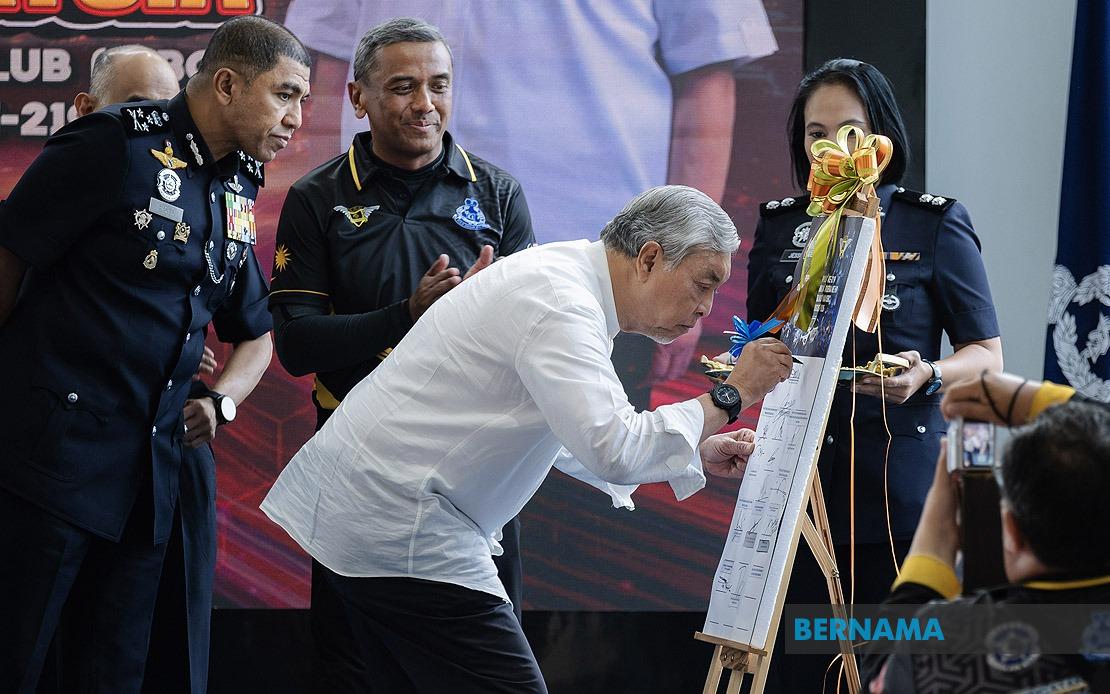
Speak at the closing ceremony of the Negeri Sembilan Contingent Charity Ride programme alongside the Ipoh Super Bike Club, Ahmad Zahid emphasised that any negotiations involving potential political partners must weigh tangible benefits against conceivable risks. This principled framework appears designed to guard against agreements that might prove disadvantageous once the electoral dust settles and governance begins in earnest. The emphasis on honest dealing and sustained commitment to pledges signals ongoing sensitivity within BN circles to accusations that the coalition has failed to honour prior political arrangements.
The Deputy Prime Minister has delegated authority to Melaka Chief Minister Datuk Seri Ab Rauf Yusoh, who simultaneously serves as state BN chairman, to conduct preliminary negotiations with potential coalition partners. These discussions will subsequently be escalated to the national level, where senior BN leadership will scrutinise proposals in detail before reaching final decisions. This hierarchical approach reflects the coalition's determination to prevent ad-hoc state-level pacts from creating unintended consequences at the federal tier.
Ahmad Zahid explicitly linked state-level political cooperation to broader efforts aimed at bolstering stability across Malaysia's national governance architecture. Rather than treating state elections as isolated contests, BN leadership increasingly frames such contests as opportunities to reinforce the federally-established Unity Government framework. This integration of state and national political calculations has become increasingly pronounced since the 2022 general election, which produced Malaysia's first coalition government spanning competing blocs at the federal level.
The Melaka state government's current term expires on December 31, creating an approaching deadline that will likely concentrate minds around the negotiating table. During the fifteenth state election, BN captured 21 of 28 available seats, while Pakatan Harapan secured five and Perikatan Nasional claimed two. These results delivered BN a commanding mandate, yet the subsequent composition of the state executive council reflects the federal government's broader political makeup, incorporating members drawn from PH alongside BN representatives.
The mirroring of federal coalition dynamics at the state level illustrates how Malaysia's political landscape has become increasingly integrated vertically, with decisions made in federal capitals invariably cascading outward to influence sub-national arrangements. The Unity Government arrangement, which reunited BN and PH after 2022, created new interdependencies that reshape calculations in individual state contests. Melaka's political future will likely reflect not simply local preferences but rather the equilibrium that federal partners judge necessary to sustain national stability.
Ahmad Zahid's nuanced statements suggest that BN leadership recognises the limits of formula-based approaches to competitive politics. The Johor and Negeri Sembilan victories, whilst impressive, emerged from particular political configurations that may not obtain in Melaka. Factors ranging from the distribution of opposition strength to the positioning of smaller parties to local community concerns could all counsel different strategic choices. The coalition's willingness to acknowledge these variations hints at a maturing approach to coalition management.
Critically, Ahmad Zahid underscored the importance of examining not merely immediate electoral gains but also longer-term governability and sustainability of any arrangement. Political agreements that deliver overwhelming majorities but alienate significant voter cohorts or generate internal friction within participating parties can create problems downstream. BN's historical experience, including recent instances where state governments have fragmented or shifted allegiance, presumably informs this more cautious calculus.
The coordination of state-level political strategy with national-level stability objectives marks a significant departure from earlier eras when state elections were treated primarily as local contests. Today's integration creates both opportunities and vulnerabilities for BN. Coordinated approaches can concentrate resources and messaging, yet they also mean that stumbles in individual states reverberate through federal structures. The coalition's apparent awareness of these dynamics signals a more sophisticated appreciation of how Malaysian federalism functions in practice.
Looking ahead, observers will scrutinise how BN's customised approach to Melaka translates into concrete political moves. The timeline extending to year-end suggests negotiations will likely intensify through the coming months. How the coalition balances demands from its own component parties, incorporates or marginalises potential smaller coalition partners, and reconciles state-level arrangements with federal commitments will shape not only Melaka's governance but also broader patterns in Malaysian coalition politics. Ahmad Zahid's framework emphasises principled negotiation and benefit-maximisation, yet implementation will ultimately determine whether Melaka becomes a template for future state electoral strategies.

