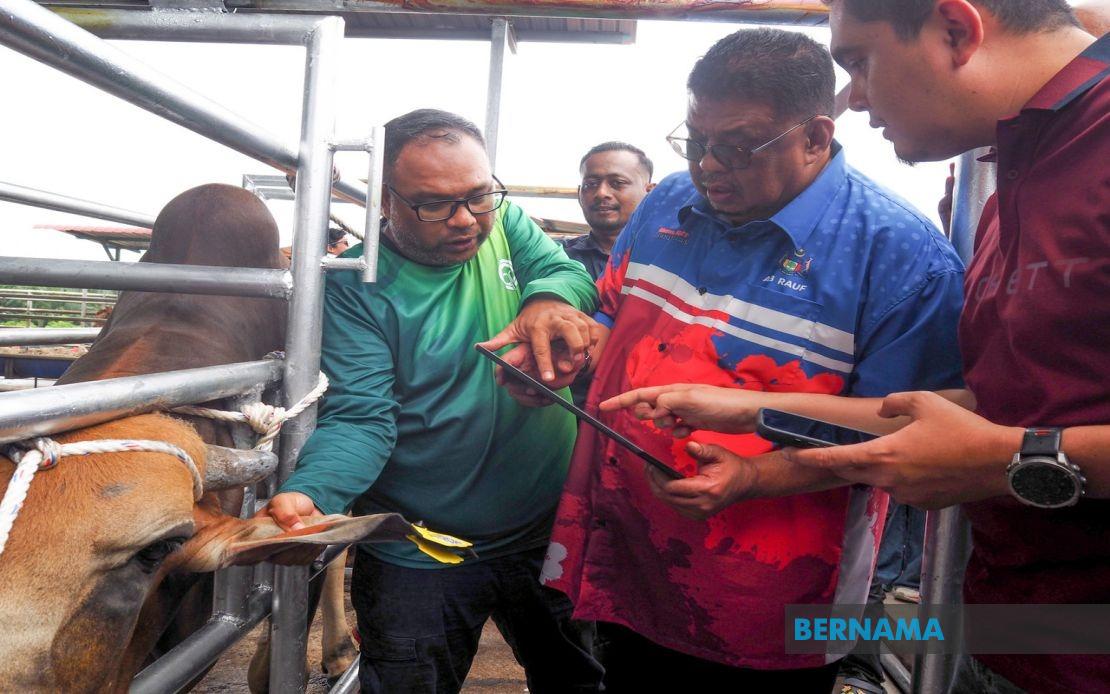
Melaka has rolled out an innovative digital livestock identification programme using QR code tags, marking a significant step in modernising animal husbandry management across the state. The Livestock QR Tag system, developed collaboratively between the Melaka Veterinary Services Department and state authorities under Chief Minister Datuk Seri Ab Rauf Yusoh's digitalisation vision, represents a departure from traditional livestock management approaches by embedding technology into everyday farming operations. Each tag carries a unique identifier and QR code that enables instant access to critical farming information through smartphone scanning, transforming how authorities interact with livestock owners and respond to incidents.
The urgency behind this initiative stems from mounting safety and administrative concerns that have plagued the state. Since 2023, Melaka has recorded 835 accidents involving stray livestock alongside more than 50 formal complaints about wandering animals threatening road users and community wellbeing. These incidents have prompted state officials to seek systematic solutions that move beyond reactive enforcement towards preventive identification and rapid owner contact. Mahathir Mustafa, chief assistant secretary of the Melaka Chief Minister's Local Government Unit, emphasised that the QR Tag system addresses these challenges by enabling authorities to pinpoint livestock owners with unprecedented speed and accuracy, fundamentally changing how the state responds to animal-related emergencies.
The system's design reflects practical considerations within Malaysia's agricultural context. Each tag serves as a permanent identifier throughout an animal's lifespan, eliminating the need for replacement even when ownership changes hands. Rather than requiring physical tag swaps during property transfers, the system simply updates ownership records in the eVetPermit Malaysia digital platform, reducing administrative burden on farmers whilst maintaining accurate state-level databases. This approach balances technological innovation with the realities of smallholder and commercial farming operations, where excessive bureaucratic requirements might discourage participation. The underlying logic is straightforward: better information accessibility creates faster incident resolution and clearer accountability chains.
Implementation progress has exceeded initial expectations, with 2,000 livestock already fitted with QR tags by early June. The state government has set an ambitious trajectory to eventually encompass Melaka's entire registered cattle and buffalo population, estimated at over 32,000 animals. This expansion timeline suggests the programme has gained traction among breeders, partly because the state subsidises tag installation costs during the introductory period. Until the end of 2024, Melaka covers the RM6.50 per-tag cost entirely, requiring farmers only to register with the Veterinary Services Department. Beginning in 2027, breeders will assume responsibility for new installations and replacements at RM5 per head, establishing a cost-sharing model that encourages early adoption whilst establishing sustainable funding mechanisms.
Beyond immediate safety improvements, the QR Tag system enables sophisticated livestock governance functions that extend to disease control and animal welfare oversight. Authorities can now track movement patterns, identify animals requiring health interventions, and enforce regulations against harmful practices more effectively. The system essentially creates a digital livestock registry accessible to multiple stakeholders—veterinary services, local councils, enforcement agencies, and farmers themselves. This interconnected approach mirrors digital identification systems deployed successfully in other Malaysian states and represents a trend towards integrated animal management infrastructure across Southeast Asia. Such systems prove particularly valuable during disease outbreaks, allowing rapid identification of affected animal populations and implementation of quarantine measures.
Farmer reception has reportedly been positive, with breeders recognising the system's potential to protect their commercial interests and enhance their industry's reputation. Livestock farming in Malaysia occasionally faces criticism regarding animal welfare and regulatory compliance; a transparent, technology-enabled system addresses some of these concerns by demonstrating farmer willingness to operate within structured frameworks. The QR Tag initiative essentially reframes livestock management as a matter of professional responsibility rather than informal practice, elevating industry standards across Melaka. This psychological shift, though subtle, carries implications for how farming communities view their relationship with state authorities and public expectations.
The collaboration between Melaka's Local Government Unit, Veterinary Services Department, and local authorities represents the organisational infrastructure required to sustain such initiatives. Successful rollout depends not merely on technology deployment but on coordinated enforcement, consistent farmer engagement, and regular system maintenance. Mahathir stressed that inter-departmental cooperation remains critical to achieving programme objectives and expanding implementation steadily. This emphasis reflects lessons from previous digitalisation efforts where technological systems faltered due to organisational silos or inadequate resourcing. By explicitly recognising coordination requirements, Melaka officials acknowledge that innovation success extends beyond the initial announcement phase.
Melaka's QR Tag system offers instructive lessons for other Malaysian states confronting similar livestock management challenges. The programme demonstrates how targeted digitalisation addresses concrete public safety issues whilst creating secondary benefits for agricultural governance. Rather than imposing technology top-down, the system acknowledges farmer concerns, subsidises adoption costs initially, and provides tangible value through faster owner identification during incidents. These design principles—addressing real pain points, sharing implementation costs, and delivering immediate utility—enhance adoption likelihood and programme sustainability. Neighbouring states experiencing comparable stray livestock problems may consider parallel initiatives adapted to local conditions.
The system also reflects broader trends in Malaysian governance emphasising smart city and smart state development frameworks. Melaka's aspiration to become a smart and livable state finds concrete expression through such digitalised management tools that improve both administrative efficiency and public welfare outcomes. Technology adoption in agriculture particularly resonates with Malaysia's vision for digital-first governance, though implementation must account for rural connectivity constraints and farmer digital literacy variations. Melaka's approach of using smartphone-based scanning rather than requiring specialised equipment represents pragmatic recognition of existing technology penetration.
Looking forward, the QR Tag system may serve as a foundation for more comprehensive livestock management infrastructure. Future iterations could incorporate real-time location tracking through GPS-enabled tags, integration with insurance systems, or connection to breeding records and genetic databases. Such expanded applications would require additional investment and farmer buy-in but could establish Melaka as a regional leader in agricultural digitalisation. The current phase represents a proof-of-concept demonstrating technology's viability and acceptability within the state's farming community. Success here may inspire broader agricultural modernisation initiatives spanning crop management, supply chain transparency, and market linkage platforms.
From a Southeast Asian perspective, Melaka's initiative reflects growing recognition that livestock management requires sophisticated coordination between multiple authorities and stakeholders. The region's expanding animal agriculture sector, driven by rising protein consumption and urbanisation, demands modern management approaches that balance productivity with animal welfare and public safety. Digital identification systems like Melaka's offer solutions adaptable across diverse agricultural contexts, from smallholder mixed farms to commercial operations. As regional trade in livestock products intensifies, standardised identification and tracking systems may become competitive prerequisites, positioning early adopters like Melaka advantageously within emerging Southeast Asian agricultural networks.

