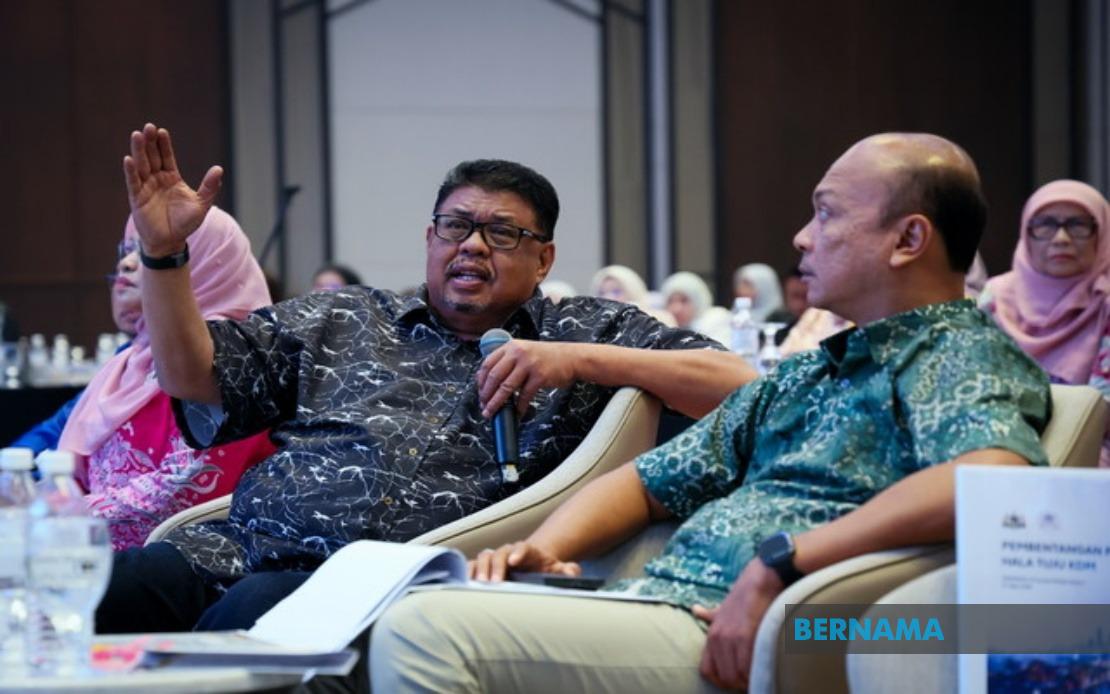
Melaka's Barisan Nasional coalition has made clear that retaining all 21 State Legislative Assembly seats it currently commands will be central to its election strategy, with party leadership insisting this position represents an immovable negotiating boundary for any potential political allies seeking to contest alongside them in the upcoming polls. Datuk Seri Ab Rauf Yusoh, who chairs both the Melaka BN organization and the Melaka UMNO liaison committee while serving as Chief Minister, underscored the non-negotiable nature of this stance during remarks following his attendance at a digital village workshop in Alor Gajah on Wednesday.
The determination to contest all 21 seats reflects the significance of BN's performance in the 2018 state election, when the coalition secured precisely this number of seats, establishing the government that has governed Melaka since then. This positioning contrasts sharply with the fragmented opposition, which saw Pakatan Harapan secure five seats and Perikatan Nasional manage two seats in that same election cycle. By anchoring negotiations around the defense of their entire current representation, BN leadership is signaling confidence in their electoral base while simultaneously establishing clear parameters for dialogue with other political entities.
Ab Rauf's articulation of BN's position carries particular weight given his dual roles commanding both state party machinery and the state government itself. When addressing reporters, he emphasized that any party contemplating cooperation with BN must accept these territorial boundaries as a fundamental prerequisite. His framing of the 21 seats as the coalition's "boundary for negotiations" suggests that while BN remains open to broader coalition arrangements, such partnerships cannot come at the expense of surrendering existing representation in the state legislature.
The Melaka chief minister acknowledged that discussions with external parties were anticipated, particularly noting expectations that three senior leaders from the Islamic Party would seek meetings during the week in question. Rather than dismissing such outreach, Ab Rauf indicated receptiveness to dialogue, though he emphasized that any substantive decisions would require deliberation and approval from UMNO's Supreme Council, the party's highest decision-making body. This insistence on securing proper internal authorization before committing to external arrangements reflects the complex internal politics within the Malay-Muslim political space, where multiple organizations compete for influence and representation.
The temporal dimension of the electoral situation adds another layer of significance to these declarations. Melaka's state government mandate officially expires on December 31, leaving a window during which dissolution and fresh elections must occur. Ab Rauf confirmed that assembly dissolution could materialize at any moment, though he demurred on specifying an exact timeframe, employing characteristic political humor by suggesting that advance disclosure would eliminate the element of surprise inherent in electoral timing. This strategic ambiguity serves multiple purposes, maintaining flexibility for BN while keeping opposition parties in a state of preparedness uncertainty.
The underlying dynamics of Melaka state politics reflect broader patterns evident across Malaysian federalism, where coalition building and seat negotiations remain fundamental to governance architecture. BN's insistence on defending all existing representation prevents the emergence of multiple competing governments that might dilute the coalition's authority. For opposition parties, the statement signals that breakthrough into the state government would require achieving electoral superiority through increased voter support rather than through negotiated arrangements with BN.
The southeastern state's political landscape has proven particularly volatile in recent years, with shifts in governance reflecting broader national political realignments. The determination to hold the line on 21 seats represents a defensive posture aimed at preventing further erosion of BN's position while simultaneously projecting confidence in the coalition's electoral prospects. Should BN retain its 2018 seat count or improve upon it, the leadership's current firmness would be vindicated, whereas any significant losses would expose the organization to internal recriminations about strategy and execution.
From a regional perspective, Melaka's political dynamics carry implications beyond state boundaries. As one of the country's more compact states with straightforward electoral mathematics, developments in Melaka often serve as bellwethers for broader coalition performance. The BN's assertion of its seat defense strategy provides early indication of how the coalition intends to navigate what many analysts anticipate will be a consequential electoral period for Malaysian politics. The specificity of the 21-seat position, rather than a more general commitment to defending government, suggests sophisticated internal polling and strategic assessment concerning achievable outcomes.
The coordination challenges implicit in coalition politics become apparent when considering how BN will manage seat allocations among its component parties while maintaining this unified defensive position. Historically, negotiations between UMNO, MCA, and MIC in multiracial constituencies have proven contentious, with each party seeking to maximize its seat allocations. Holding the line at 21 total seats while distributing them proportionally among coalition partners requires careful calibration of party sensitivities and electoral mathematics.
Looking ahead, the chief minister's remarks establish a clear negotiating baseline against which future developments should be measured. Should opposition parties or potential coalition partners attempt to secure concessions on seat allocations, BN leadership has preemptively foreclosed that possibility. Simultaneously, the openness to discussions with PAS and other entities leaves room for exploratory talks that might yield non-seat-related cooperative arrangements, such as policy coordination or targeted electoral support in specific contests.
The sovereignty of decision-making ultimately residing with the UMNO Supreme Council serves as both constraint and protection for state-level leaders. While Ab Rauf cannot unilaterally concede seats to external parties, neither can lower-ranking officials circumvent his stated position without invoking party discipline mechanisms. This institutional check reinforces the credibility of his public declarations, assuring coalition allies and electoral constituencies that his commitments carry organizational weight.
As December approaches and the likelihood of state election dissolution increases, BN's 21-seat defense position will likely face practical testing through negotiations with interested parties and, ultimately, through the electoral process itself. The leadership's current steadfastness in articulating this boundary reflects confidence in both their organizational apparatus and their electoral prospects, setting the stage for what analysts anticipate will be a keenly contested state-level competition.

