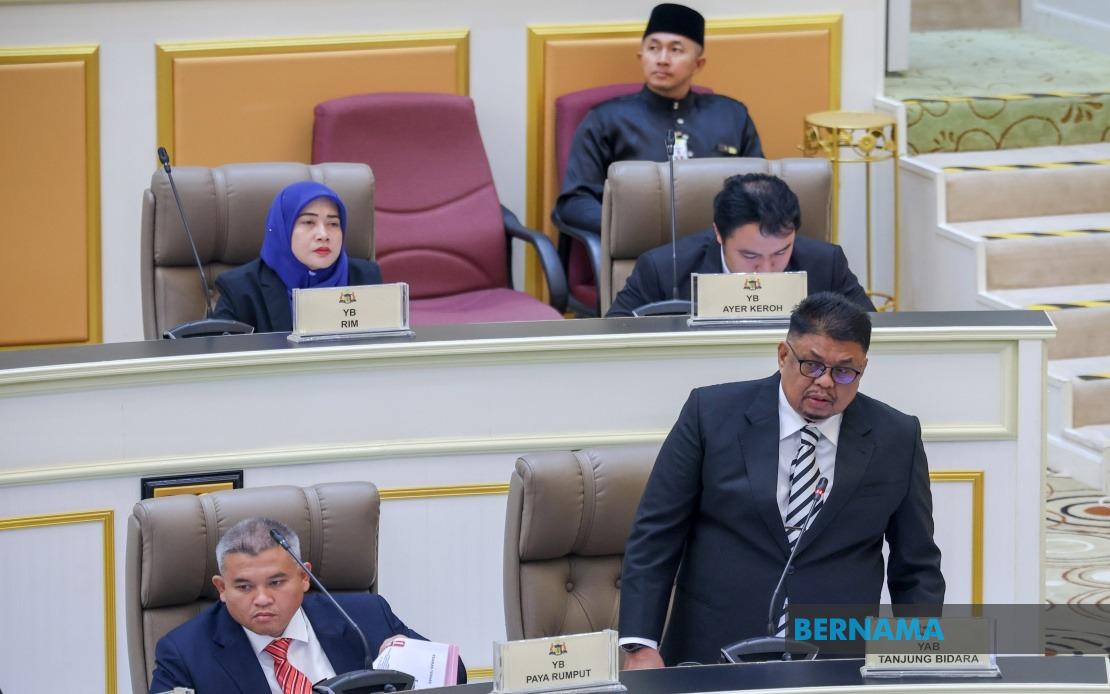
The Melaka State Legislative Assembly has taken a significant step in broadening its parliamentary composition by passing a constitutional amendment that opens the door for appointing up to seven specially selected state assemblymen. The vote on July 14 reflected strong support within the chamber, with 23 lawmakers voting in favour of the Melaka State Constitution (Amendment) Bill 2026, though five members opposed the measure.
Chief Minister Datuk Seri Ab Rauf Yusoh, who introduced the legislation with backing from Senior State Executive Councillor Datuk Rais Yasin, outlined an ambitious rationale for the reform. Beyond merely expanding the assembly roster, the amendment seeks to inject technical rigour and specialised knowledge into the state's legislative deliberations. The appointed members are envisioned as individuals commanding deep expertise across critical sectors including legal affairs, economic policy, education, investment, technological advancement and broader state development initiatives. Their presence in parliamentary debates is expected to elevate the quality of policy discussion and provide lawmakers with sophisticated, evidence-based perspectives on complex governance matters.
A particularly noteworthy dimension of this appointment mechanism concerns representation and inclusion. Ab Rauf emphasised that the system would create pathways for participation by groups whose voices might otherwise remain marginalised in the electoral process. Women, young Malaysians, indigenous Orang Asli communities, religious and ethnic minorities, as well as professionals and business representatives stand to gain platforms for meaningful engagement in state affairs through this channel. The appointment route effectively bypasses electoral competitive dynamics that sometimes disadvantage candidates from underrepresented demographics, instead focusing selection criteria on demonstrable expertise and capacity to contribute substantively to the state's prosperity.
The amendment also serves as a structural mechanism for enhancing parliamentary oversight and accountability. By introducing appointed members alongside elected representatives, the assembly creates institutional checks and balances that complement the existing electoral legitimacy of elected lawmakers. These appointed figures can provide independent analytical perspectives unencumbered by constituency pressures or party political considerations, potentially fostering more objective examination of bills, administrative performance and policy proposals. Such technical rigour becomes particularly valuable when legislatures grapple with specialised issues where general political judgment requires supplementation by domain-specific knowledge.
The legislative debate itself revealed a notable convergence of opinion across party lines, signalling recognition of the reform's potential merits. Three assemblymen participated in substantive discussion, with two representing the government coalition and one from the opposition benches. Melaka Opposition Leader Dr Mohd Yadzil Yaakub notably backed the measure, framing it as a means to strengthen the state's institutional architecture provided implementation emphasised transparency and people-centric criteria. He drew a parallel to the federal Dewan Negara appointment system, noting that individuals of proven distinction and national contribution have demonstrated capacity to meaningfully shape legislative outcomes at that level, a principle equally applicable at state administration.
The constitutional amendment represents fulfilment of an earlier political commitment. The Barisan Nasional coalition had pledged to pursue this reform as part of its 2021 Melaka state election manifesto, specifically under Thrust 1 focused on Political Stability and Promoting Mature Politics. That such a substantial institutional change required several years to crystallise reflects the deliberate pace typically demanded for constitutional amendments, which generally require supermajority support and careful legislative drafting.
For Malaysian governance more broadly, the Melaka initiative holds considerable significance as a model potentially replicable in other states. The appointment mechanism mirrors tried federal approaches while addressing specific state-level representation challenges. As Malaysia's political system continues evolving toward greater institutional maturity and sophistication, such measures offer practical vehicles for incorporating expertise-driven governance while maintaining democratic legitimacy through the retention of fully elected majorities. The approach sidesteps the necessity of choosing between democratic principles and professional competence, instead integrating both.
The reform also reflects evolving attitudes toward legislative composition across Southeast Asia. Regional democracies increasingly recognise that purely electoral systems, while normatively important, sometimes benefit from complementary mechanisms drawing specialist talent into parliamentary chambers. Thailand, Singapore and Indonesia have explored various appointed institutional arrangements, each attempting to balance democratic legitimacy with functional expertise. Melaka's move positions Malaysia within broader regional conversations about optimal legislative design.
Implementation mechanisms for the appointment process remain to be detailed in subsequent subsidiary legislation and procedural rules. The transparency standards emphasised by opposition lawmakers during debate will prove crucial for public acceptance of the scheme. Selection criteria, appointing authorities, tenure arrangements and removal procedures will substantially influence whether the reform strengthens parliamentary quality or becomes susceptible to partisan patronage. Well-designed implementation architecture could transform Melaka's assembly into a model of institutional innovation, while poor execution might undermine both legislative independence and public confidence.
The amendment also carries implications for gender representation and youth participation in governance. Malaysia's legislatures at both state and federal levels have faced persistent criticism regarding women's underrepresentation in elected positions. The appointment mechanism offers a direct avenue for elevating female participation in parliamentary work without awaiting broader electoral shifts in demographic voting patterns or candidate selection practices within political parties. Similarly, young professionals seeking entry into formal governance structures might find appointment pathways more accessible than winning contested electoral contests.
Governance experts will likely scrutinise whether Melaka's appointed assemblymen mechanism achieves its intended objective of enhancing deliberative quality. Measuring parliamentary effectiveness involves assessing whether appointed members genuinely contribute distinctive perspectives, whether their inputs substantially influence legislative outcomes, and whether their presence demonstrably improves policy analysis. Early performance indicators will carry significance beyond Melaka, potentially informing decisions across other Malaysian states contemplating comparable reforms.

