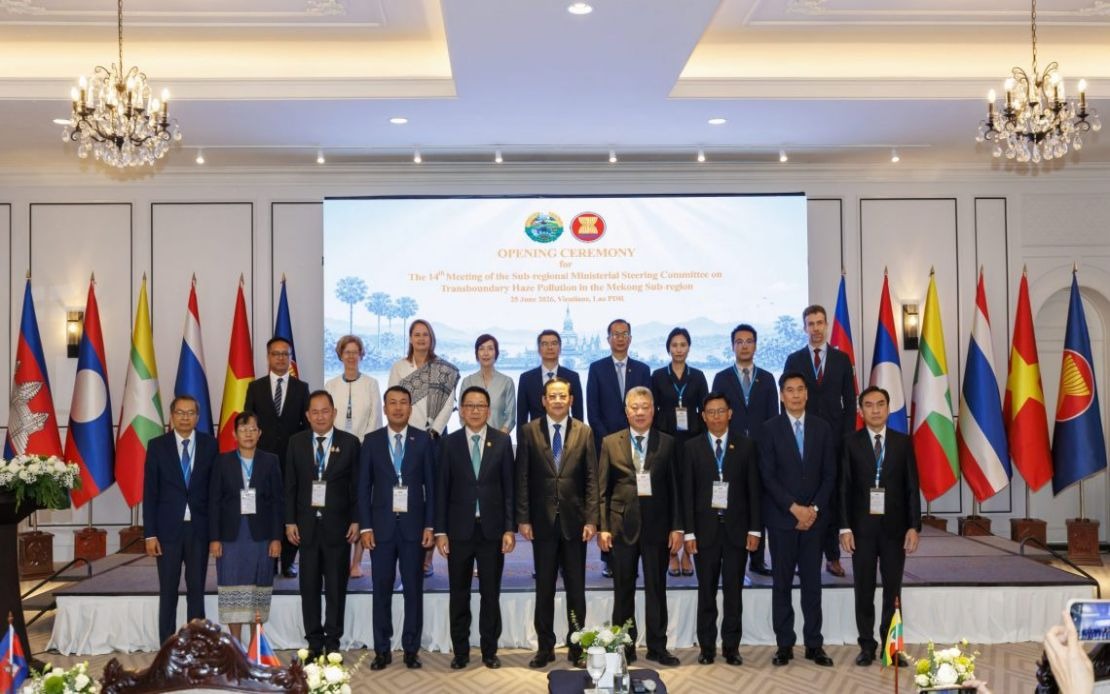
Governments across the Mekong region are bracing for an intensified air pollution crisis as climate patterns converge to create dangerous conditions for forest fires and smoke drift. With El Niño conditions strengthening and urban temperatures climbing across major cities from Bangkok to Ho Chi Minh City, policymakers are accelerating cross-border initiatives to prevent another devastating haze episode that could cripple the subregion's economies and public health systems.
The alarm was sounded at the 14th Meeting of the Sub-Regional Ministerial Steering Committee on Transboundary Haze Pollution in the Mekong Sub-Region, held in Vientiane on June 25. Lao Prime Minister Sonexay Siphandone underscored the severity of the threat, pointing to the documented impacts of forest fires and transboundary air pollution across the Greater Mekong Subregion. The cascading consequences—biodiversity loss, public health deterioration, and economic damage—have already imposed substantial costs on the region, with no relief in sight unless coordinated action materialises.
Data presented at the ministerial meeting reveals an alarming trajectory. Fire hotspots in the region surged by approximately eight percent between December 2025 and May 2026 compared to the same period in the previous year, signalling that prevention efforts have yet to reverse the underlying drivers of combustion risk. This uptick coincides with climate conditions that are making forests increasingly flammable across the subregion, from peatlands in Sumatra and Kalimantan to drought-prone areas in central Laos and Cambodia.
The meteorological picture compounds these concerns. Major cities across the Mekong corridor are experiencing unseasonable heat despite the theoretical onset of the monsoon season, which typically brings relief from extreme temperatures. Ho Chi Minh City and Bangkok are both enduring severe heatwaves even as rains should arrive, a phenomenon that climate scientists attribute to El Niño's strengthening grip and broader climate change impacts. The pattern suggests that traditional seasonal predictability—upon which agricultural planning and fire-prevention scheduling have long depended—is becoming unreliable.
Lao environmental authorities have issued specific warnings about the likely trajectory through the coming months. Temperature projections for certain areas within Laos range between 35 and 38 degrees Celsius, well above normal thresholds and into the danger zone for vegetation stress and ignition risk. Critically, these extreme temperatures are expected to arrive alongside irregular and insufficient rainfall, creating a potentially catastrophic combination of heat and drought. Water levels in key regions are already declining, while prolonged dry spells threaten to desiccate forests and grasslands across vulnerable zones.
The cascading impacts of this environmental convergence extend far beyond air quality concerns. Agricultural productivity faces significant jeopardy as drought conditions stress crops and livestock during critical growing phases. Water scarcity threatens both irrigation systems and hydropower generation, upon which several Mekong nations depend heavily for electricity supply. For Malaysia and the broader Southeast Asian region, understanding these threats matters because economic disruptions in the Mekong—from food production to energy availability—create supply-chain pressures and price volatility that ripple through the entire subregion's trade networks.
Weather scientists have added to the urgency by flagging the possibility of a Super El Niño event developing in 2026, which would push regional temperatures even higher and potentially suppress monsoon rainfall further. Such a scenario would create conditions reminiscent of the devastating 2015 haze crisis, when parts of Southeast Asia experienced air quality index readings that reached hazardous and even severe categories, causing respiratory illnesses, school closures, and economic losses estimated in the billions.
In response to these mounting threats, ASEAN member states participating in the Vientiane meeting pledged to intensify efforts to reduce fire hotspots and control transboundary haze pollution, particularly during the critical dry seasons when fire risk peaks. The commitment signals recognition that the problem transcends national borders and requires coordinated surveillance, fire-prevention protocols, and rapid response mechanisms. However, pledges alone are insufficient; implementation requires sustained funding, institutional capacity, and political will to enforce regulations across often-remote border regions where enforcement has historically been weak.
The transboundary nature of the haze problem creates particular complexity for policymakers. Fires burning in one nation's forests or peatlands drift across borders as smoke, affecting the air quality and public health of neighbouring countries that may have had no role in the combustion. This dynamic creates incentives for free-riding—governments may prioritise domestic development and agricultural expansion over fire prevention if the costs of uncontrolled burning are externalized to neighbouring states. International coordination mechanisms attempt to overcome this problem, but they depend on transparent information-sharing and political commitment that has not always materialised.
For Malaysian stakeholders, the stakes are particularly high. Malaysia's position as a developed nation with significant trade linkages throughout the Mekong region means that haze episodes disrupt supply chains, reduce demand for Malaysian exports, and create spill-over public health costs. The 2015 haze crisis, for instance, affected Malaysian businesses operating in Indonesia and Thailand, while regional supply disruptions inflated prices for raw materials. Additionally, transboundary haze can drift into Malaysian airspace, especially during particular wind patterns, necessitating domestic air quality management and health system readiness.
The ministerial committee's focus on dry season prevention reflects an understanding that proactive measures during periods of high fire risk offer the best return on investment. Preventing fires from igniting in the first place—through restrictions on land clearing, enforcement against arson, and incentives for sustainable land management—is far more cost-effective than managing massive transboundary smoke events after they occur. Peatland protection deserves particular emphasis, as peat fires burn intensely, spread rapidly, and produce disproportionately thick smoke that can travel thousands of kilometres.
The convergence of El Niño patterns, climate change, and rising human activity in the Mekong region creates a new normal characterised by elevated fire risk and transboundary haze potential. The 14th ministerial meeting represents an acknowledgement of this reality and a commitment to collective action, but the true test lies in whether governments will allocate sufficient resources, enforce compliance within their borders, and maintain political coordination even when immediate haze events are not visible. For Malaysia and the wider region, sustained vigilance and investment in cross-border fire prevention are no longer optional luxuries but essential requirements for protecting public health, agricultural security, and economic stability.

