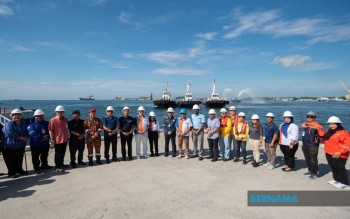
Megah Port Management Sdn Bhd (MPM) has officially commenced marine operations at Labuan Port following the acquisition of four tugboats valued at RM23 million, a move that underscores the port operator's commitment to strengthening maritime safety and operational efficiency across the federal territory's strategic shipping hub.
Datuk Seri Patrick Tiong, managing director of MPM, said the investment represents more than a corporate commitment—it reflects the company's determination to fulfil obligations as the port's primary operator while enhancing vessel movement reliability. The acquisition comes after MPM signed the Operation, Facility and Management Continuation Agreement with the Labuan Port Authority (LPA), which formally obligates the operator to provide comprehensive marine services across designated port zones.
The tugboat fleet will perform multiple critical functions essential to modern port operations. These vessels will assist ships during entry and exit procedures, support berthing and unberthing manoeuvres, and provide navigational assistance in restricted waterways where vessel manoeuvrability is limited. Beyond routine operations, the tugboats can execute complex tasks including towing disabled vessels, managing ships during adverse weather or strong currents, and escorting high-risk cargo through port waters.
For Malaysian maritime stakeholders, this development carries particular significance given Labuan's role as a major bunkering, trading and petrochemicals hub in Southeast Asia. The enhanced tugboat capacity addresses growing concerns about port congestion and safety, issues that have increasingly affected regional shipping efficiency. By investing in dedicated marine assets, MPM signals confidence in the sector while acknowledging that modern port management requires substantial capital commitments beyond basic infrastructure.
The emergency response dimension of this investment deserves particular attention. Tiong emphasised that the tugboats strengthen MPM's capacity to mount rapid responses to maritime incidents, including fires, mechanical failures and environmental hazards. The demonstration conducted at the launch showcased the fleet's firefighting support capabilities, a critical feature for a port handling significant volumes of petrochemicals and hazardous materials. This emergency preparedness infrastructure protects not only commercial interests but also environmental assets and human lives in surrounding waters.
The marine services agreement covers several major operational zones within Labuan Port limits, encompassing the DG Terminal, Petronas Chemicals Methanol Labuan Terminal, Asian Supply Base Fuel Terminal and Shell Timur Terminal. This comprehensive coverage ensures that diverse cargo types and vessel sizes can be accommodated with appropriate safety protocols. The diversity of terminal operations underscores why a dedicated, well-equipped tugboat fleet is essential rather than optional infrastructure for modern port management.
Coordination with Malaysian Maritime Enforcement Agency, Marine Police Force and other regulatory bodies represents another critical element of MPM's operational framework. Tiong acknowledged that professional marine services must occur within a structured regulatory environment where maritime laws, safety standards and security protocols are rigorously maintained. This emphasis on inter-agency cooperation reflects international best practices in port administration and acknowledges that port safety cannot be achieved through individual operator action alone.
From a regional perspective, this development demonstrates the ongoing competition among Southeast Asian ports to enhance service quality and operational sophistication. Labuan faces competition from other regional hubs, and investments in modern marine infrastructure help maintain its competitiveness. Ports that fail to upgrade capabilities risk losing shipping traffic to rival facilities offering superior services. MPM's investment therefore serves both immediate safety and long-term commercial objectives.
The RM23 million investment also carries broader implications for Malaysia's maritime sector. It represents confidence in the viability of port operations under private management frameworks and demonstrates that commercial operators can successfully implement mandatory safety responsibilities alongside profit motives. This confidence may encourage additional private sector participation in other port development and modernisation projects across the nation.
For the shipping industry and port users, the expanded tugboat capacity should translate into more predictable vessel scheduling, reduced waiting times for berthing operations, and enhanced safety during cargo handling. Commercial benefits extend to shipping companies seeking reliable port services and cargo owners concerned about on-time delivery and cargo security. These operational improvements can strengthen Labuan's position as a preferred port for regional shipping lines.
MPM's openness to feedback and guidance from regulatory authorities indicates a management approach focused on continuous improvement rather than static compliance. This iterative approach to marine operations management suggests that as operational experience accumulates, the port may refine procedures and enhance services further. The company's stated commitment to professional and lawful marine service delivery provides a framework for this ongoing development.
The launch event itself, featuring emergency response demonstrations, serves multiple purposes beyond publicity. It provides visible assurance to industry stakeholders that MPM possesses genuine operational capabilities, allows enforcement agencies to assess vessel capabilities firsthand, and establishes baseline competency standards against which future performance can be measured. Such transparent demonstrations build confidence in the port operator's ability to manage complex maritime operations professionally.
Looking forward, this investment positions Labuan Port for continued growth in the competitive Southeast Asian shipping landscape. Whether additional marine assets will be acquired as cargo volumes increase remains to be seen, but the initial RM23 million commitment signals serious intent to operate Labuan Port according to contemporary maritime standards rather than minimal compliance thresholds.

