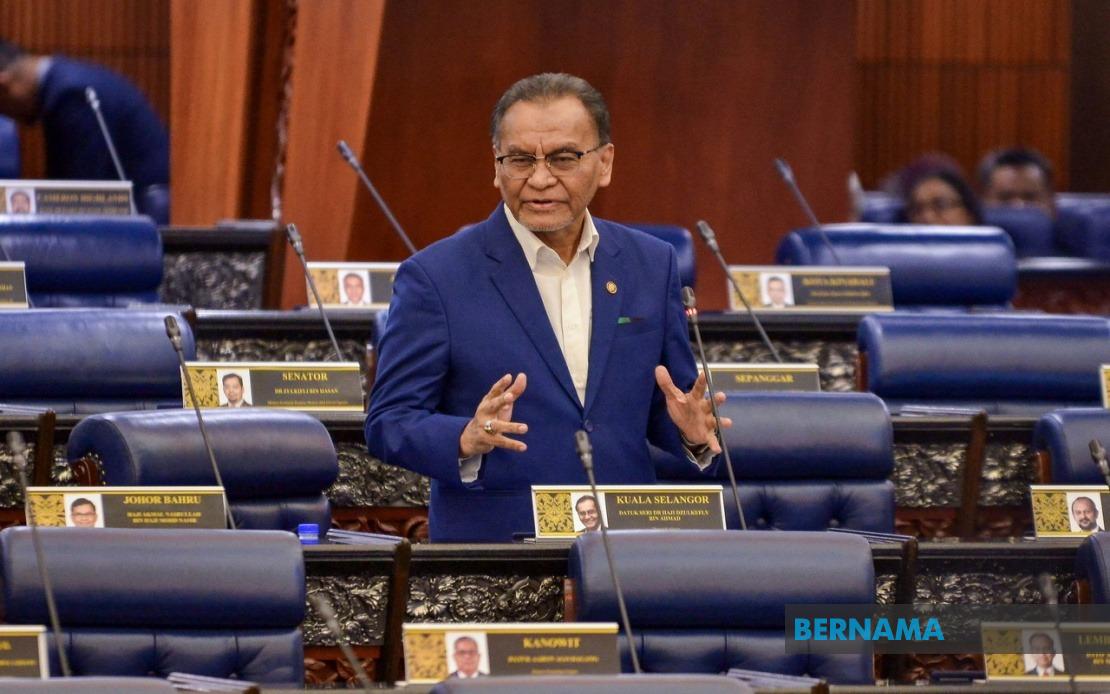
Healthcare affordability has emerged as a critical concern for Malaysia's middle-income households, prompting the government to introduce MediAsas, a new medical insurance and takaful plan designed to bridge the gap between public and private healthcare systems. Health Minister Datuk Seri Dr Dzulkefly Ahmad announced the initiative as part of the broader RESET framework, which addresses escalating costs in the private medical sector while maintaining universal coverage through public facilities.
The MediAsas Plan specifically targets the M40 group—households earning between RM4,850 and RM10,970 monthly—who increasingly seek private healthcare options but struggle with rising premiums. By offering competitive rates and flexible coverage that accounts for pre-existing conditions, non-communicable diseases, and mental health support, the scheme acknowledges real gaps in current protection mechanisms. This positioning reflects growing recognition that Malaysia's healthcare ecosystem requires tiered solutions catering to different income segments rather than a one-size-fits-all approach.
Launching as a pilot programme in the Klang Valley at the end of July, MediAsas will involve six insurance and takaful companies before expanding nationwide from January 2027. This phased rollout allows regulators and providers to stress-test operational frameworks, refine premium structures, and gather data on utilisation patterns among target beneficiaries. The Klang Valley's selection as the initial test ground reflects the region's concentration of both private healthcare infrastructure and the target M40 demographic, making it an ideal environment to validate the scheme's viability.
A defining feature of MediAsas is its gradual integration of Diagnosis Related Group (DRG)-based payment mechanisms at private hospitals. This cost-containment strategy, commonly employed in developed healthcare systems, ties reimbursement to standardised treatment protocols rather than fee-for-service models, potentially moderating inflation in private sector charges. For Malaysian households accustomed to open-ended out-of-pocket expenses, such structured billing represents a meaningful shift toward predictability and affordability in private healthcare access.
The Health Minister emphasised that MediAsas complements rather than displaces Malaysia's public healthcare system, which continues to provide universal coverage funded through tax revenue. This clarification is essential, as it reassures stakeholders that the introduction of a private-sector insurance product does not signal any withdrawal of government commitment to free or heavily subsidised medical services. Public hospitals and clinics remain foundational to Malaysia's social contract, serving all citizens regardless of income or employment status.
For the B40 group—the bottom 40 per cent of earners—existing protections remain in place through an extensive network encompassing 154 hospitals and more than 3,000 public healthcare facilities nationwide. Complementary schemes such as PeKa B40, the MADANI Healthcare Scheme, and MySalam provide additional layers of financial protection. This ecosystem demonstrates the government's multi-pronged approach to ensuring that economic hardship does not prevent access to essential medical care, a principle underlying Malaysia's healthcare philosophy since independence.
Dr Dzulkefly's reference to the RESET framework encompasses broader structural reforms beyond MediAsas itself. Improving interoperability of electronic medical records across public and private institutions would reduce duplicative testing and imaging, lowering overall healthcare costs while improving clinical outcomes through better information continuity. Simultaneously, restructuring private hospital billing practices addresses the opacity and unpredictability that often accompanies private sector healthcare consumption, a source of financial anxiety for many middle-income families.
The MediAsas initiative reflects evolving global trends in healthcare financing, where governments increasingly facilitate risk pooling through regulated private insurers rather than delivering all services directly. Countries across Southeast Asia and beyond have adopted hybrid models recognising that pure public provision becomes strained as healthcare technologies advance and population ageing accelerates. For Malaysia, where private sector healthcare accounts for a growing share of total expenditure, formalising this relationship through standardised products like MediAsas may yield efficiency gains and innovation while maintaining equitable access principles.
The scheme's attention to pre-existing conditions and non-communicable diseases is particularly significant given Malaysia's health burden, where diabetes, hypertension, and cardiovascular disease constitute leading causes of morbidity and mortality. Traditional insurance products often exclude or heavily load premiums for such conditions, leaving chronically ill middle-income individuals vulnerable. By embedding coverage for these populations, MediAsas addresses a genuine market failure and reduces medical bankruptcy risk for households managing multiple chronic illnesses.
Regional implications warrant consideration as well. Southeast Asian nations grapple with similar healthcare financing challenges as rising incomes create demand for better quality and amenity alongside expectations of affordability. Malaysia's experience piloting MediAsas could offer instructive lessons for neighbouring economies designing their own healthcare protection mechanisms, particularly regarding the mechanics of integrating private insurers into predominantly public health systems and managing moral hazard concerns.
The January 2027 nationwide expansion timeline allows approximately eighteen months for the pilot phase, sufficient for generating meaningful data on claims patterns, premium adequacy, and customer satisfaction. This gradualism contrasts with more disruptive implementation approaches and signals administrative caution, though it also means beneficiaries outside the Klang Valley face extended waiting periods. Potential expansion beyond the initial six participating insurers and takaful operators will depend partly on pilot performance and regulatory comfort with the operational model.
For Malaysian households in the M40 bracket, MediAsas represents a policy acknowledgment that their healthcare needs fall between public system capacity and unsubsidised private markets. Rather than leaving such families to navigate volatile private healthcare costs independently, the government is actively structuring affordable pathways to quality private care. Success will hinge on achieving premium rates that feel genuinely accessible while maintaining actuarial sustainability—a delicate balance that pilot data will help inform.

