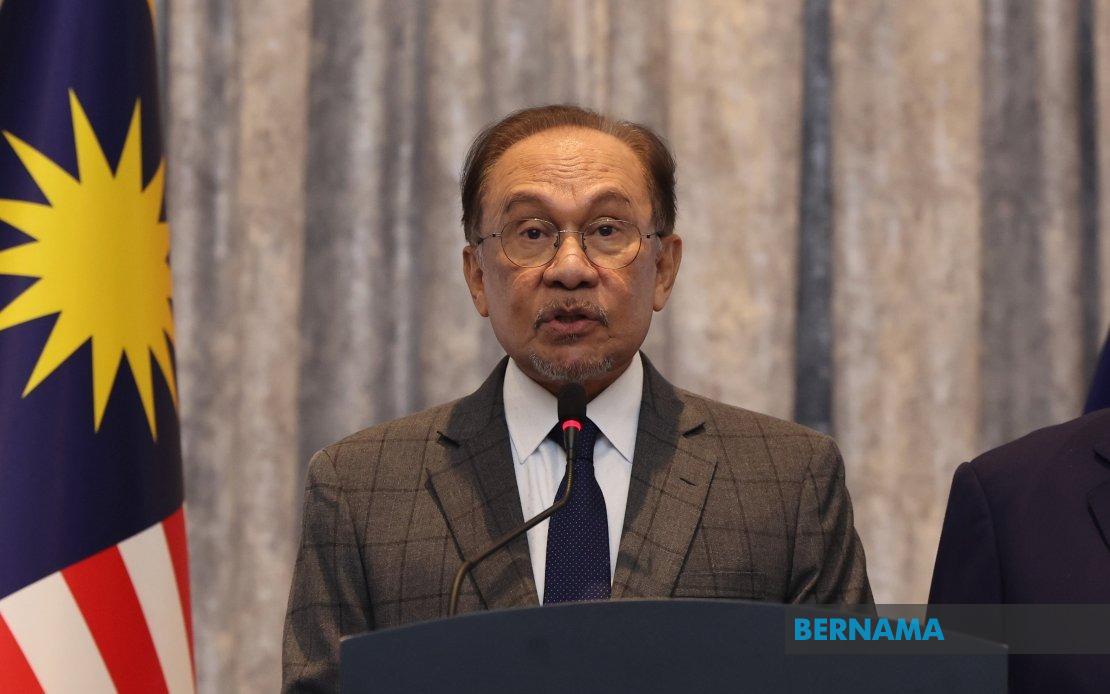
Prime Minister Datuk Seri Anwar Ibrahim delivered a pointed message to Malaysia's media community on Thursday, cautioning that the rush to embrace emerging technologies must not come at the cost of journalistic integrity, cultural values, and national sovereignty. Speaking at the Malaysian Press Night 2025 and Malaysian Press Institute-PETRONAS Journalism Awards 2026 in Kuala Lumpur, Anwar stressed that while embracing digital innovation, artificial intelligence, and information technology freedom remained essential, these tools must remain grounded in ethical principles rather than serving as vehicles for external agendas.
The prime minister's remarks reflect growing concerns across Southeast Asia about the dual-edged nature of technological progress. Nations in the region have grappled with questions about how to harness digital transformation while protecting citizens from misinformation, cultural erosion, and external manipulation. Anwar's emphasis on maintaining vigilance against challenges accompanying technological advancement suggests the government recognises that technological neutral ground does not truly exist—each platform, algorithm, and system embeds values and priorities from its creators.
Anwar drew parallels between historical and contemporary forms of influence, noting that Western media dominance historically shaped global narratives according to specific agendas. He extended this analysis to present-day technological power, arguing that a new global force now leverages control over technology and digital infrastructure to project ideological and cultural values that frequently clash with local societies' own traditions and perspectives. This observation resonates particularly in Malaysia, where religious, ethnic, and cultural pluralism require careful navigation and where technological platforms have increasingly become sites of contested meaning around national identity.
The concept of the "captive mind," which Anwar invoked, traditionally referred to intellectual populations constrained by political or colonial domination. However, the prime minister's reframing of this term to encompass technological and digital constraints reflects an understanding that in the contemporary landscape, control over information architecture and algorithmic curation can be as constraining as more overt forms of censorship. As countries throughout Southeast Asia race to master emerging technologies, they simultaneously confront the challenge of ensuring that technological adoption does not inadvertently compromise sovereign control over domestic narratives and values transmission.
Communications Minister Datuk Seri Fahmi Fadzil, who attended the event, and the Malaysian Communications and Multimedia Commission share responsibility for supporting the media sector while it navigates this transition. Anwar indicated that government support would extend to helping practitioners understand and respond to these technological and ideological pressures, though he emphasised that such support would operate within a framework of openness to diverse viewpoints. He explicitly stated that the government would welcome critical perspectives and diverse opinions, recognising that national unity on these complex questions cannot be imposed but must emerge through inclusive dialogue.
The prime minister commended the Malaysian Press Institute, supported by PETRONAS, and the Malaysian Media Council for their initiatives in driving media innovation and reform. These efforts, Anwar suggested, represent the country's commitment to preventing media capture—whether technological or ideological—that might lock Malaysia into narratives not of its own making. By strengthening institutional capacity within the media sector itself, these organisations work to ensure that Malaysian journalists and editors maintain agency in determining which stories to pursue, how to frame issues, and what voices to amplify.
Anwar's comments also acknowledged the ongoing role of press freedom and democratic principles in Malaysian journalism. He expressed gratitude to media practitioners for their commitment to providing views, constructive criticism, and recommendations alongside news coverage. This recognition of journalism's multifaceted role—beyond mere information reporting to include analysis and accountability—underscores the government's understanding that a healthy media ecosystem requires space for critical examination and diverse perspectives. For Malaysian readers and the broader Southeast Asian audience, this represents an implicit acknowledgment that technological tools themselves do not determine outcomes; rather, the values, training, and professional standards of those wielding these tools prove decisive.
The timing of these remarks carries significance given regional and global developments. Throughout Southeast Asia, governments and civil society organisations have increasingly focused on digital literacy, media literacy, and the capacity of citizens to navigate information landscapes shaped by competing technological platforms and state actors. Malaysia's explicit attention to preventing technological captivity of its media ecosystem positions it within a growing movement of nations seeking to harness innovation while protecting institutional autonomy and cultural integrity.
For Malaysian media practitioners and communications professionals, Anwar's message carries both exhortation and expectation. Embracing technology remains non-negotiable in an era when audiences access news across multiple platforms and when data analytics can improve story targeting and audience engagement. However, this adoption must occur within a framework that keeps paramount the traditional values of accuracy, fairness, independence, and service to public understanding. The challenge lies in determining which aspects of technological systems align with these values and which might subtly undermine them through design choices that prioritise engagement metrics over truth or that optimise for particular audience segments at the expense of social cohesion.
The event itself, bringing together government officials, media leaders, and journalists, suggests an institutional ecosystem attuned to these questions. Representatives from the Malaysian National News Agency, the Malaysian Press Institute, and PETRONAS—itself a significant media funder and stakeholder—convened to address media excellence and professional standards. This configuration reflects Malaysia's distinctive approach, where government, private enterprise, and professional institutions collaborate on media development while maintaining formal separation of editorial authority.
For Southeast Asian observers, Malaysia's approach offers lessons about negotiating rapid technological change while preserving institutional values. The region faces common challenges: rapid internet penetration, rising artificial intelligence capabilities, platform dominance by foreign technology companies, and questions about how traditional media institutions adapt. Anwar's framing suggests that resistance to technology is neither viable nor desirable, but that technological adoption must be paired with explicit commitment to local values, institutional autonomy, and the human judgment that editors, journalists, and media leaders provide.
The prime minister's emphasis on openness to criticism and diverse viewpoints, even as warning against technological captivity, indicates a nuanced position that acknowledges legitimate pluralism while resisting external imposition of values. This balance remains difficult to achieve in practice, particularly when platforms operate according to algorithmic logics that many users do not fully understand. Nonetheless, Anwar's public articulation of this concern signals to media practitioners, policymakers, and citizens that Malaysia recognises the stakes involved in technological transition and remains committed to managing that transition in ways that preserve authentic national agency and institutional integrity.

