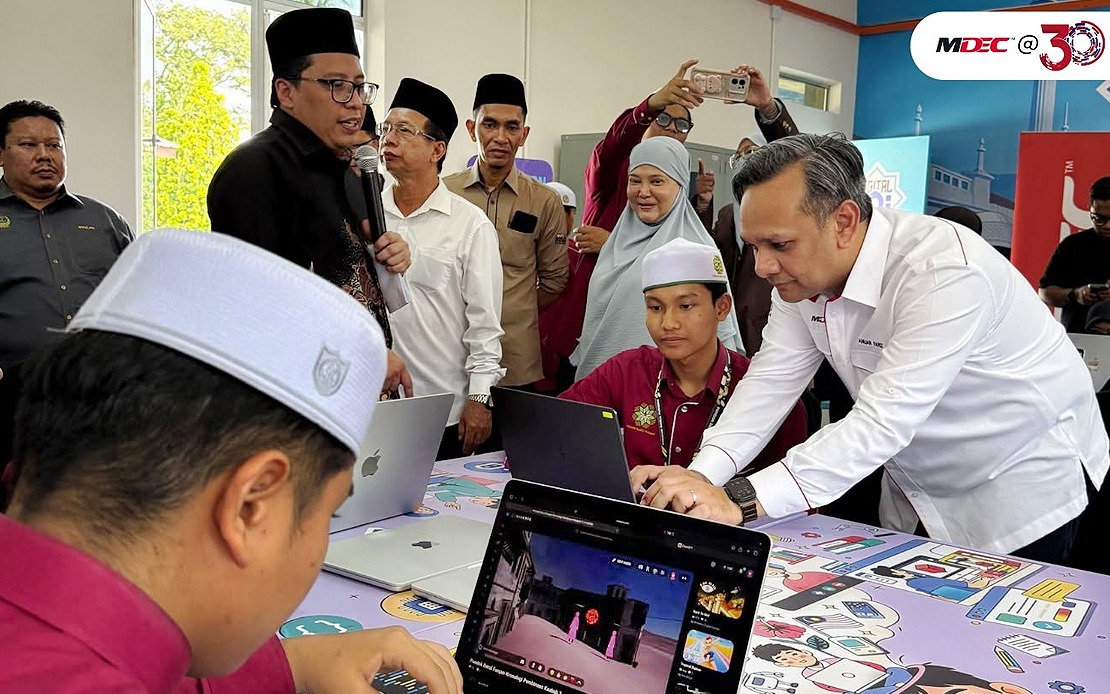
The Malaysia Digital Economy Corporation has formally inaugurated a Digital Maker Hub facility at Pondok Darul Furqan in Tambun, Ipoh, marking a significant milestone in efforts to democratise access to cutting-edge technology within Malaysia's Islamic education sector. This handover represents part of a broader national strategy to integrate digital competencies and emerging technologies into religious learning environments, recognising that future economic participation increasingly demands technological literacy across all educational streams.
According to MDEC chief executive officer Anuar Fariz Fadzil, the newly established hub functions as an immersive learning environment furnished with an array of modern equipment designed to facilitate hands-on engagement with contemporary tools. The facility includes personal computers with high-speed internet access, interactive smartboards for collaborative learning, robotics kits for practical engineering exploration, and microcontroller systems that enable students to understand the fundamentals of automation and programming. This combination of hardware and connectivity creates space where theoretical concepts can be translated into tangible experimentation, a pedagogical approach increasingly recognised as essential for developing genuine technological competency rather than mere familiarity with software interfaces.
The initiative operates under the umbrella of the Digital IPI, formally known as the Islamic Education Institution Digital Transformation Programme, which was officially launched by Prime Minister Datuk Seri Anwar Ibrahim in March. This collaborative undertaking brings together MDEC and the Department of Islamic Development Malaysia (JAKIM) to orchestrate a coordinated rollout of digital infrastructure across pondoks and madrasahs nationwide. The partnership reflects an acknowledgment that modernising Islamic education requires institutional commitment and technical support extending beyond individual schools, necessitating coordination between specialised agencies.
Anuar Fadzil contextualised the initiative within Malaysia's national development trajectory, specifically referencing the government's stated ambition to position the country as an Artificial Intelligence Nation by 2030. This framing suggests that digital capacity-building in Islamic institutions is not peripheral to broader economic transformation but rather integral to achieving comprehensive sectoral readiness. He emphasised that technological access must become genuinely universal rather than concentrated within particular demographic or geographic segments, with Islamic education institutions representing a previously underserved demographic requiring targeted intervention to prevent widening digital divides.
The philosophy underlying the programme centres on transforming students and educators from passive technology consumers into active architects of digital solutions. Rather than positioning Islamic education institutions as catching up to secular educational competitors, the framing positions teachers and students as potential innovators and creative contributors to Malaysia's emerging digital economy. This reconceptualisation carries psychological and practical implications, suggesting that religious learning environments possess distinctive value propositions within technology ecosystems rather than merely replicating secular institutional models.
During the facility's inauguration, Pondok Darul Furqan students and faculty engaged in the MetaSkool Metaverse Programme, a two-day intensive introduction to virtual reality and metaverse technologies. Thirty students and five teachers participated in experiential learning modules and interactive activities explicitly designed to stimulate creative thinking and encourage exploration of emerging digital frontiers. This exposure to cutting-edge technologies such as virtual worlds and immersive environments introduces concepts that extend far beyond traditional computer literacy, positioning participants to understand how technological evolution might reshape various sectors including education, commerce, and social interaction.
The rollout currently operates in pilot phase, with five additional Islamic education institutions across Kedah, Kelantan, Negeri Sembilan, Pahang and Penang scheduled to receive comparable Digital Maker Hub facilities. This geographically distributed approach suggests deliberate strategy to create regional clusters of digital capacity rather than concentrating resources in particular urban centres. The selection of these specific states likely reflects demographic distribution of Islamic educational institutions alongside strategic considerations regarding regional economic development priorities.
Projected impact figures suggest the programme will ultimately reach more than three thousand students alongside fifty educators through structured training curricula. The training modules encompass digital literacy fundamentals and artificial intelligence awareness, digital creative applications, immersive learning technologies, metaverse platform navigation, and digital content creation methodologies. This comprehensive scope recognises that digital readiness involves multiple competency layers rather than simply operating software or understanding programming syntax.
A distinctive philosophical element underscores the programme's design—the deliberate integration of religious values with technological development rather than treating these domains as separate or potentially competing spheres. The initiative seeks to embed ethical principles including trustworthiness and integrity into technological learning, suggesting that Islamic education institutions can demonstrate how values-based frameworks enhance rather than constrain technological innovation. This approach carries potential resonance across Southeast Asia's diverse societies, many of which grapple with questions about technology adoption and cultural preservation.
For Malaysian readers and regional observers, this initiative carries broader implications for how developing economies approach digital transformation. Rather than accepting narratives that position technology adoption as inherently secular or culturally corrosive, the Digital IPI programme demonstrates how faith-based institutions can become active participants in technological advancement. This model potentially offers insights for other nations in Southeast Asia wrestling with similar tensions between preserving cultural and religious identities whilst building competitive digital economies.
The programme also addresses practical workforce considerations relevant to Malaysia's economic future. As artificial intelligence and automation reshape labour markets, ensuring that diverse educational streams produce digitally capable graduates becomes economically essential. Islamic education institutions graduate students who frequently enter teaching, religious leadership, social work, and entrepreneurial roles—positions from which digital competency amplifies effectiveness and reach. Building these capabilities prevents skill gaps that might otherwise marginalise graduates from emerging economic opportunities.
Looking forward, the success of this pilot phase will likely determine whether Digital IPI expands beyond the initial six selected institutions. Regional education policymakers across Southeast Asia are watching how Malaysia implements this model, as many countries simultaneously operate extensive Islamic educational systems whilst pursuing digital economy ambitions. Demonstrating feasible, culturally coherent pathways to bridging these objectives could influence broader educational transformation trajectories across the region.

