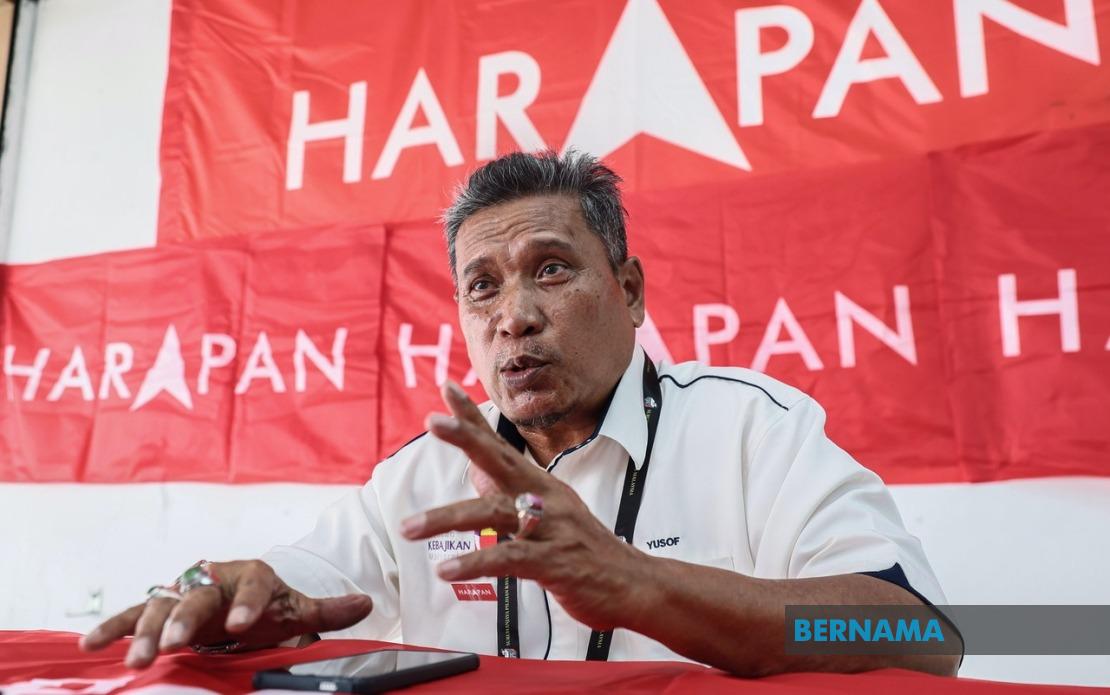
Pakatan Harapan's Tenggaroh state seat candidate Md Yusof Dawam has presented an ambitious vision to address generational challenges facing the Felda community, targeting both demographic retention and economic rejuvenation in what represents a critical pivot for rural development in Johor. The 64-year-old retired teacher believes the current migration patterns of young settlers away from Felda schemes reflects systemic planning failures that have left second-generation residents without viable residential options, threatening the long-term viability of these established communities.
Young families in Tenggaroh consistently cite housing constraints as a primary grievance, according to feedback gathered during campaigning. The inability of settler children to establish independent households without substantial financial resources has created a dependency cycle that forces multiple generations to share single family units, an arrangement increasingly untenable in modern times. Md Yusof's proposed solution involves securing between ten and twenty acres within or adjacent to the Tenggaroh Felda scheme for a purpose-built residential settlement, complete with systematic planning that differentiates it from previous ad-hoc land allocation approaches. This would represent a departure from conventional Felda administration and signal recognition that earlier settlement models require modernisation.
Beyond residential concerns, Md Yusof identifies land stewardship as an underlying economic issue. Without second-generation capacity to maintain oil palm plantations and other family agricultural assets, holdings risk being abandoned, subdivided, or transferred to external commercial interests. A planned settlement strategy would anchor descendants to their inherited landholdings, preserving family enterprise continuity and preventing the gradual outsourcing of agricultural productivity that frequently occurs when youth seek employment in urban centres. This retention mechanism carries implications for Felda's collective economic resilience and the broader sustainability of smallholder palm oil operations across Southeast Asia.
The candidate's retail sector modernisation proposal responds to a palpable stagnation within Tenggaroh's commercial landscape, where shop configurations and business models have remained essentially unchanged since the 1980s. Md Yusof proposes introducing temporary land grants enabling merchants to construct contemporary business premises, transforming the settlement into a more recognisable "small town" centre rather than the dispersed trading outposts that currently characterise Felda communities. This structural upgrade would theoretically extend retail diversity and consumer services, reducing residents' dependency on journeys to distant urban markets for routine purchases and services.
Mersing's geographic remoteness, situated approximately 70 kilometres from town proper, compounds these service gaps. Current residents requiring everyday items like keropok lekor must undertake lengthy commutes, an inefficiency that Md Yusof argues both wastes household time and extracts retail spending from the community. Centralising commercial infrastructure within Tenggaroh itself would establish a self-contained economic circulation loop where settlement income recycles internally rather than dispersing to external merchants. Such reorganisation aligns with broader Southeast Asian rural development theory emphasising local value chains as pathways to sustained prosperity.
The tourism dimension of Md Yusof's platform addresses underutilisation of natural assets, particularly the surrounding islands of Pulau Besar, Pulau Tinggi, and Pulau Aur that have attracted international film production companies. While these islands have served as location shoots for foreign entertainment productions, local residents have captured minimal economic benefit from this international interest. The absence of youth-operated tourism enterprises or maritime transport companies has prevented the natural translation of visiting production activity into sustainable employment and income streams for younger residents.
International film production activity, while episodic and unpredictable, represents a significant untapped opportunity for destination development. Md Yusof's implicit argument that formalising tourism infrastructure and establishing local operating capacity could convert ad-hoc filming interest into structured, year-round economic activity reflects pragmatic engagement with globalisation patterns affecting rural Malaysia. Creating pathways for younger settlers to build tourist-facing businesses would simultaneously address youth unemployment and capital requirements, while strengthening economic diversification beyond agriculture.
Md Yusof's campaigning methodology emphasises intimate community engagement through small-group meetings rather than mass rallies, a tactical choice reflecting his understanding of Felda's social structures and his own biographical positioning. His four decades of residence in Mersing combined with sixteen years as an educator within Felda Nitar furnishes him with institutional knowledge and personal credibility that transcends typical political candidate credentials. This deep local embeddedness theoretically enables nuanced understanding of community priorities that externally-parachuted candidates may overlook or misjudge.
The educational background particularly distinguishes Md Yusof's candidacy within the context of rural development discourse, where technical literacy and long-term strategic thinking require grounding in institutional systems. His teaching experience suggests capacity for translating policy concepts into community-comprehensible initiatives, a skill that often proves decisive in rural electoral contexts where candidates' ability to articulate achievable plans carries disproportionate weight compared to urban sophistication metrics.
Tenggaroh's electoral significance reflects broader Johor dynamics as the state hosts the 16th state election comprising 172 candidates contesting 56 seats on July 11. Rural constituencies like Tenggaroh frequently determine overall state political outcomes, yet their development priorities often receive subordinated attention in electoral campaigns dominated by urban concerns. The emergence of Felda-specific development planning as a central campaign plank indicates either renewed political commitment to rural constituencies or recognition that previous policy frameworks have demonstrably underperformed.
Malaysia's Felda scheme, once celebrated as a model redistribution and poverty alleviation mechanism, faces contemporary legitimacy questions as original settler populations age and intergenerational transmission becomes operationally complex. Johor, housing substantial Felda populations, naturally becomes a testing ground for renewed rural development approaches. Md Yusof's platform suggests Pakatan Harapan is consciously engaging these institutional renewal questions, positioning itself as the mechanism for modernising rural administration rather than merely preserving inherited structures.
The polling represents a referendum not merely on individual candidacies but on competing visions for rural Malaysia's trajectory. Md Yusof's emphasis on demographic retention, economic diversification, and infrastructure modernisation contrasts implicitly with approaches prioritising agricultural intensification or continued urbanisation acceptance. His vision imagines Felda communities as viable long-term residential and economic locations for younger generations, rather than temporary staging grounds before migration to urban employment centres—a philosophically significant reframing of how Malaysia conceptualises rural sustainability and intergenerational equity.

