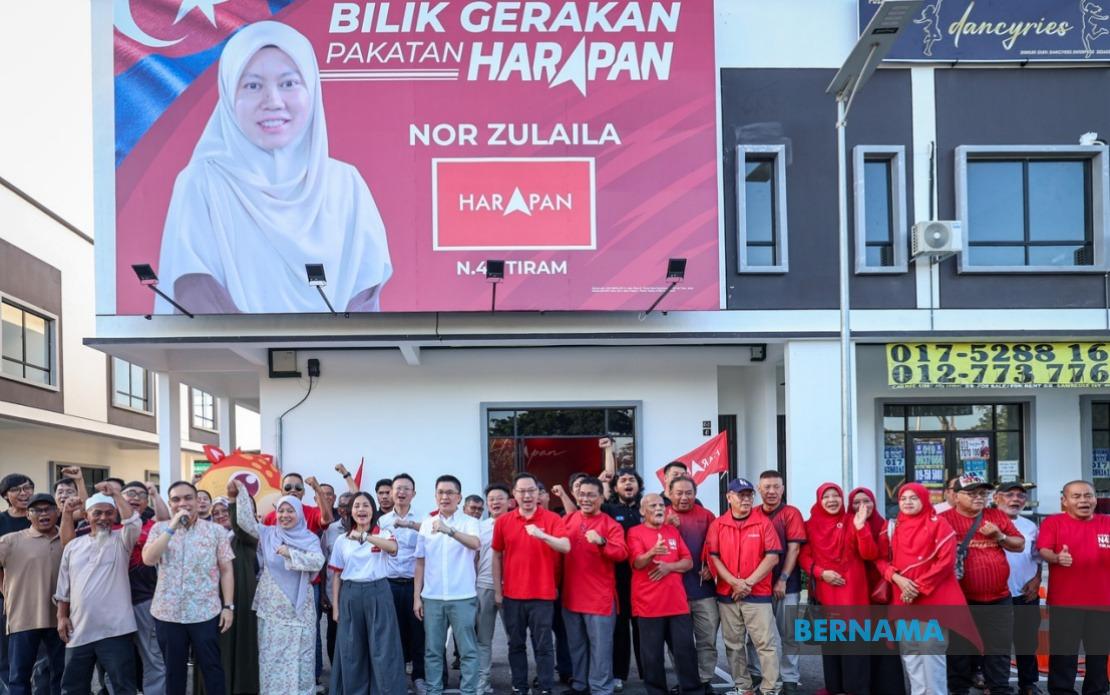
The Malaysian Communications and Multimedia Commission (MCMC) has been tasked with maintaining reliable internet connectivity across Johor throughout the ongoing state election campaign, Deputy Communications Minister Teo Nie Ching announced today. Speaking at the Pakatan Harapan operations room launch for the Tiram constituency in Pasir Gudang, Teo emphasized that consistent digital access represents a critical infrastructure requirement for managing campaign activities and reaching voters effectively during this electoral period.
Teo's directive to MCMC reflects growing recognition within Malaysia's political establishment of how digital infrastructure directly impacts election campaigns. The minister explained that stable internet service underpins multiple aspects of modern political engagement, from coordinating large-scale public rallies to delivering timely messaging to the electorate. By framing connectivity as an organizational necessity rather than merely a convenience, Teo positioned broadband access alongside traditional campaign mechanics like venue management and voter outreach.
The MCMC will conduct continuous assessment of network performance in areas anticipated to draw significant crowds, according to Teo's statement. This targeted monitoring approach acknowledges that peak demand during major campaign events can strain local infrastructure, potentially disrupting communications for organizers and attendees alike. The regulator's focus on high-traffic zones reflects practical experience from previous electoral contests in Malaysia, where infrastructure limitations in densely populated areas have occasionally compromised campaign execution.
Teo, who also serves as Johor DAP chief, shared encouraging feedback from grassroots campaign activities across the state. Voter sentiment gathered through ongoing ground engagement has proven remarkably positive, with constituents demonstrating strong intention to participate in the democratic process. Notably, Teo observed heightened enthusiasm among voters living outside their home constituencies, many of whom have indicated willingness to return to their hometowns specifically to cast ballots—a pattern suggesting genuine engagement with electoral outcomes rather than apathetic participation.
This voter mobility trend carries significance for campaign planning across Malaysia's states. Migration for work and education has created geographically dispersed electorates, with substantial portions of voters residing temporarily outside their registered constituencies. The willingness Teo observed to make special journeys home for voting reflects political consciousness that extends beyond mere civic obligation, potentially reshaping how parties approach voter persuasion strategies. Understanding which demographic groups prioritize returning home to vote allows campaigns to tailor messaging accordingly.
DAP's campaign strategy for the Johor election deliberately avoids designating any seats as politically secure, Teo explained. This approach contradicts conventional electoral wisdom that permits parties to concentrate resources on competitive races while maintaining minimal presence in supposedly safe strongholds. Instead, DAP has committed to treating all 17 contested seats with equal priority and attention. Teo's reasoning centres on recognizing that complacency about electoral certainty frequently translates into reduced campaign intensity, which in turn enables unexpected shifts in voter preference.
The coalition's decision to invest evenly across all its targeted constituencies reflects lessons from previous elections where taken-for-granted seats unexpectedly shifted to opposing parties. This strategy carries operational costs—requiring party machinery to maintain consistent activity across multiple fronts rather than concentrating firepower in decisive battlegrounds—but distributes risk and prevents the embarrassment of surprise losses in supposedly secure territory. For larger parties with substantial resources, this approach remains viable; smaller parties with limited personnel and funding typically cannot afford such comprehensive coverage.
Teo emphasized that distinct local challenges characterize each constituency, requiring tailored campaign approaches rather than standardized messaging. This constituency-specific perspective suggests DAP's campaign team has conducted detailed analysis of demographic composition, incumbent performance, voter concerns, and competitive dynamics across all 17 seats. Acknowledging that political conditions vary meaningfully across even a single state demonstrates sophistication in campaign planning, moving beyond top-down directives to recognize ground-level complexity.
The election timeline structures intensive activity across a concentrated period. Nomination day occurs tomorrow, with early voting scheduled for July 7 and general polling day set for July 11. This compressed schedule compresses campaign activity into roughly two weeks from nomination to election, limiting time for sustained persuasion efforts compared to national parliamentary elections. The early voting option provides flexibility for voters anticipating scheduling conflicts on polling day, potentially including overseas-based constituents and shift workers unable to vote during standard hours.
The Johor state election represents the first major electoral test for Malaysia's revised political landscape following recent parliamentary developments. Results will provide crucial indicators of voter sentiment toward various coalitions and inform expectations for future national elections. Strong performance in the state could bolster any coalition's confidence heading toward eventual parliamentary contests, while disappointing results would necessitate strategic reassessment.
Internet infrastructure's role in this election underscores how digital connectivity has become integral to modern political competition in Malaysia. From social media campaigning to coordination of volunteer networks to rapid-response messaging, campaigns now depend substantially on reliable broadband. MCMC's commitment to monitoring connectivity ensures that technical infrastructure limitations do not inadvertently disadvantage any coalition, preserving the principle that electoral outcomes reflect voter preferences rather than administrative or logistical constraints.
Beyond the immediate election context, maintaining optimal internet coverage during campaign periods establishes precedent for treating connectivity as election infrastructure comparable to polling facilities and security arrangements. As Malaysian elections become increasingly digitized, this institutional commitment to broadband reliability during electoral periods reflects recognition that modern democracy requires modern telecommunications foundations.

