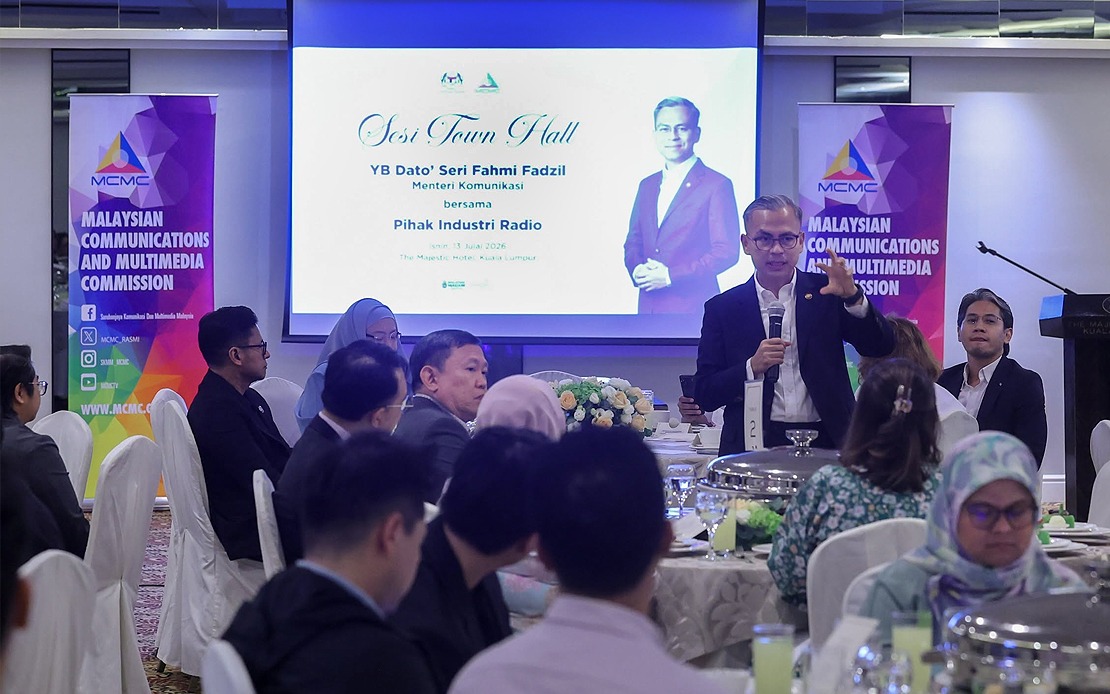
Communications Minister Datuk Seri Fahmi Fadzil has initiated a strategic examination of Malaysia's radio broadcasting sector, tasking the Malaysian Communications and Multimedia Commission with conducting an in-depth study of the National Broadcasting Policy. The review reflects the government's commitment to revitalising the radio industry as it navigates significant disruption from digital platforms and evolving listener preferences across the nation.
The assessment forms part of a broader alignment with the National Creative Industry Policy and the Orange Economy Council's strategic agenda, positioning radio as a critical component of Malaysia's creative economy framework. By situating the radio review within these established policy structures, the government signals its intention to treat broadcasting not merely as a legacy medium but as an integral element of Malaysia's cultural and economic development in the years ahead.
Fahmi outlined his vision during a town hall session that brought together MCMC representatives, radio broadcasters, and industry stakeholders to engage in candid dialogue. The forum provided a platform for radio operators to articulate their operational challenges, competitive pressures, and recommendations for industry-wide improvements. This consultative approach underscores recognition that sustainable policy solutions require meaningful input from those operating within the sector.
Prominent among the issues workshopped were strategies to elevate locally-produced music content on Malaysian radio frequencies. Radio stations have long served as crucial discovery platforms for Malaysian artists, yet competition from streaming services and international content has eroded their traditional role in breaking domestic talent. The government's focus on this dimension reflects awareness that strengthening local content pipelines could simultaneously support the music industry and differentiate Malaysian radio from digital alternatives.
The licensing framework emerged as another critical discussion point. Malaysia's current radio licensing structure, governed by MCMC regulations, has remained relatively stable for years, but industry representatives have increasingly flagged that existing models may not adequately address contemporary operational realities, including the costs of digital integration and audience measurement tools. A modernised licensing regime could provide broadcasters with greater flexibility whilst maintaining regulatory oversight.
Industry sustainability featured prominently in deliberations, reflecting widespread concern about revenue pressures facing traditional radio operators. Advertising income, historically the sector's lifeblood, has fragmented as brands redirect budgets toward digital channels with sophisticated targeting capabilities. Radio stations have experimented with podcasting, live events, and sponsored content, yet many remain financially vulnerable. The government review offers an opportunity to identify structural reforms or incentive mechanisms that could stabilise the sector.
Fahmi emphasised the government's determination to ensure radio retains cultural relevance and economic viability as digital competition intensifies. Radio's enduring strength lies in its accessibility, its capacity for real-time connection with communities, and its integration into daily routines during commutes and work. Yet sustaining these advantages requires deliberate investment in content quality, technological modernisation, and business model innovation. The MCMC review will need to diagnose which regulatory, financial, or infrastructural barriers currently impede such advancement.
The digital landscape's expansion presents both threat and opportunity. Whilst streaming platforms and social media have fragmented audiences, digital distribution tools have simultaneously lowered production barriers, enabling radio stations to extend their reach beyond traditional FM frequencies through apps, websites, and podcasts. The review must grapple with how licensing, content requirements, and funding mechanisms can adapt to this hybrid broadcasting environment where traditional and digital distribution coexist.
For Malaysia's broader creative economy objectives, radio remains a potent medium for cultural expression and talent development. Unlike more capital-intensive film and television production, radio production is relatively accessible, allowing emerging artists, journalists, and producers to develop their craft. A thriving radio sector thus functions as an incubator for creative talent that may subsequently contribute to television, film, music, and digital content production. The government's review implicitly recognises this ecosystem function.
The town hall consultations signal a departure from top-down policy formulation, acknowledging that industry practitioners possess invaluable ground-level knowledge. By creating space for broadcasters to articulate grievances and propose solutions, the government builds stakeholder buy-in for eventual policy changes. This collaborative methodology, if sustained throughout the review process, could produce recommendations that command industry acceptance rather than triggering resistance.
Regional context matters here too. Across Southeast Asia, governments have grappled with similar questions about radio's future amid digital disruption. Malaysia's approach, rooted in the creative economy framework, offers a model that other nations in the region might learn from. Strengthening Malaysian radio could establish the country as a centre of broadcasting excellence within ASEAN, attracting regional talent and investment.
The timeline and scope of the MCMC review remain to be clarified, but the process is likely to span several months as researchers survey industry data, conduct stakeholder interviews, and develop evidence-based recommendations. The resulting policy amendments could reshape licensing conditions, content requirements, funding eligibility, and regulatory compliance frameworks. Industry participants will be monitoring progress closely, as the review's outcomes will directly influence their operational and strategic planning.
Ultimately, the government's initiative reflects awareness that Malaysian radio's future depends not on nostalgia but on purposeful modernisation grounded in contemporary audience needs and technological realities. By commissioning a comprehensive policy review, Communications Minister Fahmi Fadzil has signalled seriousness about radio's role in Malaysia's creative economy whilst creating legitimate opportunity for the industry to shape its own regulatory environment.

