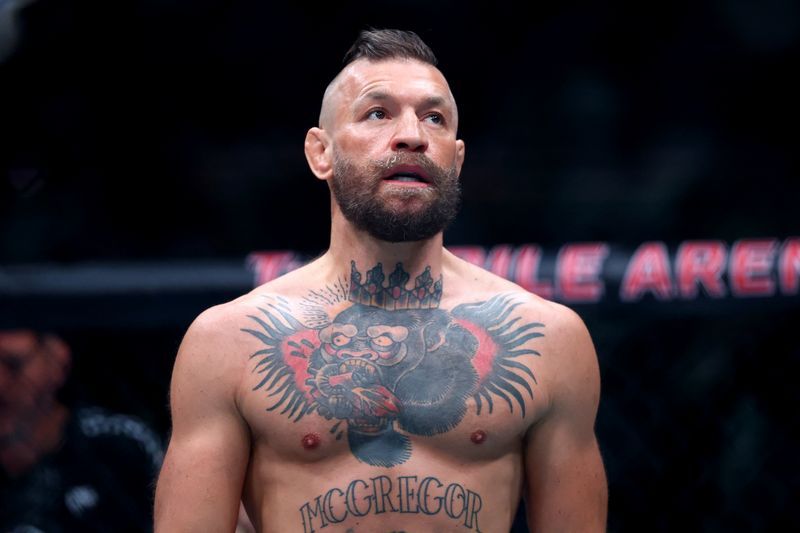
Conor McGregor's comeback to professional mixed martial arts ended almost as soon as it began on Saturday night. The former two-division UFC champion suffered a catastrophic knee injury at UFC 329 in Las Vegas that forced him to withdraw from his bout with Max Holloway after only 63 seconds of competition. What was billed as a major resurgence for the Irish fighter instead became another chapter in a troubling run of setbacks that have plagued his career in recent years.
The injury occurred early in the opening round when McGregor attempted an aggressive flying kick against Holloway. The technique, while visually striking, went badly wrong as the 37-year-old landed awkwardly and immediately signalled distress. After struggling through a few more seconds of exchange, McGregor gestured to the referee to indicate he could no longer continue. The bout, which had generated significant anticipation across the combat sports world, ended almost as quickly as it began.
McGregor's return to competition represented his first fight in nearly three years, having last stepped into the octagon in July 2021 against Dustin Poirier, an encounter that saw him suffer a compound leg fracture. The layoff from competitive action, combined with the specific nature of this new injury, raises serious questions about his physical conditioning and readiness for elite-level competition. The brief duration of Saturday's fight means McGregor gained virtually no useful competitive data or conditioning benefit from the bout.
The rematch with Holloway carried additional intrigue given their history. The pair had previously fought in 2013, when McGregor secured a unanimous decision victory in what was an important moment in his career trajectory. A successful performance against Holloway on Saturday could have served as a meaningful stepping stone, but instead McGregor's inability to compete has left that narrative incomplete. Holloway, the former featherweight champion, struck a diplomatic tone in the aftermath, suggesting the pair should revisit their rivalry once McGregor has recovered from his injury.
This latest injury is the most recent in a series of misfortunes that have derailed what was once a dominant career. Beyond the physical injuries, McGregor has faced a cascade of other complications that have disrupted his professional trajectory. A scheduled bout against Michael Chandler in June 2024 was cancelled after McGregor sustained a broken toe during training camp, demonstrating how vulnerable his comeback plans have become to even minor injuries. Each setback has pushed his return further into the future.
The fighter's troubles extend well beyond the physical. In 2023, an Irish civil court jury found McGregor liable in a case involving allegations dating to 2018. That legal verdict represented a significant reputational blow and raised questions about sponsorship and public perception. More recently, McGregor accepted an 18-month sanction from anti-doping authorities in October 2025 after missing three collection attempts by Combat Sports Anti-Doping officials throughout 2024. Though the ban was backdated and technically expired in March, the series of violations underscored a pattern of non-compliance with sporting regulations.
For Southeast Asian fight fans and Malaysian observers, McGregor's struggles carry broader implications for how elite combat athletes manage their careers and physical preparation. The UFC remains hugely popular across the region, and McGregor remains one of the organisation's most recognisable figures. His inability to stay healthy and compete at the highest level serves as a cautionary tale about the intersection of injury management, regulatory compliance, and comeback attempts in professional sport.
The broader context of McGregor's decline is particularly striking given his previous achievements. As a former champion at both featherweight and lightweight, he represented a different era of UFC dominance and marketability. His current situation reflects how quickly elite athletes can fall from prominence when injuries compound and opportunities are missed. The sport itself has moved on, with new fighters establishing themselves at the highest levels of competition.
On the same card at the T-Mobile Arena, British fighter Paddy Pimblett also recorded a swift victory, subduing Frenchman Benoit Saint-Denis with a submission in the lightweight division's co-main event. That bout lasted less than a minute, creating an unusual evening where the headline fight concluded almost instantaneously. The contrast between McGregor's forced exit due to injury and Pimblett's dominant display highlighted different trajectories in professional combat sports.
Moving forward, the critical question concerns whether McGregor can recover adequately from this knee injury and whether his body can withstand the demands of elite UFC competition. The physical toll from multiple injuries, combined with the extended absence from regular training and competition, suggests his return to the championship level may be significantly more challenging than previously anticipated. His claims to title contention appear remote at this point, and even establishing himself as a credible contender at welterweight or lightweight requires demonstrable performance improvements.
For the UFC, McGregor's continued struggles present both commercial and competitive challenges. The organisation has built significant revenue around the fighter's marketability, yet his inability to deliver consistent performances undermines that value. Holloway's comments about potentially running the fight back suggest a willingness to engage McGregor again, but only if the Irish fighter can prove his injury recovery was complete and his fitness levels sufficient. Until then, McGregor remains sidelined, nursing his latest setback and contemplating an increasingly uncertain path forward.

