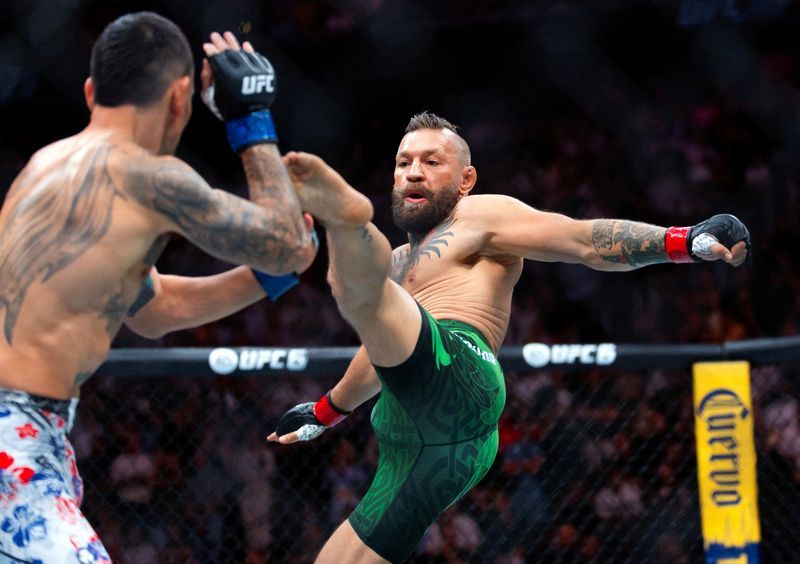
Conor McGregor's long-awaited return to mixed martial arts competition came to an abrupt and disappointing end on Saturday evening in Las Vegas, lasting barely over a minute before a serious knee injury forced him to withdraw from his bout with Max Holloway. The incident occurred in the opening exchanges when McGregor attempted an ambitious jump kick, landed awkwardly, and immediately signalled to the referee that he could not continue. On Monday, the Irish fighting icon announced plans to undergo surgical intervention and maintained his resolve to step back into the octagon in the future, signalling through an Instagram post that he remains committed to his professional ambitions despite the setback.
The injury represents yet another frustrating chapter in what has become a turbulent period for the 37-year-old former two-weight champion. McGregor's career trajectory over recent years has been significantly disrupted by both physical ailments and extracurricular complications that have repeatedly derailed his attempts at competitive resurrection. The Dubliner has found himself caught in a cycle of recovery, cancelled bouts, and legal entanglements that have substantially limited his time competing at the highest level of the sport.
McGregor's injury struggles extend back several years. Most notably, a severe leg fracture sustained during a bout against Dustin Poirier in 2021 dealt a considerable blow to his momentum and required an extended rehabilitation period. That recovery process was further complicated when a scheduled matchup with Michael Chandler was cancelled in June 2024 after McGregor sustained a broken toe during training—a relatively minor injury in isolation that nonetheless prevented him from competing at a critical juncture in his comeback attempt.
Beyond the physical toll of injuries, McGregor has faced significant personal and legal challenges that have clouded his professional standing. In 2024, a jury in an Irish civil court determined that McGregor was liable in connection with allegations involving Nikita Hand, stemming from an incident in 2018. This legal determination added considerable weight to the obstacles already facing his attempted return to competitive fighting and drew scrutiny from both fans and observers of the sport.
Additionally, McGregor faced disciplinary action from anti-doping authorities that resulted in an 18-month suspension imposed in October 2025 for what officials termed "whereabouts failures." The fighter had missed three separate collection attempts by Combat Sports Anti-Doping during 2024, leading to the sanction. Although the ban was backdated to an earlier period, it only expired in March, meaning McGregor's participation in competitive events has been restricted until very recently.
Despite these accumulated setbacks, McGregor's public statements indicate an unwavering determination to pursue his sporting ambitions. His Instagram post struck a tone of optimism and spiritual conviction, emphasizing his belief that adversity ultimately serves a constructive purpose in his life. He outlined a methodical approach to his recovery, beginning with surgery followed by pre-habiliation work and a gradual return to martial arts training before attempting competition once more.
McGregor referenced completing "the final fight of the contract" in his statement, suggesting he remains bound by existing agreements with the Ultimate Fighting Championship and has aspirations to fulfill those contractual obligations. This language indicates that despite the accumulation of injuries and complications, the athlete retains a concrete objective to return to professional competition and potentially achieve closure on his current arrangement with the promotion.
For Malaysian and Southeast Asian combat sports enthusiasts, McGregor's situation underscores the harsh realities of professional fighting at an elite level. The region has produced numerous martial artists who have faced similar injury and legal complications throughout their careers, yet the pattern remains sobering. The recovery period from severe knee injuries typically extends considerably, with many fighters never returning to their previous level of performance. McGregor's age—at 37, he is no longer in the prime years that typically define elite fighting careers—adds another layer of complexity to his recovery prospects.
The broader context of McGregor's challenges also reflects evolving expectations surrounding athlete conduct and anti-doping compliance within professional sports globally. The Combat Sports Anti-Doping sanction for whereabouts failures reflects regulatory bodies' determination to maintain rigorous testing protocols, and McGregor's case demonstrates that even prominent figures cannot operate outside these systems without facing consequences. For aspiring fighters in Malaysia and the region who look to international examples for guidance on professional conduct, McGregor's experiences offer cautionary lessons about both the physical demands and the off-octagon obligations that accompany elite status.
Looking ahead, McGregor's surgical recovery and rehabilitation timeline will be closely monitored by fight fans, sports analysts, and the broader MMA community. The trajectory of his return attempt will provide valuable data points about whether fighters in their late thirties can successfully navigate the substantial demands of modern professional fighting following serious structural injuries. His stated commitment to pursuing the final fight on his contract suggests he intends to make a genuine attempt at closure rather than a prolonged fadeout, though the practical success of such ambitions remains uncertain given the medical and competitive hurdles ahead.

