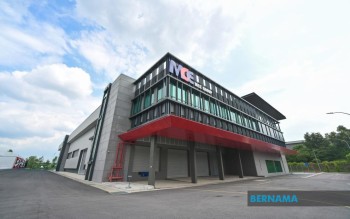
MCE Holdings Bhd has officially inaugurated the MCE Auto Hub, a RM50 million advanced manufacturing facility located within UMW High Value Manufacturing Park in Serendah, Hulu Selangor. The launch, overseen by Investment, Trade and Industry Minister Datuk Seri Johari Abdul Ghani, represents a significant expansion for the Malaysian tier-1 automotive electronics supplier and signals renewed confidence in the country's automotive manufacturing ecosystem during a period of industry transformation.
Spanning 5.52 hectares, the MCE Auto Hub constitutes the opening phase of an ambitious long-term capital deployment programme potentially reaching RM200 million. The facility is engineered to more than double MCE's existing manufacturing capacity whilst simultaneously elevating the group's capabilities across product design, engineering, manufacturing and research and development functions. This expansion arrives at a pivotal moment for Malaysia's automotive sector, which is navigating the transition from traditional internal combustion engine vehicles towards electric vehicle production and next-generation mobility technologies.
Minister Johari's presence at the inauguration underscores the government's prioritisation of attracting and retaining advanced manufacturing investments within the country. His remarks emphasised that such commitments reflect broader confidence in Malaysia's industrial future and MCE's strategic positioning. The minister highlighted that within an intensely competitive global manufacturing environment, domestic suppliers must persistently pursue operational excellence by investing in engineering talent, fostering innovation ecosystems and deploying cutting-edge technologies—a message directed at the wider Malaysian automotive supply chain.
MCE's trajectory illustrates the evolution of Malaysian automotive suppliers over recent decades. Established over thirty years ago, the company commenced operations by supplying remote alarms and central locking systems to Malaysia's domestic automotive market in 1990. This foundation enabled gradual portfolio expansion into increasingly sophisticated automotive electronics and mechatronic solutions. Today, MCE extends its customer reach across Malaysia, ASEAN nations and the United States, positioning itself as a regional player capable of competing internationally rather than remaining confined to domestic markets.
The MCE Auto Hub incorporates Industry 4.0-ready infrastructure, featuring clean room production environments and precisely controlled manufacturing conditions necessary for modern automotive electronics destined for both conventional internal combustion engine platforms and battery electric vehicles. This dual-capability approach reflects market realities: whilst electric vehicle adoption accelerates globally and within Southeast Asia, traditional powertrains will persist across numerous vehicle segments for the foreseeable future. MCE's capacity to serve both platforms simultaneously provides valuable flexibility for customers managing transitional product portfolios.
Operationalising the Serendah facility has expanded MCE's total workforce to 680 personnel, including 90 qualified engineers distributed across operations in Johor Bahru, Port Klang and Serendah. This engineering concentration strengthens MCE's ability to manage increasingly complex development programmes spanning internal combustion and electric vehicle platforms. For Malaysian technology talent, the facility creation represents career advancement opportunities in advanced manufacturing and automotive engineering—sectors offering premium compensation and technical skill development often unavailable in other domestic industries.
MCE group managing director Dr Goh Kar Chun articulated an ambitious vision linking the company's expansion to Malaysia's broader industrial ambitions. He emphasised that the MCE Auto Hub represents confidence that Malaysian engineering talent, human resources and manufacturing capabilities possess genuine competitive advantage on the world stage. This confidence-building narrative matters significantly within Southeast Asia, where perceptions of manufacturing quality and technological sophistication directly influence multinational automotive supplier location decisions and customer confidence in sourcing relationships.
The investment strengthens MCE's capacity to champion localisation initiatives across Malaysia's automotive value chain. By establishing a sophisticated local hub for designing, developing and manufacturing advanced automotive electronics, MCE creates downstream opportunities for Malaysian semiconductor companies, electrical and electronics manufacturers, and component suppliers. This ecosystem-building approach generates multiplicative economic effects extending far beyond MCE itself, potentially catalysing complementary investments across related sectors.
Dr Goh emphasised that Malaysia's automotive industry future depends fundamentally on deeper collaboration between vehicle manufacturers, tier-1 suppliers like MCE and the broader technology ecosystem encompassing semiconductor firms and electronics companies. This collaborative framework could accelerate Malaysian technology integration into automotive applications, reducing dependence on foreign technology licensing and building indigenous technological capabilities. Such integration strengthens Malaysia's positioning as a regional automotive electronics manufacturing hub, differentiating the country from competing Southeast Asian locations.
The MCE Auto Hub will function as the group's primary manufacturing and engineering headquarters, centralising design capabilities and high-value production operations. This consolidation enhances operational efficiency whilst signalling to multinational automotive customers that MCE possesses concentrated manufacturing expertise and engineering resources. International original equipment manufacturers increasingly consolidate suppliers, preferring partners demonstrating vertical integration and comprehensive capabilities—advantages the expanded facility directly supports.
MCE's expansion arrival coincides with Malaysia's broader strategic pivot towards advanced manufacturing. The government has explicitly targeted upgrading the country's position within global automotive value chains, moving beyond assembly towards higher-value design, engineering and component manufacturing. MCE's RM50 million facility investment exemplifies this ambition, demonstrating that Malaysian companies can access sufficient capital and technical expertise to compete in globally-demanding automotive electronics segments.
Looking forward, MCE's success will partly depend on its ability to secure substantial customer contracts leveraging the expanded facility's capabilities. The company must convert manufacturing capacity into actual production orders from both established automotive manufacturers and emerging electric vehicle producers. Securing such commitments from regional and international customers will validate the investment thesis and potentially encourage other Malaysian suppliers to pursue similar advanced manufacturing expansions.
The MCE Auto Hub ultimately represents more than a single company's expansion—it symbolises Malaysian confidence in the country's automotive future during a period of global industry disruption. Whether this investment catalyses broader manufacturing upgrades across the Malaysian automotive ecosystem will significantly influence the country's economic trajectory over the coming decade.

