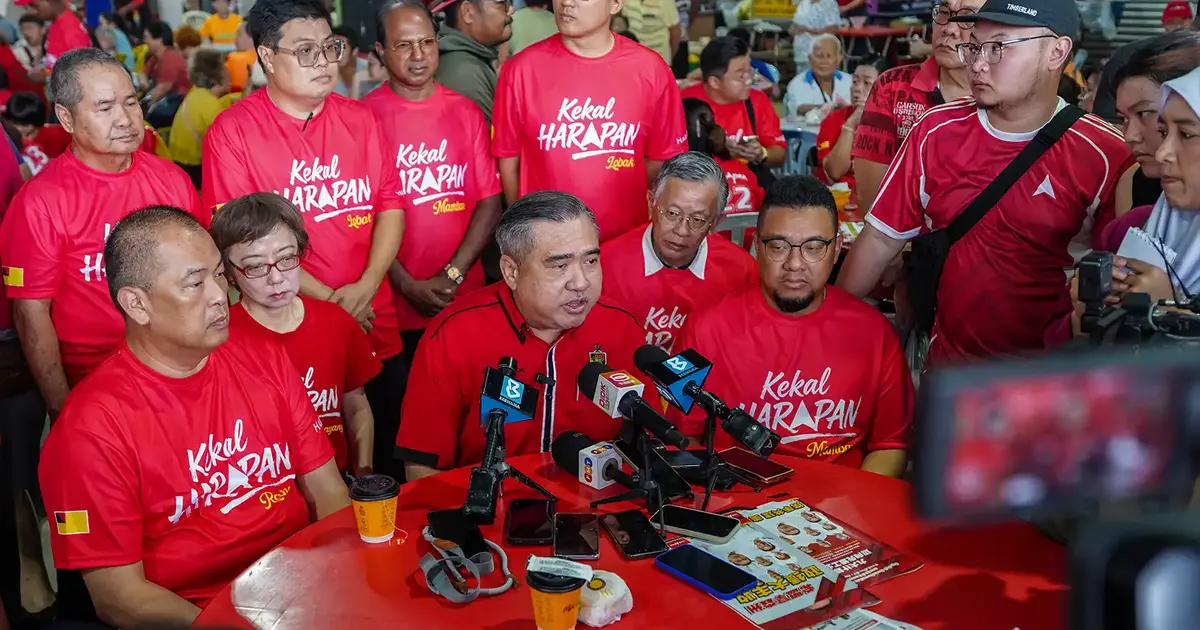
The Malaysian political landscape in Negeri Sembilan has become increasingly contentious following the formation of a pact between Barisan Nasional and Perikatan Nasional, with the Democratic Action Party's secretary-general accusing the Malaysian Chinese Association of emerging as the primary victim of the coalition agreement. According to Loke Siew Fook, MCA was forced to relinquish control of three constituencies it traditionally dominated in order to preserve the broader alliance and sidestep divisive multi-cornered contests that could have weakened the combined bloc's electoral prospects.
The seat-sharing arrangement reflected calculations made by BN's leadership to consolidate opposition against the ruling Pakatan Harapan government in the state. By ceding electoral ground, MCA ostensibly sought to prevent fragmentation that would benefit PH candidates contesting in split votes across the state's constituencies. However, the intricate calculations that underpinned this compromise have unraveled following Bersatu's formal entry into the partnership, introducing fresh complications to what was already a delicately balanced equation among competing political interests.
Loke's characterisation of MCA as the "biggest loser" reflects deeper tensions within the Negeri Sembilan political sphere regarding seat allocation and representation. The party's willingness to surrender three constituencies—areas where its support base has historically been concentrated—represents a substantial concession in practical electoral terms, extending beyond merely symbolic compromise. These constituencies likely represent not only consistent vote-gathering opportunities but also crucial sources of grassroots support, organisational presence, and resource mobilisation that sustain party operations at the state level.
The decision to accommodate PN, which commands less established presence in Negeri Sembilan compared to BN's component parties, fundamentally altered the original bargain that MCA had presumably negotiated. When seat arrangements are initially designed, the mathematics of electoral competition suggest the formula should benefit all participating parties proportionally according to their respective strengths. Yet by introducing a third major player into proceedings, the entire framework became subject to renegotiation, with existing concessions suddenly appearing inadequate or unfairly distributed.
Bersatu's expansion into Negeri Sembilan carries significant strategic implications for the state's political trajectory. The party entered the arrangement as a newcomer with genuine ambitions to capture seats, necessitating fresh territory allocations that could only come from the existing BN-PN pool. Unlike smaller coalition partners that might accept symbolic representation or token candidacies, Bersatu demanded competitive positions where it possessed realistic winning prospects, effectively squeezing the space available for established players like MCA.
From MCA's perspective, the timing of Bersatu's involvement represented poor fortune rather than strategic miscalculation. The party had already committed to its three-seat sacrifice when negotiating positions within the broader BN framework, presumably with assurances that the arrangement would remain stable. Discovering that additional players would subsequently claim seats from the shared pool left MCA in an untenable position—having already given ground with the expectation of participating under one set of rules, only to face a revised framework that diluted its representation further.
This unfolding situation illustrates the perpetual challenges facing multi-party coalitions in Malaysian politics, particularly when multiple merger arrangements occur sequentially rather than simultaneously. Initial bilateral or trilateral negotiations establish certain premises and agreements, yet introducing fresh partners downstream inevitably requires renegotiating terms that were thought settled. MCA's predicament exemplifies how earlier concessions, made in good faith within one context, can prove disadvantageous when external circumstances shift.
The broader implications for Malaysian electoral politics are noteworthy. BN's capacity to deliver unified coalition arrangements appears challenged when coordinating across multiple partners with divergent interests and bargaining power. MCA, once a formidable force within BN's leadership structure, increasingly appears marginalised in seat negotiations at both federal and state levels. This reflects shifting demographic patterns, declining electoral performance, and the party's reduced leverage within coalition discussions where Bersatu and other players make increasingly assertive claims.
For Negeri Sembilan specifically, the fragmented nature of the anti-PH coalition creates uncertainty about which parties possess realistic electoral prospects. Constituencies where three or four candidates compete from nominally allied parties risk splitting votes unpredictably, potentially handing seats to PH despite the opposition's theoretical numerical superiority. This outcome contradicts the entire rationale behind coalition building, which assumes unified fronts increase collective competitiveness against government forces.
MCA's acceptance of the initial three-seat reduction suggests the party prioritised maintaining coalition stability and alliance relationships over maximising electoral opportunities through internal competition. This reflects either principled commitment to united opposition or pragmatic recognition that contested races would indeed benefit the governing coalition. However, the subsequent Bersatu complication suggests MCA's sacrifice may have been rendered ineffective by circumstances beyond its control.
Looking forward, MCA faces difficult choices regarding its participation in state-level coalitions. Accepting reduced seat allocations in exchange for coalition participation only yields political benefits if those arrangements prove stable and deliverable. When external parties subsequently alter agreed frameworks, participating parties must weigh whether continued alignment remains advantageous or whether alternative strategies might better serve their electoral interests.
The Negeri Sembilan situation underscores evolving dynamics within Malaysian coalition politics, where traditional hierarchies appear increasingly contested and seat-sharing agreements remain perpetually vulnerable to disruption. For Malaysian voters observing these machinations, the episode demonstrates how complex political calculations at party leadership level ultimately determine their electoral choices and representation options.

