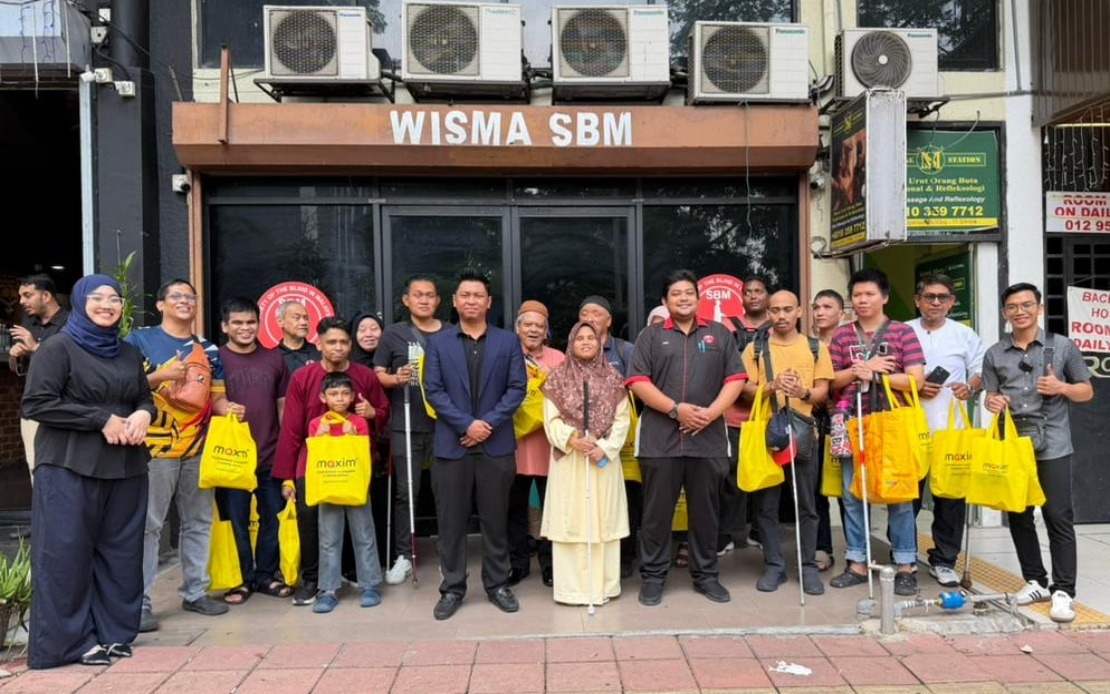
E-hailing platform Maxim is stepping up its mission to dismantle transportation barriers for vulnerable populations across Malaysia, deploying a multipronged strategy centred on affordable pricing, tailored technology solutions, and collaborative partnerships with community organisations. The company's commitment reflects a growing recognition that accessible mobility extends far beyond conventional ride-sharing, functioning instead as a critical enabler of social participation and economic opportunity.
Syed Abdul Syarif Syed Peiaru, Maxim's Kuala Lumpur head, articulated the company's vision during a recent discussion, emphasizing that transportation access represents a fundamental gateway to independence and opportunity. Rather than positioning affordability and accessibility as separate concerns, the company views them as interdependent pillars essential for creating genuine inclusivity across diverse demographic segments including persons with disabilities, senior citizens, low-income households, and students. This philosophical grounding distinguishes Maxim's approach from purely commercial models, instead framing mobility as a social enabler that facilitates educational pursuits, employment prospects, healthcare access, and community engagement.
The practical implications of this accessibility framework become particularly significant in the Malaysian context, where transportation infrastructure gaps disproportionately affect vulnerable populations in both urban and rural settings. By maintaining reasonable fares while expanding service coverage into underserved regions, Maxim addresses a persistent challenge facing cities like Kuala Lumpur and secondary urban centres where public transportation options remain limited for persons with disabilities or those operating under financial constraints. The company's willingness to absorb operational costs associated with inclusive service delivery signals a departure from maximizing short-term profitability in favour of sustainable, socially-conscious growth.
Central to Maxim's accessibility initiative is the Mesra OKU service, a purpose-built offering that incorporates extended waiting periods accommodating passengers with mobility challenges, driver training in disability-sensitive assistance protocols, integrated support for mobility aids, and voice-recognition booking capabilities for users with visual impairments. The service architecture acknowledges that accessibility extends beyond physical convenience to encompass dignity, safety, and user autonomy. Passengers can specify assistance requirements through the application interface, enabling drivers to prepare appropriately and ensuring journeys proceed without unnecessary complications or discomfort. This design philosophy represents meaningful progress in an industry where standardized approaches historically marginalized persons with disabilities.
Technology functions as a crucial enabler within Maxim's accessibility ecosystem, with the digital platform engineered to minimize friction points that typically discourage vulnerable users from adopting ride-hailing services. Transparent fare structures eliminate unexpected charges that might deter budget-conscious passengers, while real-time driver connectivity provides reassurance regarding vehicle arrival and identity verification. Voice-recognition features address barriers faced by visually impaired users, democratizing access to digital mobility solutions that increasingly dominate transportation markets. The company's partnership with the Society of the Blind in Malaysia demonstrates strategic intent to refine these capabilities in consultation with affected communities rather than imposing top-down solutions.
Beyond fare structures and technological innovation, Maxim has cultivated institutional partnerships that amplify accessibility impact across multiple service sectors. Collaborations with hospitals facilitate medical appointment access for mobility-challenged patients, while educational institution partnerships support student transportation needs. Non-governmental organizations serving vulnerable communities gain transportation solutions to enhance service delivery, creating network effects where improved mobility facilitates broader social program effectiveness. These partnerships transcend conventional corporate social responsibility frameworks, instead constituting systemic integration designed to embed accessibility considerations throughout interconnected social infrastructure.
The company's engagement with para-athletic communities, including transport provision for Sarawak para swimmers, illustrates how accessibility principles extend into specialized domains often overlooked by mainstream service providers. Adaptive sports development depends critically on logistical support that enables consistent training and competition participation, particularly in states where transportation networks remain underdeveloped. By recognizing para-athletes' specific mobility requirements, Maxim addresses gaps where public transportation and conventional ride-hailing services prove insufficient, reinforcing the notion that inclusive mobility must accommodate diverse user profiles and activity types.
Financial sustainability considerations underlie Maxim's accessibility expansion, with specialized pricing initiatives for persons with disabilities and individuals with special needs calibrated to balance affordability with operational viability. The company's approach acknowledges that vulnerable populations often operate under severe financial constraints, yet represents valuable service volume when aggregated across Malaysia's diverse geography. Special pricing mechanisms function as demand stimulation while simultaneously advancing social inclusion, creating a virtuous cycle where expanded usage generates operational efficiencies offsetting revenue reductions from discounted fares.
The regional context amplifies significance of Maxim's initiative, as Southeast Asia's rapidly urbanizing landscape creates persistent mobility challenges for populations historically dependent on informal transportation arrangements. Malaysia's aging demographic profile, combined with high disability prevalence rates, ensures growing demand for accessible services that neither formal public transportation nor conventional commercial operators have adequately addressed. By positioning accessibility as core operational philosophy rather than peripheral social responsibility, Maxim establishes competitive differentiation while modeling inclusive business practices potentially inspiring regional competitors.
Looking forward, Maxim's announced intention to deepen collaboration with government agencies, healthcare providers, educational institutions, and community organizations suggests recognition that individual corporate action, while valuable, requires systemic coordination for meaningful impact. Sustainable accessibility improvements demand alignment between transportation services, urban planning, disability policy frameworks, and social safety nets. The company's openness to stakeholder feedback regarding persons with disabilities' evolving needs indicates commitment to iterative refinement rather than static programming, acknowledging that accessibility represents dynamic process rather than fixed endpoint.
For Malaysian users within vulnerable categories, Maxim's accessibility initiatives translate to concrete mobility improvements with downstream consequences for educational attainment, employment outcomes, and social participation. Persons with disabilities gain independence previously constrained by transportation limitations, while low-income families access affordable options supporting household economic productivity. Elderly citizens maintain community engagement and healthcare access despite physical mobility constraints, and students overcome transportation barriers that historically restricted educational and employment opportunities. These individual-level improvements aggregate into broader social benefits including reduced poverty, enhanced public health outcomes, and more robust social cohesion.

