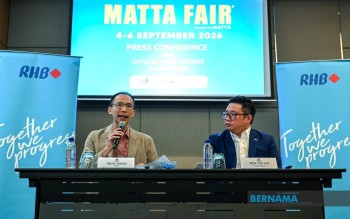
The Malaysian Association of Tour and Travel Agents has outlined an ambitious agenda for the incoming national budget, seeking a comprehensive package of fiscal and infrastructural support to revitalise the tourism sector during the critical Visit Malaysia 2026-2027 promotional period. Speaking after the MATTA Fair press conference on August 26, association president Nigel Wong presented a roadmap focused on three interconnected priorities: enhanced tax deductions for travel operators, substantial government investment in tourism infrastructure, and a bolstered promotional budget that would allow Malaysia to compete more aggressively for international visitor arrivals.
At the heart of MATTA's submission lies a recognition that Malaysia's competitiveness in the regional and global tourism marketplace hinges on the capacity of domestic tour operators to mount sustained overseas marketing campaigns. Wong emphasised that improved tax incentives, particularly in the form of enhanced deductions for promotional spending, would provide the financial breathing room operators need to expand their international presence and articulate Malaysia's value proposition to potential visitors. This approach reflects industry consensus that tax policy can serve as a lever to stimulate private-sector investment in brand-building activities that ultimately benefit the national tourism ecosystem.
The timing of MATTA's submission is significant. With the Visit Malaysia 2026-2027 initiative now entering its implementation phase, the industry body recognises that the budget cycle offers a critical window to secure the fiscal measures necessary to make the campaign a success. Tour operators have consistently argued that they function within a compressed margin environment, and that targeted tax relief would enable them to allocate additional resources toward promotional activities in key overseas markets without sacrificing profitability or operational flexibility.
Beyond taxation, MATTA has identified infrastructure and heritage restoration as a cornerstone of its budget strategy. Wong pointed to the renovation of the Sultan Abdul Samad Building as a exemplary case of how strategic government investment can transform a historical landmark into a compelling tourist attraction that enhances Kuala Lumpur's international brand identity. The principle underlying this argument is straightforward: destination appeal depends not only on natural attractions but on the presentation and condition of cultural and historical assets that differentiate Malaysia from competing Southeast Asian tourism destinations.
Malaysia's tourism landscape contains considerable untapped potential in its heritage stock. Across the country, traditional buildings, colonial-era structures, and historical sites represent valuable tourism commodities that often suffer from deferred maintenance and underinvestment. MATTA's call for targeted government funding to refurbish and upgrade these assets addresses a persistent infrastructure deficit. When well-maintained and accessible, such sites can anchor tourism itineraries and generate ancillary economic activity in surrounding communities, creating multiplier effects that extend beyond the tourism industry itself.
The association's advocacy extends beyond traditional tourism infrastructure into the realm of urban management and public safety. Wong articulated a holistic vision of tourism development in which municipal councils and city authorities play an active role in ensuring that urban destinations remain clean, safe, and pedestrian-friendly. This whole-of-tourism approach recognises that visitor satisfaction depends on factors ranging from street cleanliness and public transportation to security and commercial vibrancy. By positioning municipal authorities as stakeholders in tourism outcomes, MATTA is essentially arguing for a policy framework that incentivises local governments to adopt tourism-centric urban management practices.
Such a stance reflects international best practice in destination management. Cities that have successfully scaled tourism activity—from Bangkok to Singapore—have typically implemented coordinated strategies that align local governance structures with tourism promotion objectives. In the Malaysian context, where cities and municipal councils operate with varying levels of resources and capacity, a government-endorsed whole-of-tourism approach could help standardise destination quality and reduce the inconsistency that sometimes characterises visitor experiences across different regions.
The promotional budget dimension of MATTA's submission addresses what industry observers regard as a persistent underfunding of Malaysia's overseas marketing efforts relative to regional competitors. A higher allocation dedicated specifically to Visit Malaysia 2026-2027 activities would enable Tourism Malaysia and its partners to mount campaigns of greater scale and sophistication in key source markets. This is particularly relevant for competing against Thailand's historically well-resourced Tourism Authority of Thailand and Indonesia's diversified tourism marketing infrastructure.
From a macroeconomic perspective, MATTA's budget priorities align with Malaysia's broader policy objective of expanding tourism's contribution to national output and employment. Pre-pandemic, international tourism arrivals had begun accelerating, and the sector had demonstrated capacity to generate significant foreign exchange earnings and support labour-intensive service employment. The Visit Malaysia campaigns represent an attempt to rebuild and surpass pre-pandemic performance trajectories, requiring corresponding investments in both supply-side capacity and demand-generation activities.
The Finance Minister is scheduled to table the Supply Bill for Budget 2027 on October 9, according to parliamentary records. Between now and that date, MATTA will likely intensify engagement with government officials and continue articulating its case through industry forums and media communications. The budget allocation decisions made in October will significantly shape the operating environment for tour operators throughout 2027 and influence Malaysia's competitive position in attracting international leisure and business travellers.
MATTA's submission should be understood not merely as a request for fiscal favours but as a strategic advocacy exercise aimed at aligning government expenditure with industry imperatives. By framing its demands within the context of the Visit Malaysia initiative and national tourism objectives, the association is essentially arguing that the measures it seeks represent investments in national competitiveness rather than sectoral handouts. Whether these arguments prove persuasive to fiscal authorities facing competing budget demands will become clear following the October budget announcement.

