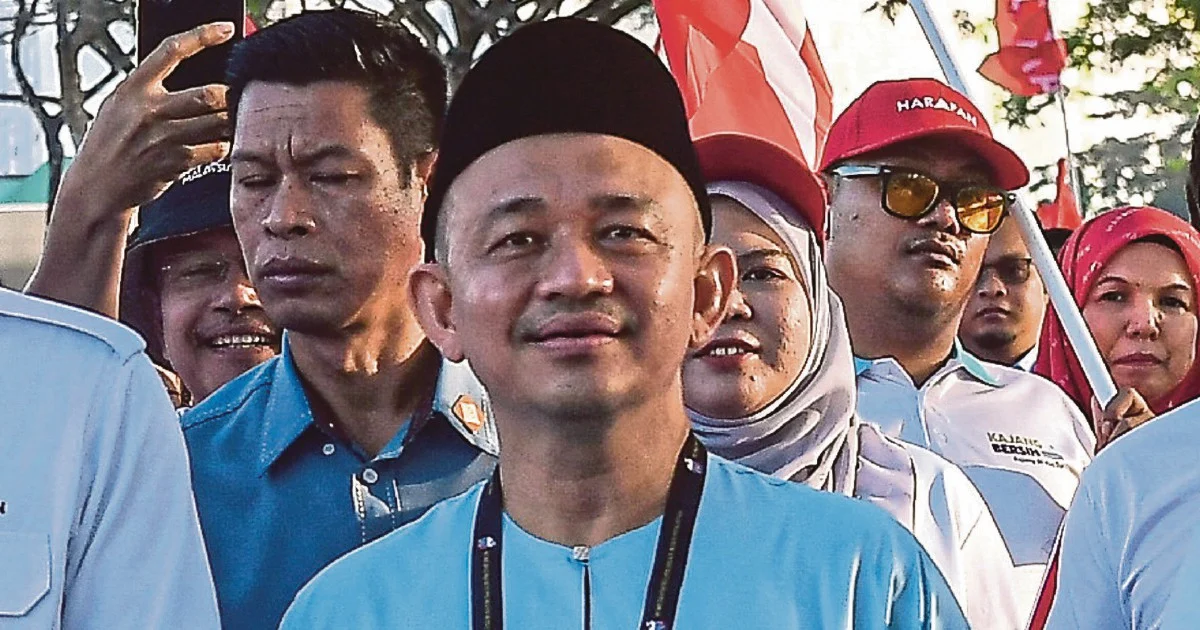
Former education minister Dr Maszlee Malik has thrown his weight behind Pakatan Harapan's electoral push in Johor, suggesting that a coalition victory would fundamentally reshape the political and developmental landscape of Malaysia's southern powerhouse. Speaking in Johor Baru, Maszlee argued that securing seats including Puteri Wangsa would grant the opposition coalition a mandate to pursue a fresh vision for the state's future.
The timing of Maszlee's intervention reflects growing momentum behind the opposition's Johor strategy. As a prominent PH figure and former education minister, his public endorsement carries weight within reform-minded circles and signals the coalition's confidence in its electoral prospects. The focus on specific constituencies like Puteri Wangsa underscores PH's belief that urban and semi-urban seats represent the battleground where voter sentiment is shifting.
Johor's political trajectory has been marked by decades of Barisan Nasional dominance, making the state a crucial test of PH's ability to expand beyond its traditional strongholds. The southern state's economic significance—as an industrial and manufacturing hub with major petrochemical facilities, palm oil processing, and tourism infrastructure—makes control of state government a coveted prize for any coalition seeking to shape national economic policy.
Maszlee's framing of electoral victory as opening a "new chapter" hints at substantive policy differences between PH and the incumbent administration. These could encompass approaches to education, industrial development, environmental management, and urban planning. For Johor's working-class and middle-class voters, messaging around tangible improvements in state services and economic opportunities often resonates more powerfully than national political narratives.
The strategic implications extend beyond Johor itself. A significant opposition breakthrough in the southern region would complicate the political arithmetic in Kuala Lumpur, potentially affecting federal coalition stability and reshaping the balance within parliament. It would also provide PH with a state laboratory for testing governance models and policy innovations that could become templates for federal implementation should the coalition return to power.
Geographically, Puteri Wangsa sits within a cluster of constituencies where demographic shifts and urbanisation have created more fluid electoral dynamics. Younger voters, urban professionals, and migrant communities in these areas have shown greater openness to opposition appeals than in rural strongholds. PH's recruitment of candidates with credibility in these communities—whether through business experience, professional credentials, or grassroots activism—typically determines success in such constituencies.
However, the electoral landscape remains complex. The incumbent administration retains structural advantages including media access, government machinery, and established party networks developed over generations. Johor's Malay-Muslim majority (approximately 70 percent of the state population) traditionally supported UMNO and BN, though recent elections have shown some erosion of this bloc voting pattern, particularly among younger demographics and urban voters concerned with cost of living and governance standards.
For Malaysian regional readers, a PH breakthrough in Johor would signal broader shifts in political preferences across Southeast Asia's major metropolitan regions. The state's fortunes are intertwined with the broader Southeast Asian economy through its trade relationships, manufacturing links to Singapore and Thailand, and role in regional supply chains. Political instability or policy uncertainty in Johor could ripple through regional business networks.
Maszlee's intervention also reflects internal PH dynamics, with different coalition partners seeking to strengthen their respective positions within the opposition alliance. His prominence on education and social policy issues positions him within a faction emphasizing inclusive development and institutional reform, messages designed to attract voters beyond traditional PH constituencies.
Looking forward, the election will likely turn on bread-and-butter issues: employment prospects, housing affordability, education quality, healthcare access, and perceptions of governance efficiency. While broader narratives about reform and new political directions capture headlines, most voters cast ballots based on assessments of which option better serves their immediate economic interests and family welfare.
The transformation Maszlee envisions would require PH not merely to win seats, but to demonstrate governance competence sufficient to attract swing voters in subsequent elections. Building sustainable political support in traditionally BN territories demands more than opposition to incumbent administration; it requires delivering visible improvements in service quality and economic opportunity. For Johor, a state whose identity encompasses both industrial modernity and agricultural heritage, reconciling different sectoral interests while maintaining fiscal prudence presents formidable governance challenges.
Ultimately, whether Johor experiences the developmental reset Maszlee describes depends less on electoral rhetoric than on performance in government. Southeast Asian voters increasingly evaluate political choices through pragmatic lenses, comparing tangible outcomes rather than ideological positioning.

