Dr Maszlee Malik, the Pakatan Harapan candidate vying for the Puteri Wangsa state seat in Johor, responded to an online challenge from constituents by taking a test drive that would expose him directly to the infrastructure grievances plaguing the area. Rather than relying solely on reports and complaints forwarded through conventional channels, the former education minister chose to experience the route himself, piloting a Perodua Myvi from Kampung Melayu Tebrau through several neighborhoods before reaching Ulu Tiram and returning towards the city centre.
The exercise proved more than a mere gesture. Maszlee traversed the roads passing through Pandan and Kangkar Tebrau, deliberately noting the quality of surfaces and traffic movement patterns during his journey. What he encountered validated the persistent complaints residents have raised on social media platforms—a reality that netizens had challenged him to verify personally. The symbolism of using a Myvi, colloquially titled the "King of the Road" in Malaysian automotive culture, added a layer of accessibility to the demonstration, using a vehicle most ordinary citizens would recognize.
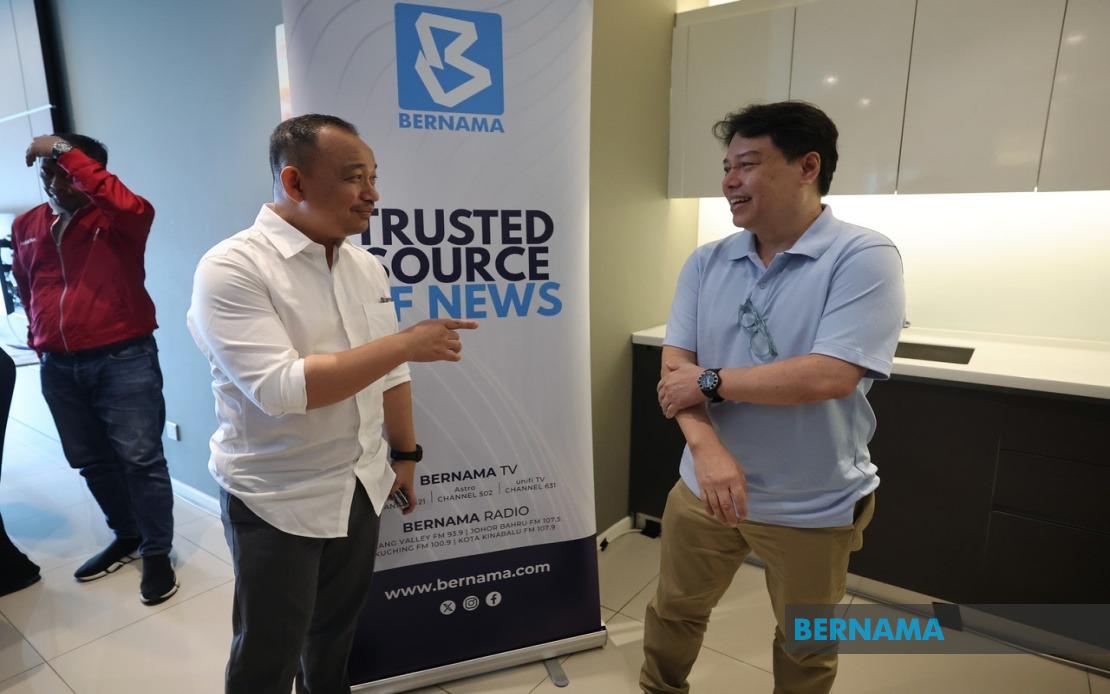
During remarks made at the Bernama Operations Room in connection with Johor's state election campaign, Maszlee offered a vivid description of his findings. He likened the experience of traversing the uneven road surfaces to sailing in traditional wooden boats at Tanjung Surat, where constant swaying and jolting characterize the journey. The deteriorated road conditions forced vehicles into patterns of bouncing and lurching, creating discomfort for occupants and raising legitimate questions about infrastructure maintenance and road design standards. These were not minor potholes or cosmetic blemishes—the problems represented systemic deficiencies affecting daily commutes for thousands of residents.
Congestion compounded the difficulties Maszlee encountered, particularly during peak travel hours when vehicle volumes overwhelmed existing road capacity. Areas including Taman Daya, Taman Pelangi Indah, and neighborhoods around Tebrau demonstrated how rapid urban expansion had outpaced infrastructure development. The mismatch between residential growth and road network upgrades has created a cascading effect, where individual housing developments proceed without corresponding investments in the arterial roads that would support the additional traffic they generate. This pattern reflects a broader challenge across Malaysia's rapidly developing corridors, where economic dynamism frequently exceeds planning capacity.
Maszlee attributed much of the congestion to inadequate coordination between development approvers and infrastructure planners. When township projects receive approval, the assumption that existing roads would absorb the traffic increase rarely proves realistic. He contended that resolving these issues demanded comprehensive urban planning that anticipated growth rather than reacted to it, alongside closer collaboration between the Public Works Department (JKR), municipal authorities, and other relevant agencies. The fragmentation of responsibilities across multiple government bodies often means that no single entity takes ownership of integrated solutions.
Drawing on his background as the former Member of Parliament for Simpang Renggam and his experience at ministerial level, Maszlee projected confidence that infrastructure deficiencies were manageable problems given proper attention and resources. His federal and ministerial experience provided insight into the bureaucratic processes required to mobilize solutions and coordinate inter-agency action. However, he emphasized that addressing entrenched infrastructure problems would require sustained commitment and long-term planning horizons extending beyond single electoral cycles. Quick fixes and superficial repairs would not resolve challenges that had accumulated over years of neglect.
The candidate stressed his commitment to community engagement as the foundation for effective governance. His proposed methodology emphasized listening to residents first, allowing their priorities to guide action rather than imposing predetermined solutions from above. This approach acknowledges that those experiencing congestion and road damage daily possess crucial knowledge about which problems deserve immediate attention and which solutions might prove most practical. Government interventions proceeding without this grassroots input frequently miss critical details and overlook community preferences, ultimately reducing effectiveness.
The Puteri Wangsa constituency, where Maszlee seeks election, encompasses 128,723 registered voters across 128,525 ordinary voters and 198 police personnel and their spouses. The state seat will experience a competitive five-way contest featuring Maszlee, Rashifa Aljunied representing MUDA, Teow Chia Ling from Barisan Nasional, Nicholas Paul Vincent fielding Parti Bersama Malaysia's colors, and Wang Wee Siong contesting as an independent candidate. This crowded ballot reflects broader fragmentation within Malaysia's political landscape, where established coalitions now face challenges from newer parties and individual candidates commanding genuine support.
The Johor state election itself represents a significant political test. Scheduled for July 11, with early voting on July 7, the election will determine the composition of the state assembly and influence regional political dynamics within the broader Malaysian context. Infrastructure and service delivery consistently emerge as dominant voter concerns in urban and suburban areas, often outweighing partisan affiliation or ideological positioning. Candidates who demonstrate engagement with practical problems affecting daily life—as Maszlee attempted through his Myvi challenge—may resonate more effectively with pragmatically minded voters less interested in campaign rhetoric than tangible commitments to improving their circumstances.
For Malaysian voters generally, this race illustrates how infrastructure maintenance and urban planning quality constitute serious election issues rather than mere technical matters for bureaucrats. The roads connecting communities, managing congestion, and enabling commerce represent public goods that directly affect quality of life, business productivity, and investment attractiveness. When these systems fail to function adequately, the cascading consequences—longer commute times, transportation costs, environmental pollution, and reduced economic activity—touch virtually every household. Political candidates who engage substantively with these challenges, as Maszlee did through his experiential test drive, position themselves as responsive to voter priorities and cognizant of real-world difficulties facing constituents.

