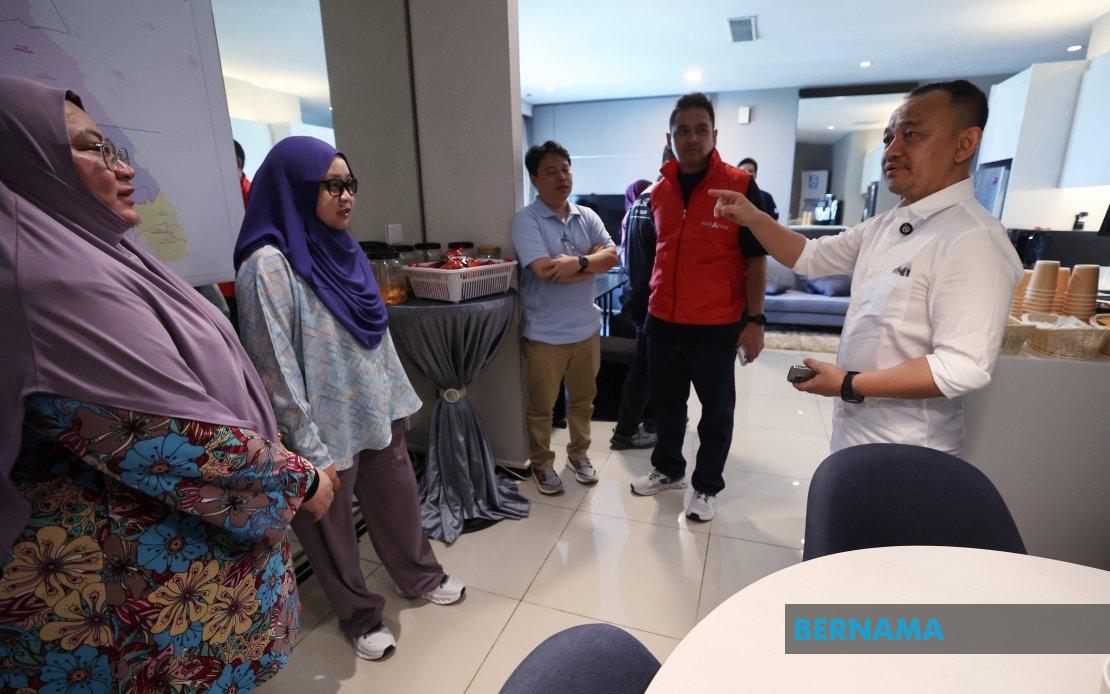
Dr Maszlee Malik, the Pakatan Harapan candidate contesting the Puteri Wangsa seat in the 16th Johor state election, is positioning technology as central to his vision for improved constituent services. The former education minister has outlined plans to deploy a dedicated mobile application that would enable residents to report local grievances and lodge complaints with greater speed and accessibility, should voters entrust him with representation in the July 11 election.
The strategic focus on digital infrastructure reflects Maszlee's assessment of Puteri Wangsa's distinctive challenges. The constituency encompasses a sprawling geographical footprint combined with significant demographic diversity, spanning from upscale residential enclaves like Austin Heights to rural Felda Ulu Tebrau settlements. This mix of affluent urban voters and underserved rural communities demands, in his view, an approach that transcends conventional in-person engagement. The proposed application would constitute one element of this modernised service delivery framework, allowing residents across dispersed areas to interact with their representative without requiring physical presence at constituency offices.
Beyond basic complaint handling, Maszlee envisions the mobile platform functioning as an identification tool for marginalised populations. Single mothers, persons with disabilities, and other vulnerable groups frequently remain unaware of available government support schemes or face administrative obstacles that prevent them from accessing entitled benefits. A centralised digital system could bridge this information gap, flagging individuals who qualify for assistance but have fallen through bureaucratic cracks due to systemic inefficiencies or limited knowledge of support mechanisms.
Maszlee has cited international precedent in shaping his approach, specifically referencing the community engagement methodology employed by Zohran Mamdani, New York City's relatively young politician who has gained attention for combining social media platforms with dedicated digital applications to solicit direct feedback from constituents. This transatlantic inspiration underscores how regional politicians increasingly draw upon global best practices, adapting foreign models to local contexts. The emphasis on direct digital communication channels represents a departure from traditional top-down constituency management, positioning representatives as responsive intermediaries rather than gatekeepers of information and resources.
The digital component forms part of a broader constituent engagement architecture that Maszlee intends to establish. Regular interaction with non-governmental organisations, residential associations, and government agencies would complement the mobile platform, while periodic town hall meetings would maintain face-to-face dialogue opportunities for addressing community concerns. This multi-channel strategy acknowledges that while technology offers efficiency gains, certain conversations and relationship-building still require physical presence and interpersonal interaction.
Maszlee's campaign strategy extends the technology-forward philosophy into electoral mobilisation itself. Recognising that conventional door-to-door canvassing fails to reach significant voter cohorts, his team is prioritising targeted social media campaigns designed to penetrate demographic groups with limited accessibility during traditional walkabouts. Young voters, Malaysians employed in Singapore, and working professionals represent constituencies that respond more effectively to digital outreach than conventional retail politics. This approach proves particularly relevant for Puteri Wangsa, where cross-border workers and diaspora populations constitute non-trivial electoral segments.
The campaign acknowledges inherent limitations within digital political communication. Algorithmic filtering and echo chambers—whereby social media platforms progressively expose users to ideologically congruent content—can inadvertently narrow the scope of campaign messaging, limiting reach among voters with different viewpoints or information consumption patterns. To mitigate this constraint, Maszlee's team implements a differentiated content strategy, crafting distinct messaging for specific localities and voter demographics while considering socio-economic status, ethnic composition, and age brackets.
This granular segmentation reflects sophisticated campaign thinking. Generation Z constituents hold different preoccupations than retired homeowners in Austin Heights; Chinese community members working in Singapore face distinct employment and taxation concerns compared to rural Felda residents; young professionals value infrastructure and digital connectivity differently than families seeking affordable housing. Rather than broadcasting uniform messaging, Maszlee's approach customises communication frameworks to reflect these divergent priorities and community-specific anxieties, potentially increasing resonance among heterogeneous voter groups.
The Puteri Wangsa contest itself presents a crowded electoral landscape. Alongside Maszlee, the ballot will feature Rashifa Aljunied representing the Malaysian United Democratic Alliance, Teow Chia Ling as the Barisan Nasional contender, Nicholas Paul Vincent from Parti Bersama Malaysia, and independent candidate Wang Wee Siong. This five-way competition underscores the fragmentation within Malaysian state-level politics, where traditional two-coalition dominance has fractured into multiple competing forces. Within this congested environment, Maszlee's emphasis on technological differentiation and targeted digital engagement offers a potentially distinctive campaigning proposition, allowing him to distinguish his candidacy from competitors operating within more conventional political frameworks.
The Johor state election will proceed on July 11, with early voting commencing on July 7. The contest carries broader significance beyond individual seat outcomes, representing an opportunity for Pakatan Harapan to consolidate strength in a state where the coalition has strengthened its political footing in recent electoral cycles. Maszlee's technology-centred approach to constituent services, should it prove persuasive to voters, may offer insights into how Malaysian politicians can harness digital tools to enhance governance responsiveness while simultaneously strengthening electoral competitiveness within increasingly crowded political contests.

