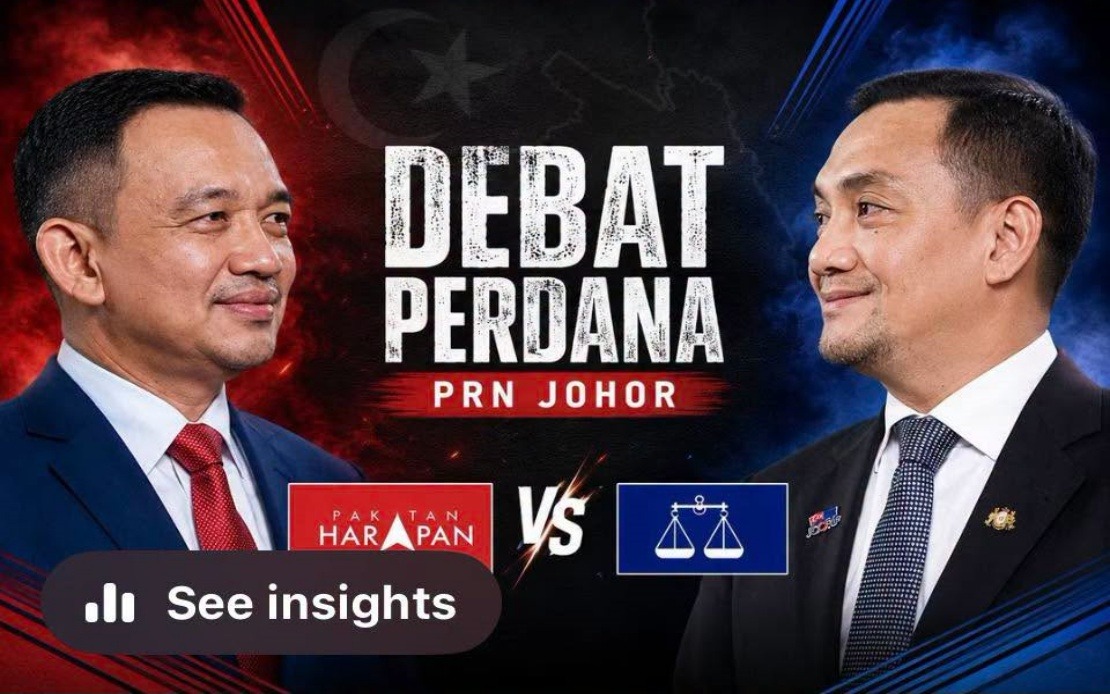
Former Education Minister Maszlee Malik has publicly embraced an opportunity to face off against Johor Menteri Besar Onn Hafiz Ghazi in a televised debate, signalling confidence in his campaign as Pakatan Harapan's representative for the Puteri Wangsa constituency in the forthcoming state election. His acceptance of the challenge comes amid growing momentum in the opposition coalition's preparations for the July 11 polling day, with the prospect of a high-profile confrontation generating substantial interest across the political landscape.
Maszlee framed his decision to accept the invitation as an expression of his commitment to democratic principles and his conviction that structured political dialogue elevates public discourse. In a statement shared on social media, the veteran politician emphasised that such forums provide valuable opportunities to engage voters directly and demonstrate the intellectual rigour behind policy positions. His willingness to participate reflects a broader strategy by Pakatan Harapan to position itself as the party of transparency and open engagement, contrasting with the ruling coalition's traditional campaign approach.
The debate proposal originated from content creator Muhamad Harris Nasril and gained traction after being amplified through the Redaksi.com Facebook platform. The initiative has resonated with observers who see such platforms as important mechanisms for voters to assess candidates beyond conventional campaign rhetoric. Public demand for confirmation of participants' involvement suggests considerable appetite among Johor voters for direct exposure to competing policy visions and leadership styles ahead of the ballot.
Packatan Harapan has positioned itself strategically for the Johor contest by fielding a composite slate of candidates reflecting the coalition's structure. The opposition alliance is contesting all 56 available seats across the state, with component parties contributing differentiated numbers: PKR is providing twenty candidates, Amanah nineteen, and DAP seventeen. This distribution reflects internal negotiations about seat allocation and attempts to maximise electoral appeal across diverse constituencies while maintaining coalition cohesion.
The timeline for the election process has now been formally established by the Election Commission. Nomination day is scheduled for this Saturday, with early voting permitted on July 7 for those unable to attend on the main polling date. The concentration of campaign activities within this compressed timeframe means that high-impact events such as a major debate become particularly significant in shaping voter impressions and generating earned media coverage.
Maszlee's background as a former Education Minister during the previous Pakatan Harapan federal government provides substantial credibility on policy matters and administrative experience. His tenure in that portfolio, though controversial at certain points, gives him standing to discuss governance, institutional reform, and developmental priorities that typically resonate in state-level campaigns. The debate framework offers him an opportunity to draw explicit contrasts between his track record and the incumbent administration's stewardship of Johor's educational and developmental infrastructure.
Onn Hafiz, as the incumbent Menteri Besar, enters any debate with the advantage of demonstrated executive authority and recent government performance data. However, he also faces scrutiny regarding his tenure's outcomes and must defend policy decisions that may have attracted criticism. The debate dynamic therefore presents a classic incumbent-challenger framework, where the former must justify continuity while the latter advocates for change.
From a broader Southeast Asian perspective, this electoral contest and its accompanying debate represent the continuing vitality of electoral competition within Malaysia's federal structure. Johor, as Malaysia's southernmost state and a historically significant political battleground, often serves as a barometer for shifting voter sentiments. The opposition coalition's aggressive campaign posture and willingness to contest every seat suggests confidence that national sentiment has shifted sufficiently to create electoral opportunities even in traditionally competitive terrain.
The debate's potential impact extends beyond the immediate constituency of Puteri Wangsa. Should the event receive substantial media coverage and draw significant viewership, it could establish narrative frameworks that influence voting behaviour across multiple Johor seats. Both major coalitions understand that high-profile confrontations between prominent figures can generate momentum, shape public perception of candidate calibre, and either enhance or damage broader electoral prospects depending on performance and messaging effectiveness.
Maszlee's explicit invocation of democratic values and political maturity in his acceptance statement reveals the rhetorical strategy Pakatan Harapan intends to deploy. By framing debate participation as evidence of commitment to inclusive governance and voter empowerment, the coalition attempts to claim the moral high ground on procedural democracy—an important symbolic positioning in Malaysian electoral competition where narratives about institutional fairness and democratic substance carry considerable weight with educated urban voters and increasingly digitally-engaged rural constituencies.
The timing of this challenge and acceptance, emerging as Pakatan Harapan formalises its complete candidate slate, suggests coordinated strategic planning. Rather than appearing reactive or defensive, the opposition has seized the initiative to shape campaign dynamics around formats where policy articulation and direct confrontation favour coherent alternative programmes over incumbent administrative claims.