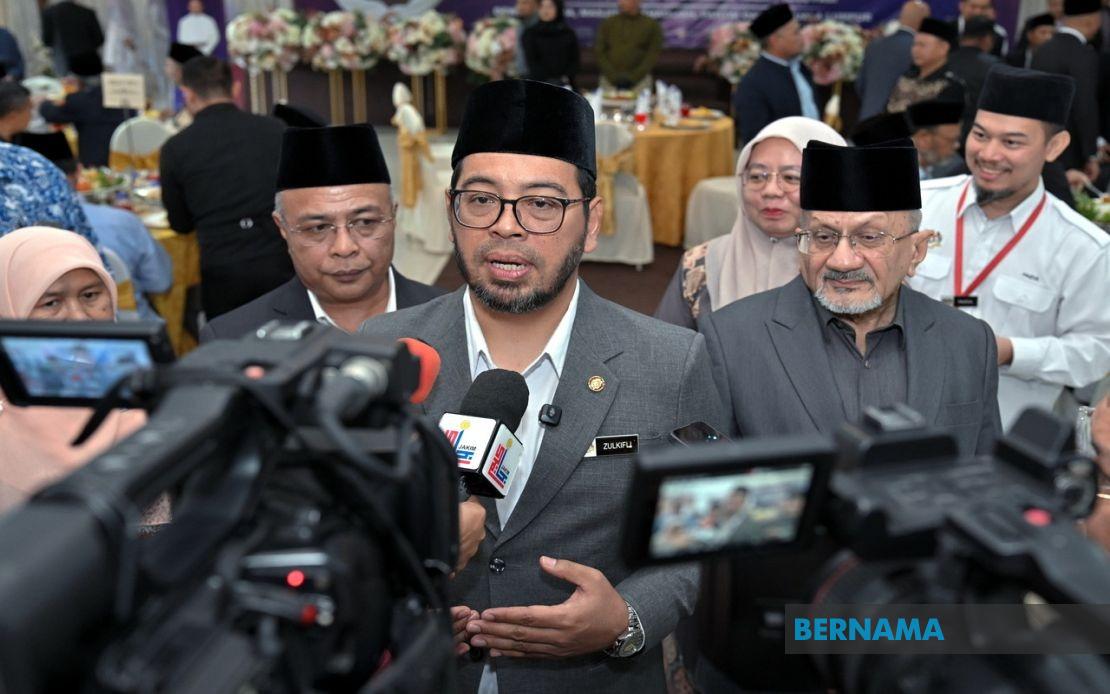
The long-awaited Masjid Warisan project opposite the Tun Razak Exchange (TRX) tower will move forward as scheduled, according to Religious Affairs Minister Dr Zulkifli Hasan, who reaffirmed the government's commitment to the initiative during remarks made in Kuala Lumpur on June 23. The minister's statement comes after mounting public discourse surrounding the proposal, with various stakeholders expressing reservations about the development's potential implications for the broader community and urban environment.
Dr Zulkifli characterised the mosque initiative as a carefully considered long-term plan designed to strengthen the institutional presence of houses of worship within the Federal Territories. He framed the project within a broader vision of mosques serving as anchors for social cohesion and community well-being, emphasising their role beyond purely religious functions. The minister's language suggested that the mosque represents part of a strategic vision to enhance the spiritual and social infrastructure across Malaysia's federal administrative areas.
The announcement comes amid reported concerns from certain quarters questioning whether the project could generate social tensions or public dissatisfaction. These objections appear to centre on questions about urban development priorities, communal harmony, and the appropriateness of the TRX location for such a facility. By reaffirming the project's viability, Dr Zulkifli directly addressed these concerns without retreating from the government's position, indicating that thorough consideration has already been given to potential community impacts.
For residents and stakeholders troubled by the development, Dr Zulkifli indicated that the Federal Territories Islamic Religious Council (MAIWP) stands ready to engage in dialogue and provide additional context. This invitation to seek clarification suggests that the government views information gaps and misunderstandings as central to the controversy, and that clearer communication about the project's benefits and design could address public apprehension. Such engagement mechanisms are crucial in managing controversial infrastructure projects in densely populated urban areas.
The minister drew upon international precedent to contextualise the proposal, noting that major cities worldwide feature prominent mosques whose calls to prayer contribute to the acoustic and spiritual character of urban environments. This comparative approach positions Malaysia within a global tradition of integrating significant religious structures into modern metropolitan landscapes. The reference to adhan (the call to prayer) as a source of spiritual peace reframes the debate beyond mere development planning into questions about cultural identity and the place of Islam within Malaysia's urban fabric.
Simultaneously, Dr Zulkifli distributed appointment letters to committee members overseeing Federal Territories mosques and Friday prayer suraus for the 2026-2029 term, a development that highlights the broader institutional strengthening of religious infrastructure across Kuala Lumpur, Labuan, and Putrajaya. The ceremony, held at Masjid Al-Khadijah in Kampung Pantai Dalam, underscores the government's ongoing investment in mosque governance and administration. This parallel initiative demonstrates a comprehensive approach to enhancing religious institutional capacity across the federal territories.
The selection process for these committee positions reflects rigorous governance standards. From 3,010 nominations spanning 91 mosques and 124 Friday prayer suraus, authorities selected 2,914 candidates following vetting procedures involving the Royal Malaysia Police, the Malaysian Anti-Corruption Commission, and the Insolvency Department. This multi-agency approach ensures that volunteer administrators meet strict integrity standards, reducing risks associated with mismanagement or misconduct at the community level.
The Masjid Warisan project, positioned within this broader institutional renewal, signals government determination to balance modernisation of Malaysia's capital with preservation of religious and cultural values. The TRX location, adjacent to the nation's flagship financial development, carries symbolic weight—placing a major mosque near the epicentre of economic activity suggests an integrated vision of national development that incorporates spiritual dimensions alongside commercial ones. This positioning challenges conventional Western-style urban planning that often compartmentalises religious and commercial spaces.
For Malaysian readers and those interested in Southeast Asian urban development trends, the Masjid Warisan initiative raises important questions about the relationship between religious institutions, modern metropolitan design, and social harmony. The project's advancement despite public controversy reflects a government confident that professional stakeholder engagement, combined with transparent governance frameworks, can reconcile apparent tensions between development aspirations and community concerns. Whether the MAIWP's open-door policy for clarification effectively addresses underlying objections will likely become clearer as construction approaches and formal community consultation processes unfold in coming months.