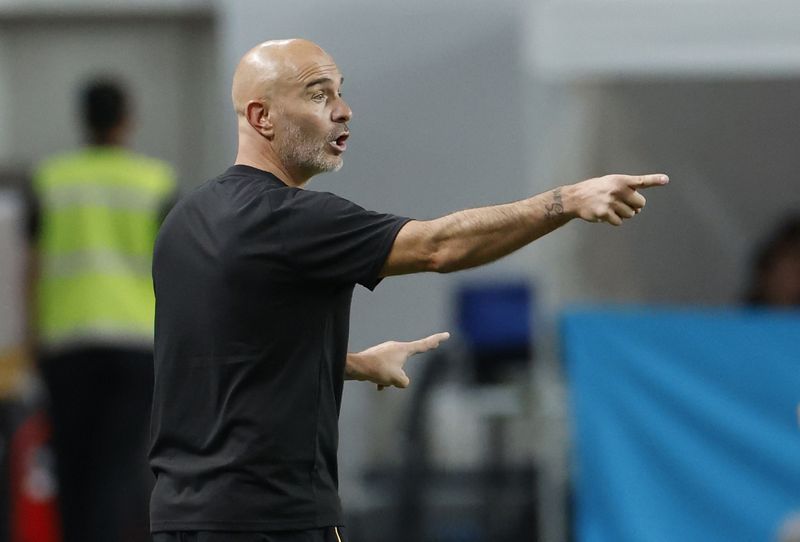
Enzo Maresca steps into one of football's most demanding roles as Manchester City embark on their first season without Pep Guardiola in a decade. The Spanish manager's departure marks the definitive end of the most glittering period in the club's modern history, during which City claimed six Premier League titles, captured the Champions League, and established themselves as the authentic powerhouse of English football. The Italian successor has been entrusted with a team featuring Erling Haaland and world-class talent throughout, yet the expectation to replicate unprecedented success looms large over the Etihad.
Maresca's appointment reflects City's determination to navigate this transition through continuity rather than wholesale change. The 46-year-old is no stranger to Manchester's inner sanctum, having served as part of Guardiola's coaching apparatus during the club's treble-winning campaign before proving himself as a manager of substance elsewhere. His track record includes steering Leicester City back to Premier League status and securing trophies at Chelsea, credentials that persuaded City's hierarchy he possessed the tactical acumen and institutional knowledge to guide the club through this pivotal juncture. Rather than seeking a radical reimagining of the team's approach, City have deliberately selected a coach versed in the positional play, ball retention, and tactical sophistication that underpinned their dominance.
The squad Maresca inherits remains formidable by any continental measure. Haaland stands as the fulcrum of City's attack, having finished as the Premier League's leading goalscorer in three of the previous four seasons, providing a prolific and dependable fountain of goals. Rodri anchors the midfield with his exceptional passing range, intelligent positioning, and defensive contributions, having recently earned the Golden Ball at this year's World Cup after propelling Spain to continental glory. The club has also invested substantially in reinforcement, securing England midfielder Elliot Anderson from Nottingham Forest for £116 million, a transaction designed to inject energy and ball-winning capability into the central areas. Emerging prospects including Rayan Cherki and Nico O'Reilly represent additional sources of vitality for the campaign ahead.
Yet beneath the surface of continued strength lies a concerning depletion. The departures of long-serving figures Bernardo Silva and John Stones represent more than mere personnel changes; they constitute a tangible loss of experience and leadership that accumulated over Guardiola's tenure. These exits suggest a squad entering a phase of transition at precisely the moment when stability might be most beneficial. The previous campaign's domestic cup double, which would have represented silverware to celebrate at virtually any other club, felt hollow when measured against the backdrop of a second-place Premier League finish behind Arsenal. That underwhelming conclusion to Guardiola's era starkly illustrates the exacting standards City have maintained, standards that Maresca must immediately replicate rather than gradually build towards.
The fundamental challenge confronting Maresca transcends tactical implementation or squad composition. Guardiola's influence permeated every dimension of City's operation, extending from strategic decision-making through to institutional culture and player development. His decade of stewardship established a particular identity and way of operating that became deeply embedded in the organization's DNA. For Maresca, the distinction between serving as Guardiola's trusted lieutenant and assuming full responsibility for driving the project represents an immense psychological and practical gulf. While his familiarity with the club's environment should facilitate a smoother transition than an external appointment might have achieved, institutional knowledge alone cannot replicate the authority and vision of a manager who fundamentally redefined expectations.
The immediate weeks and months will prove instructive regarding the pace of adaptation. Many City players are returning late from World Cup commitments, potentially complicating early preparations and cohesion. The balance Maresca must strike between honouring the positional philosophy and tactical frameworks that delivered success while simultaneously injecting sufficient innovation to reinvigorate a squad that has operated under one managerial voice for an extended period represents the central tension of his tenure. Success demands neither wholesale abandonment of proven principles nor stale repetition of established patterns, but rather intelligent evolution that respects foundations while charting fresh directions.
Maresca's appointment also carries particular significance for the wider football ecosystem. His success or struggles will reverberate through the manager market and shape perceptions regarding the viability of managing at the world's richest clubs following legendary predecessors. The financial resources and quality of playing personnel at City's disposal ensure they remain competitive across every competition, yet the psychological weight of inheriting a dynasty cannot be dismissed. Elite football clubs frequently experience periods of recalibration following iconic figures, though City's structural advantages and careful succession planning suggest they may navigate this transition more smoothly than historical precedent might suggest.
For Malaysian and Southeast Asian observers, City's transition offers instructive lessons about institutional management and leadership succession. The club's approach prioritizes stability and cultural continuity over dramatic rupture, reflecting a sophisticated understanding that transformational change initiated too hastily can destabilize established winning structures. Maresca's appointment represents a calculated gamble that deep institutional knowledge, combined with proven managerial capability elsewhere, can bridge the transition between eras more effectively than seeking a completely different vision. Whether this strategy proves prescient or represents a failure to genuinely refresh the project will become apparent as the season unfolds.
City commence their Premier League campaign against Bournemouth on August 23, providing an initial opportunity to assess whether Maresca's appointment represents seamless continuation or the beginning of a more complicated adjustment. The opening matches will reveal whether the squad has smoothly adapted to a new voice and approach or whether the transition demands extended bedding-in time. Maresca's success cannot be measured solely through silverware, though that remains the ultimate currency at City, but rather through his capacity to establish sufficient autonomy to shape the team's direction while honouring the legacy and institutional memory that enable continued excellence. The manager must simultaneously represent both continuity and change, a paradox that will test his managerial maturity and strategic acumen throughout his tenure.

